Predictive factors for the efficacy of brolucizumab in refractory polypoidal choroidal vasculopathy following aflibercept resistance
Akie Yoshinaga, Kohdai Kitamoto, Shuichiro Aoki, Ryo Terao, Tatsuya Inoue, Ryo Obata, Keiko Azuma

TL;DR
The study identifies factors that predict whether patients with a specific eye condition can extend treatment intervals after switching medications.
Contribution
A predictive model using choroidal thickness changes and pachychoroid status is proposed for brolucizumab efficacy in refractory eye disease.
Findings
Eyes without significant early choroidal thinning were more likely to extend treatment intervals.
A ≥40% choroidal thickness reduction strongly predicted difficulty in extending treatment intervals.
The model showed good discrimination with an AUC of approximately 0.97.
Abstract
To identify predictors of extension of the injection interval beyond 8 weeks at the 24-month visit after switching to brolucizumab in aflibercept-resistant polypoidal choroidal vasculopathy (PCV). Retrospective observational study 17 eyes of 16 patients with persistent or recurrent exudation on aflibercept were switched to intravitreal brolucizumab and managed with a treat-and-extend (T&E) regimen with a minimum 8-week interval after loading. The primary outcome contrasted extension (>8 weeks) versus non-extension (≤8 weeks) at month 24. Prespecified predictors were early central choroidal thickness (CCT) change from baseline to the switch visit (A0 to A1; ≥ 40% reduction) and pachychoroid. Associations were tested with Fisher’s exact tests and Firth-penalized logistic regression with the event defined as extension. At 24 months, 6 of 17 eyes (35%) achieved extension. A ≥ 40% early…
Genes, proteins, chemicals, diseases, species, mutations and cell lines named across the full text — each resolved to its canonical identifier and authoritative record.
Click any figure to enlarge with its caption.
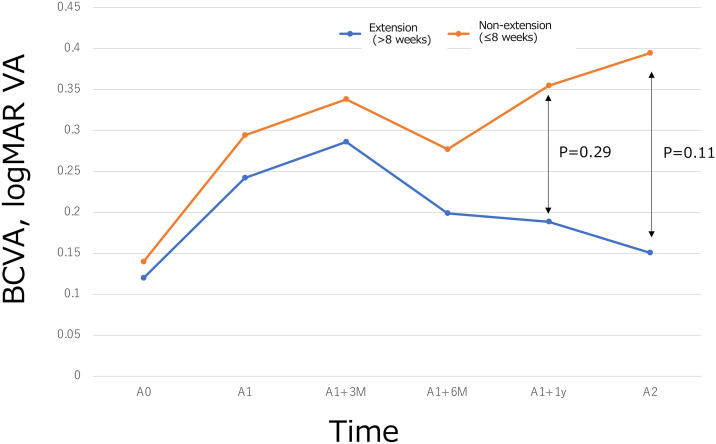 Figure 1
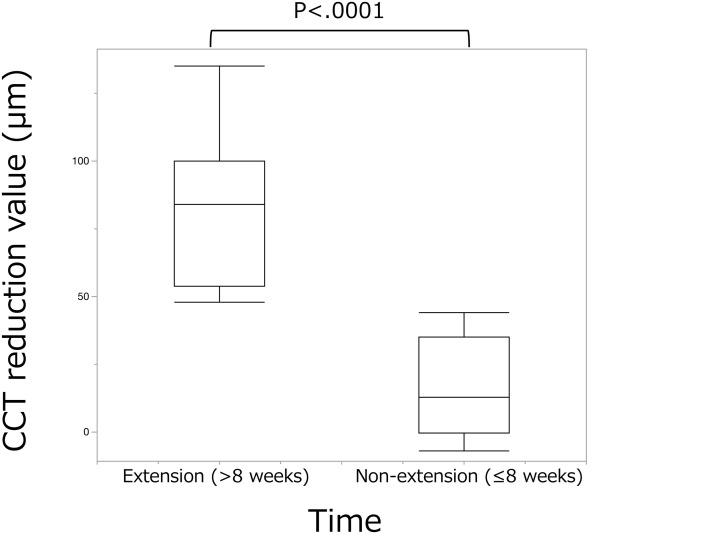 Figure 2
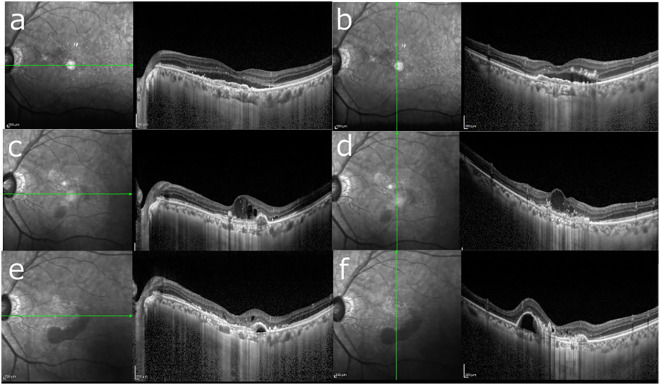 Figure 3
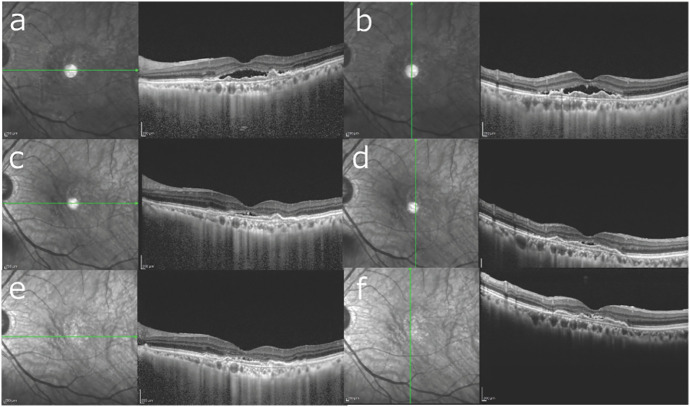 Figure 4
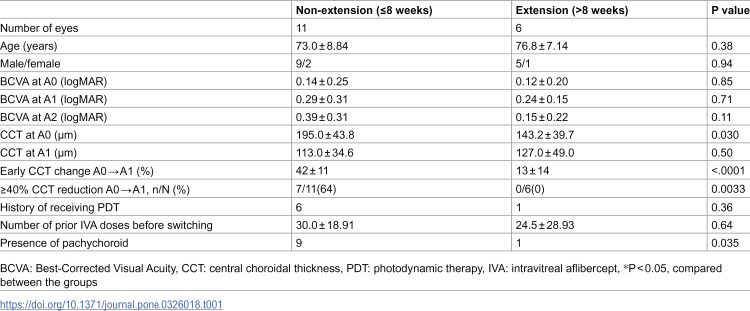 Figure 5
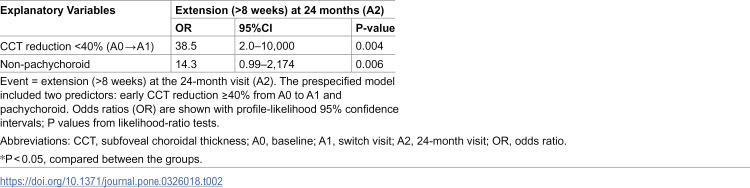 Figure 6
Peer Reviews
No public reviews on file for this paper yet. If you reviewed it on a platform where reviews are public (OpenReview, ICLR, NeurIPS, ICML), you can paste yours below so the community can read it here.
Videos
No videos yet. Explain this paper in a talk, walkthrough, or lecture? Add one.
Taxonomy
TopicsRetinal Diseases and Treatments · Ocular Diseases and Behçet’s Syndrome · Glaucoma and retinal disorders