Combining demographic shifts with age-based resistance prevalence to estimate future antimicrobial resistance burden in Europe and implications for targets: A modelling study
Naomi R. Waterlow, Clare I. R. Chandler, Ben S. Cooper, Catrin E. Moore, Julie V. Robotham, Benn Sartorius, Michael Sharland, Gwenan M. Knight, Alison Farrell, Alison Farrell, Alison Farrell, Alison Farrell

TL;DR
This study models how demographic changes and age-related resistance patterns will affect future drug-resistant infections in Europe, showing that ignoring age and sex leads to inaccurate projections.
Contribution
The study introduces a novel approach combining demographic shifts with age- and sex-specific resistance data to project future AMR burdens in Europe.
Findings
BSI incidence rates are projected to increase more in men and older adults across most bacteria.
Ignoring age and sex leads to underestimating resistance burden in men and older populations.
Achieving a 10% reduction in resistant BSI incidence by 2030 is only feasible for 68.4% of bacteria-antibiotic combinations.
Abstract
Antimicrobial Resistance (AMR) is a global public health crisis. Evaluating intervention impact requires accurate estimates of how the AMR burden will change over time, given likely demographic shifts. This study aimed to provide an estimate of future AMR burden in Europe, investigating resistance variation by age and sex and the impact of interventions to achieve the proposed United Nations (UN) political declaration targets. Using data from 12,807,473 bloodstream infection (BSI) susceptibility tests from routine surveillance in Europe, we estimate age- and sex-specific rates of change in BSI incidence for the 8 bacteria included in European Antimicrobial Resistance Surveillance Network (EARS-Net) surveillance over 2015–2019. This was used to project incidence rates by age and sex for 2022–2050 and, with demographic projections, to generate estimates of BSI burden (2022–2050). Two…
Genes, proteins, chemicals, diseases, species, mutations and cell lines named across the full text — each resolved to its canonical identifier and authoritative record.
Click any figure to enlarge with its caption.
 Figure 1
 Figure 2
 Figure 3
 Figure 4
 Figure 5
 Figure 6
 Figure 7
 Figure 8
 Figure 9
 Figure 10
 Figure 11
 Figure 12
 Figure 13
 Figure 14
 Figure 15
 Figure 16
 Figure 17
 Figure 18
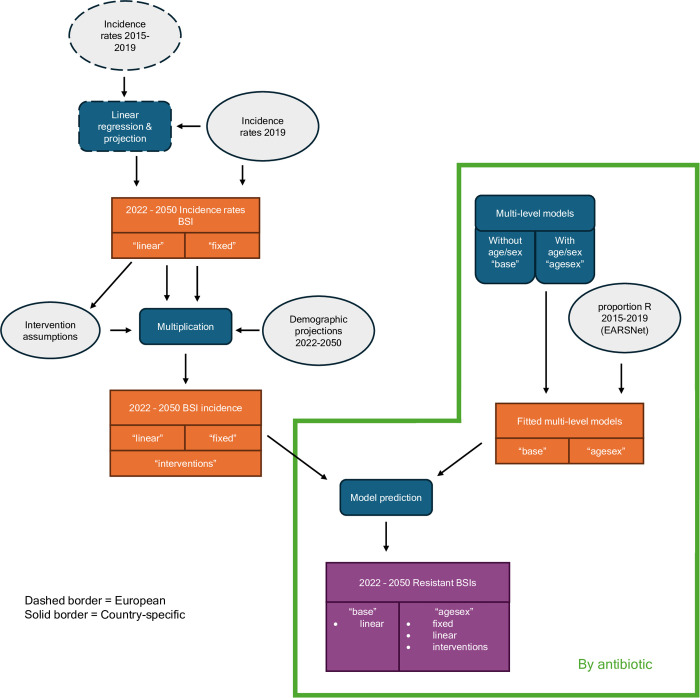 Figure 19
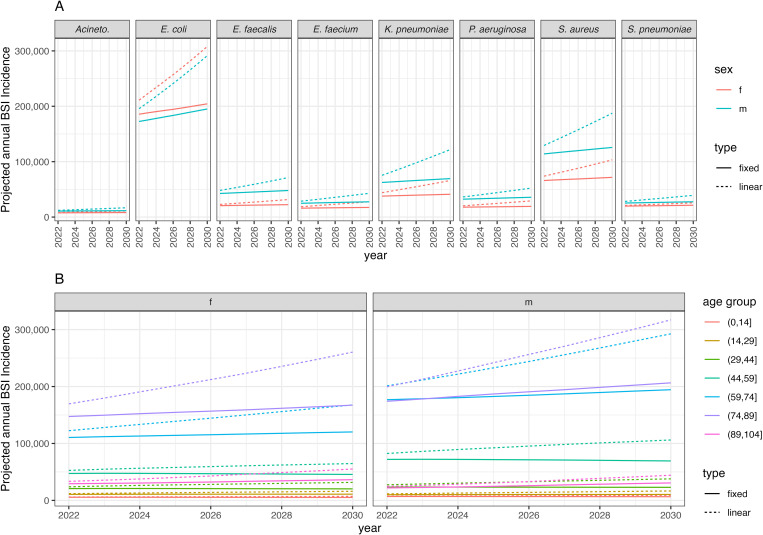 Figure 20
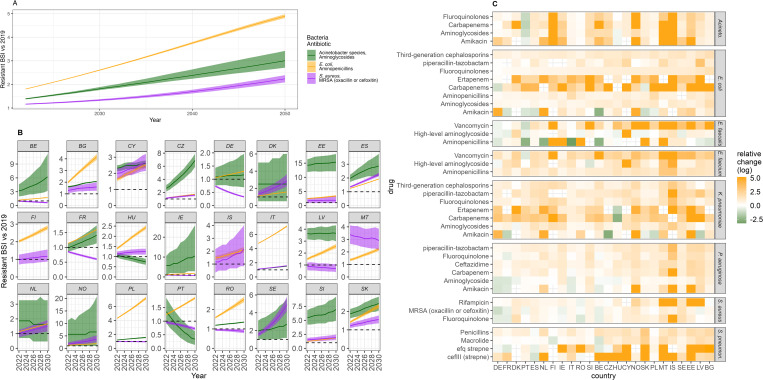 Figure 21
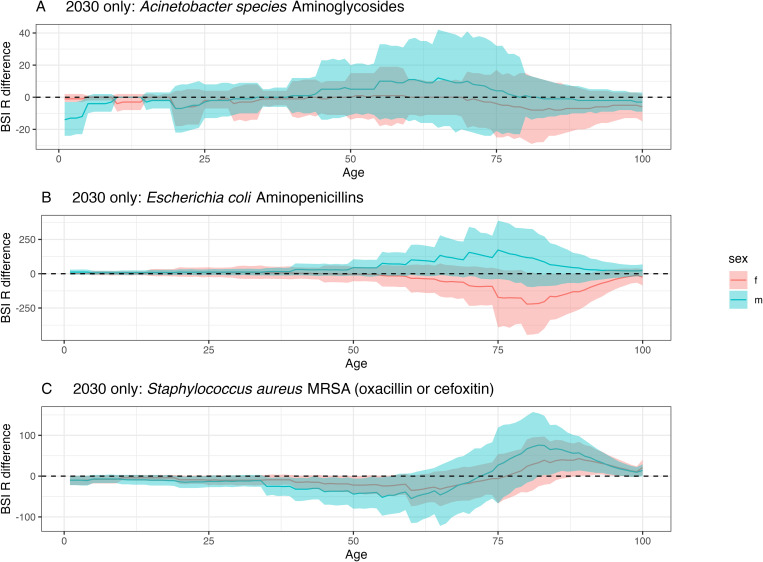 Figure 22
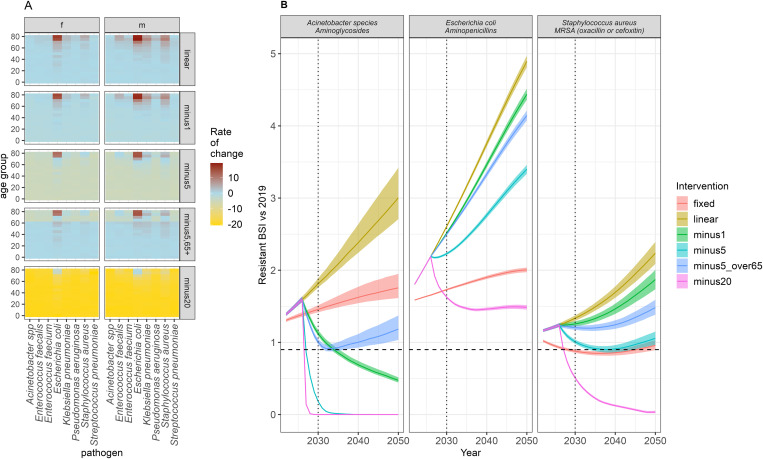 Figure 23
Peer Reviews
No public reviews on file for this paper yet. If you reviewed it on a platform where reviews are public (OpenReview, ICLR, NeurIPS, ICML), you can paste yours below so the community can read it here.
Videos
No videos yet. Explain this paper in a talk, walkthrough, or lecture? Add one.
Taxonomy
TopicsAntibiotic Use and Resistance · Urinary Tract Infections Management · Antibiotic Resistance in Bacteria