Associations of serum pepsinogen and Gastrin-17 with Helicobacter pylori infection, sex, and age, in an asymptomatic coastal population: A cross-sectional study in Rizhao, China
Tianyi Zhang, Xiangxiang Meng, Xiaomei Wang, Shanwen Mi, Yanjie Qu, Jianxin Li, Sujun Hou, Yaocai Wang, Mengmeng Yin

TL;DR
This study explores how Helicobacter pylori infection, age, and sex affect pepsinogen and gastrin-17 levels in a coastal Chinese population.
Contribution
The study provides region-specific insights into the associations between HP infection, sex, age, and serum biomarker levels in asymptomatic individuals.
Findings
HP-positive individuals had higher pepsinogen I, II, and gastrin-17 levels and lower PGI/PGII ratios.
Males had higher pepsinogen levels than females, and age showed weak positive correlations with biomarker levels.
Nonlinear relationships between age and pepsinogen I, PGI/PGII ratio, and gastrin-17 were observed.
Abstract
Pepsinogen (PG) and gastrin-17 (G-17) are widely used in the screening of gastric diseases. Our cross-sectional clinical study investigates the relationship between Helicobacter pylori (HP) infection, sex, and age on serum levels of PG and G-17 in asymptomatic subjects in Rizhao, China. A total of 12,746 asymptomatic subjects were enrolled in the study between August 2023 and January 2024. Serum levels of pepsinogen I (PGI), pepsinogen II (PGII), and G-17 were measured using the chemiluminescent microparticle immunoassay method, and the PGI/PGII ratio (PGR) was calculated. HP infection was detected using the Colloidal Gold Method, and the relationship between age, sex, HP infection, and serum PG and G-17 levels was analyzed. HP prevalence was 19.33% in this study. The serum PGI, PGII, and G-17 levels were significantly higher in the HP-positive group compared to the HP-negative group…
Genes, proteins, chemicals, diseases, species, mutations and cell lines named across the full text — each resolved to its canonical identifier and authoritative record.
Click any figure to enlarge with its caption.
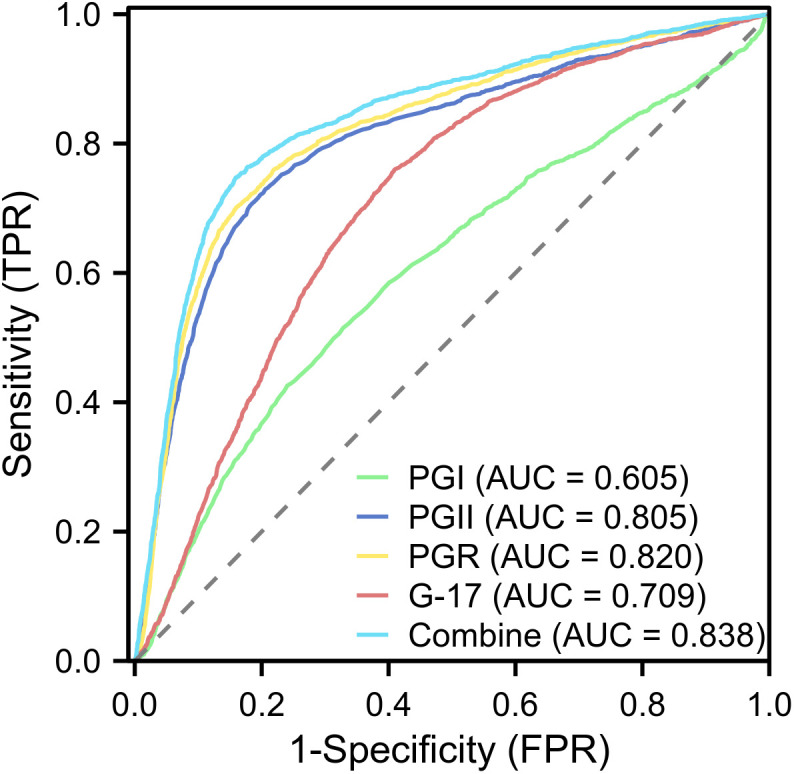 Figure 1
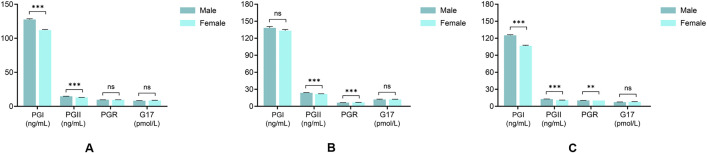 Figure 2
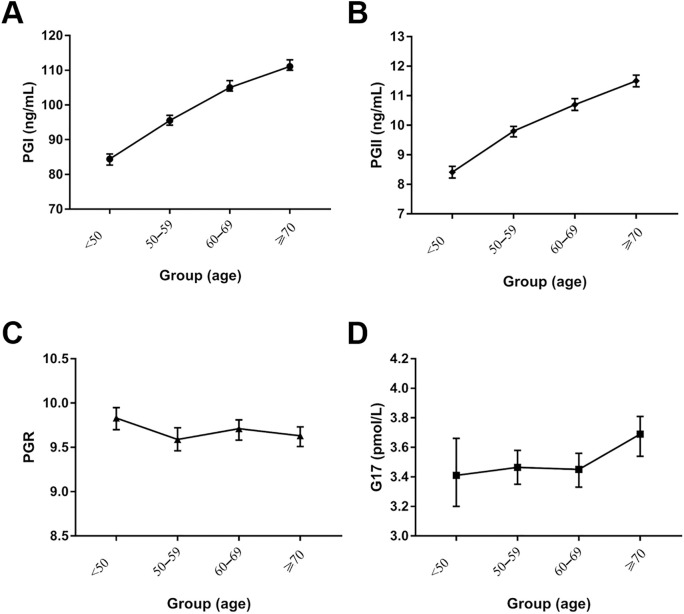 Figure 3
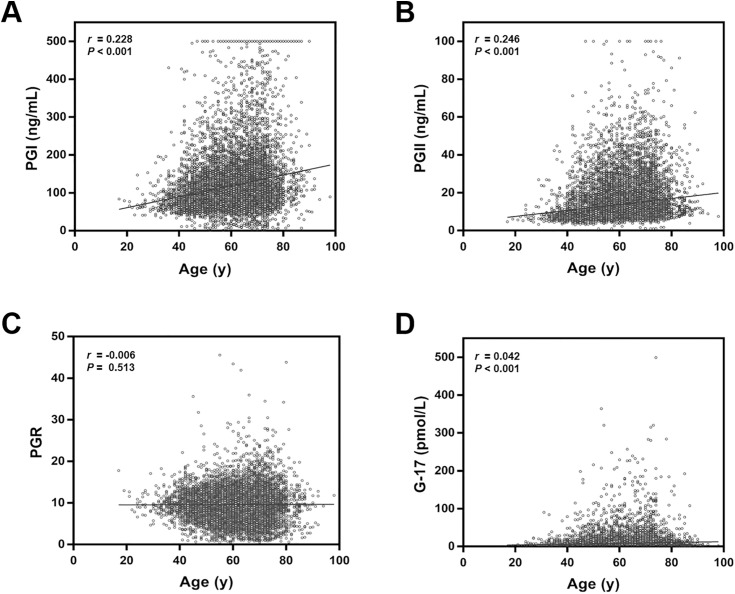 Figure 4
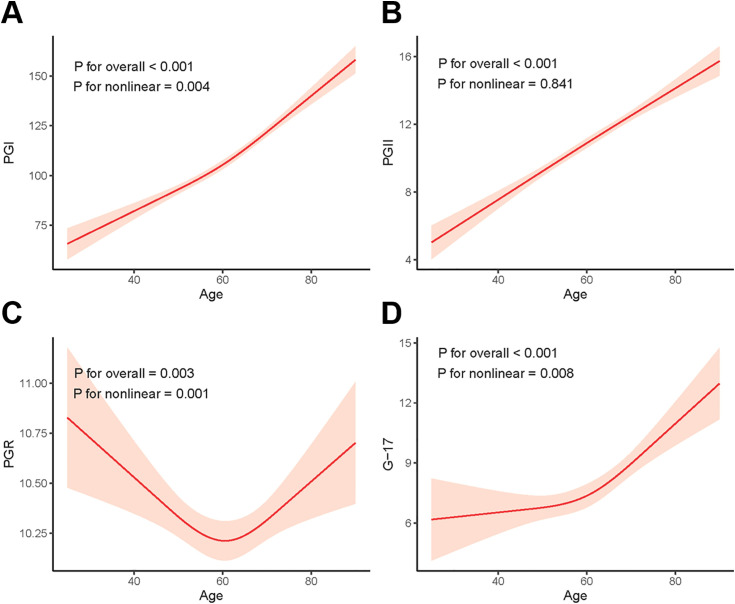 Figure 5
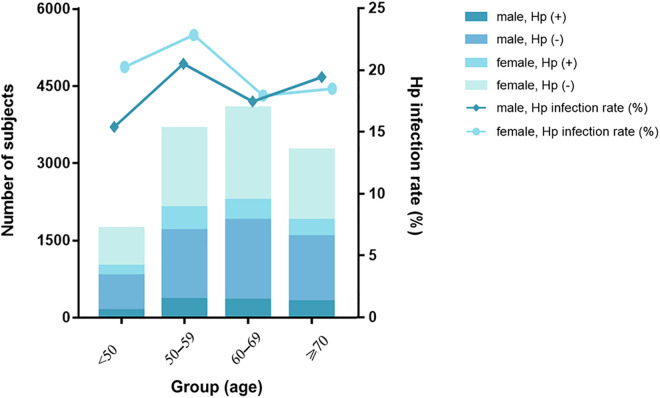 Figure 6
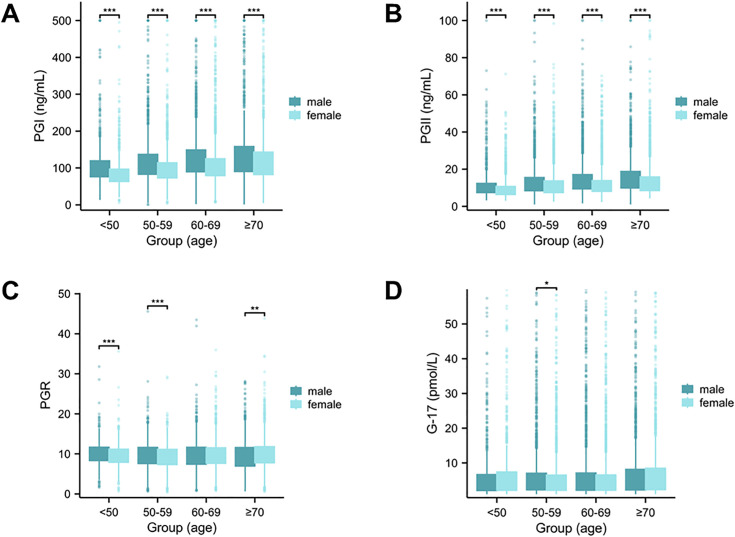 Figure 7
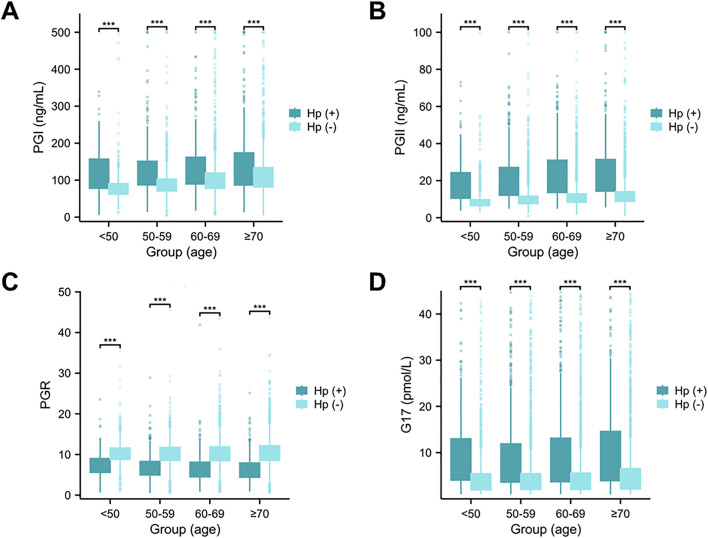 Figure 8
 Figure 9
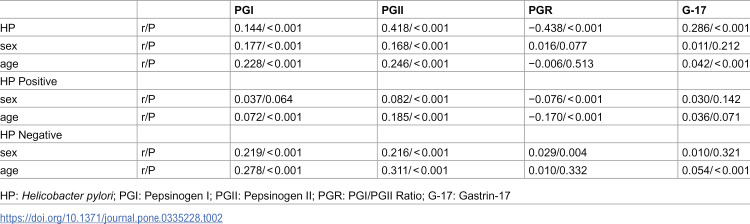 Figure 10
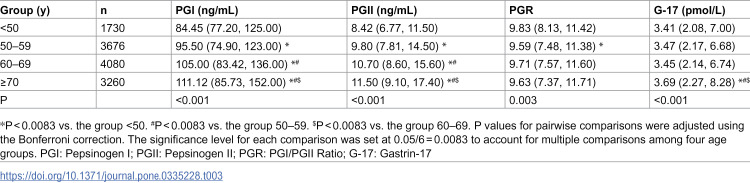 Figure 11
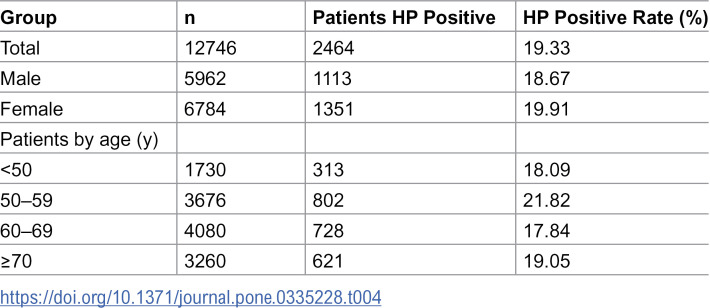 Figure 12
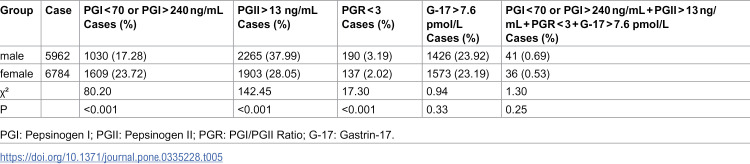 Figure 13
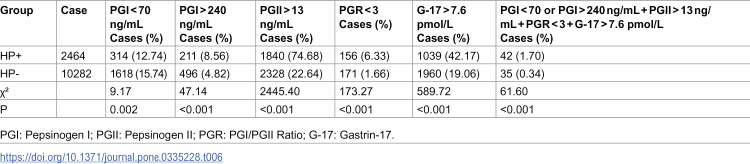 Figure 14
Peer Reviews
No public reviews on file for this paper yet. If you reviewed it on a platform where reviews are public (OpenReview, ICLR, NeurIPS, ICML), you can paste yours below so the community can read it here.
Videos
No videos yet. Explain this paper in a talk, walkthrough, or lecture? Add one.
Taxonomy
TopicsHelicobacter pylori-related gastroenterology studies · Pancreatitis Pathology and Treatment · Neuropeptides and Animal Physiology