Application of the protection motivation theory in predicting wild mushroom consumption among university students in China
Si Chen, Yu Chen, Zhenyi Li

TL;DR
This study uses a psychological theory to understand why university students in China consume wild mushrooms and identifies key factors that influence their behavior.
Contribution
Applies Protection Motivation Theory to wild mushroom consumption, revealing new insights into behavioral predictors among university students.
Findings
The PMT model explained 42.3% of the variance in wild mushroom consumption intentions.
Perceived benefits were the strongest positive predictor, while self-efficacy was the strongest negative predictor.
Traditional threat appraisal components had minimal predictive effects on consumption intentions.
Abstract
Wild mushroom poisoning represents a significant public health challenge in China, with the highest mortality rate globally. Despite extensive prevention campaigns, consumption behaviors persist, particularly among university students who may be influenced by social media and peer pressure. This study applied Protection Motivation Theory (PMT) to investigate psychological factors influencing wild mushroom consumption intentions among Chinese university students and identify key predictors for targeted intervention development. A cross-sectional survey was conducted among 216 Chinese university students. The PMT model included threat appraisal (perceived severity, susceptibility, benefits, costs) and coping appraisal (response efficacy, self-efficacy, response costs). Behavioral intention was assessed through scenario-based consumption likelihood measures. Structural equation modeling…
Genes, proteins, chemicals, diseases, species, mutations and cell lines named across the full text — each resolved to its canonical identifier and authoritative record.
Click any figure to enlarge with its caption.
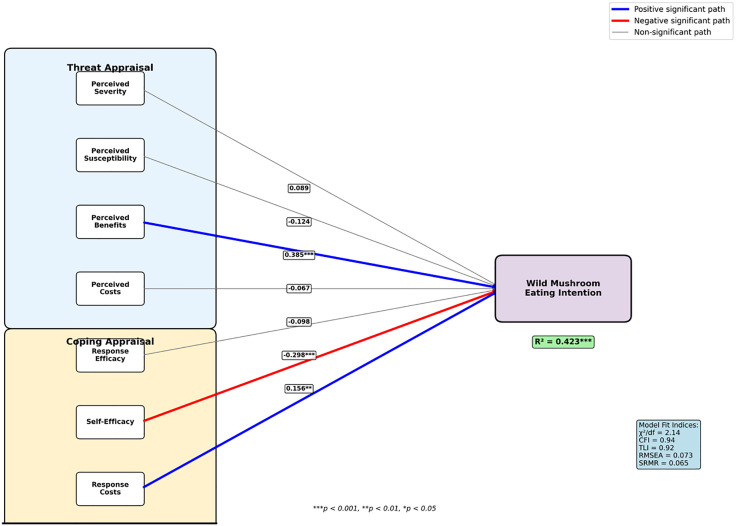 Figure 1
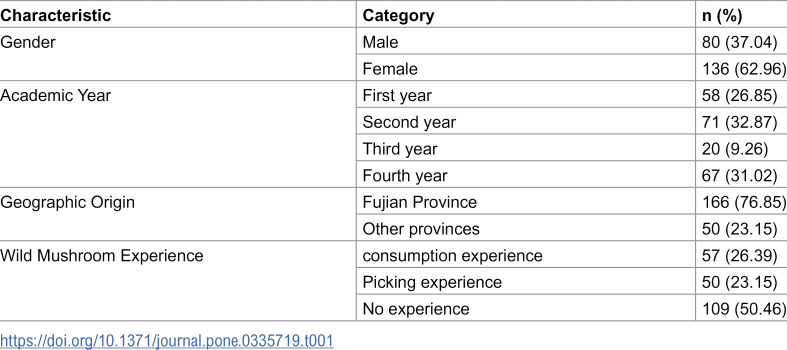 Figure 2
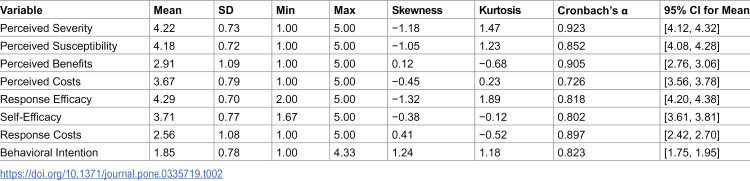 Figure 3
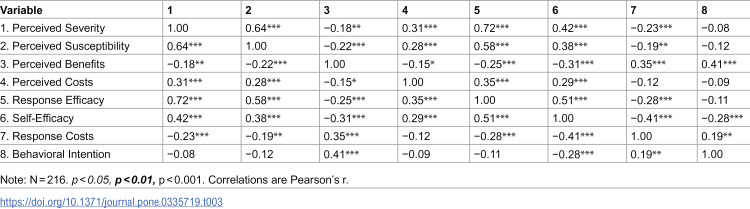 Figure 4
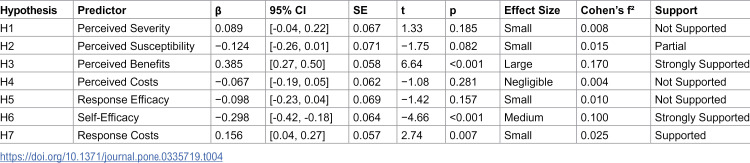 Figure 5
Peer Reviews
No public reviews on file for this paper yet. If you reviewed it on a platform where reviews are public (OpenReview, ICLR, NeurIPS, ICML), you can paste yours below so the community can read it here.
Videos
No videos yet. Explain this paper in a talk, walkthrough, or lecture? Add one.
Taxonomy
TopicsBehavioral Health and Interventions · Silymarin and Mushroom Poisoning · Fungal Biology and Applications