Population structure of Mycobacterium avium subsp. hominissuis provides new insights into genomic evolution
Idowu B. Olawoye, David Alexander, Jennifer L. Guthrie

TL;DR
This study reveals new genetic lineages and evolutionary patterns in Mycobacterium avium subsp. hominissuis, a bacteria that causes infections in humans and animals.
Contribution
The study identifies three new global lineages and recombination hotspots linked to virulence and antimicrobial resistance in MAH.
Findings
Ten global lineages of MAH were identified, including three new ones.
Regional clustering was observed in specific lineages like SC6 and SC8.
Recombination hotspots in membrane proteins are linked to virulence and resistance traits.
Abstract
Mycobacterium avium subsp. hominissuis (MAH) is a clinically important species of non-tuberculous mycobacteria that causes infections in a variety of hosts. This opportunistic pathogen is widespread in the environment, including natural and engineered water systems across the globe. To examine the current genetic diversity of this organism, we analysed 702 MAH genomes isolated from humans, pigs and environmental sources across six countries and three continents. Through Bayesian population structure analysis, we identified ten distinct global lineages, including seven previously described and three new ones. Several lineages exhibited regional clustering, including sequence cluster 6 (SC6) in Germany and SC8 in both the USA and Germany. Further analysis identified recombination hotspots in membrane proteins associated with virulence, antimicrobial resistance and immune modulation,…
Genes, proteins, chemicals, diseases, species, mutations and cell lines named across the full text — each resolved to its canonical identifier and authoritative record.
Click any figure to enlarge with its caption.
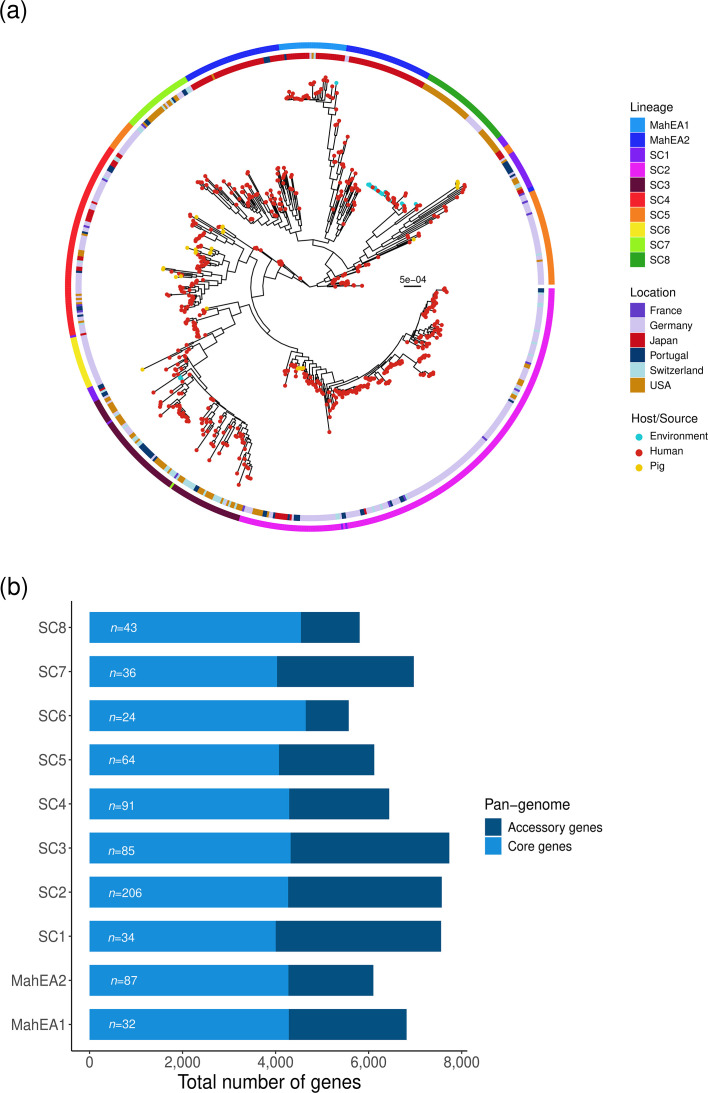 Figure 1
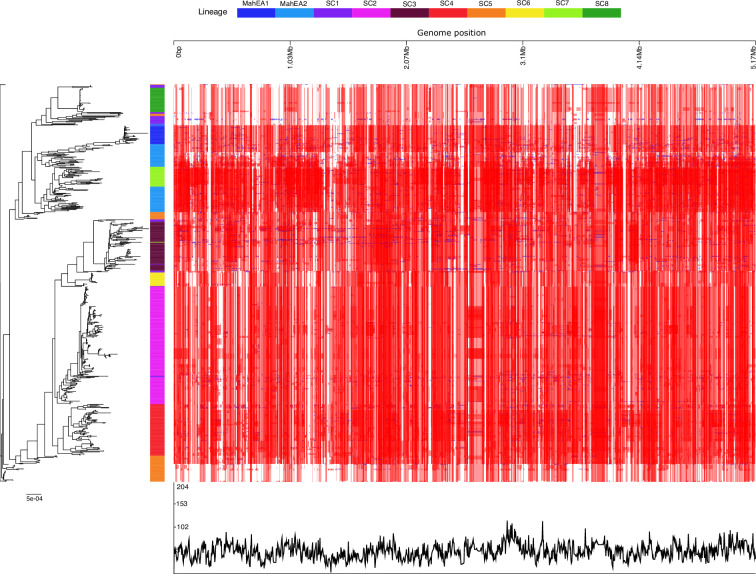 Figure 2
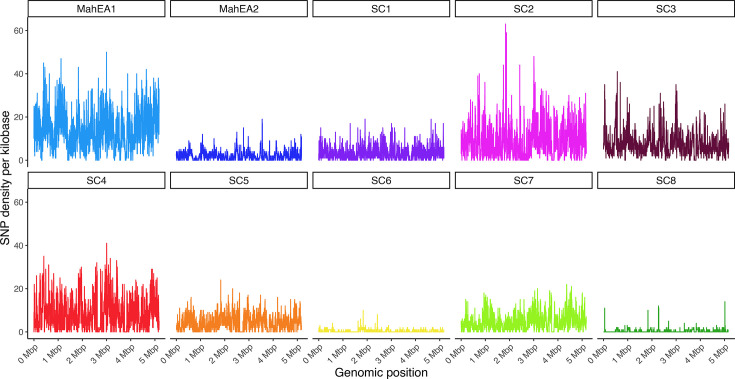 Figure 3
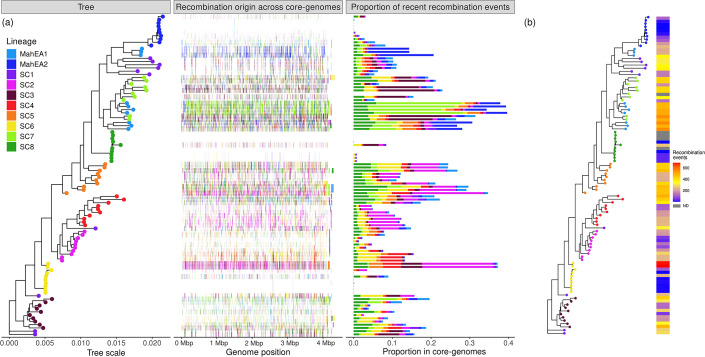 Figure 4
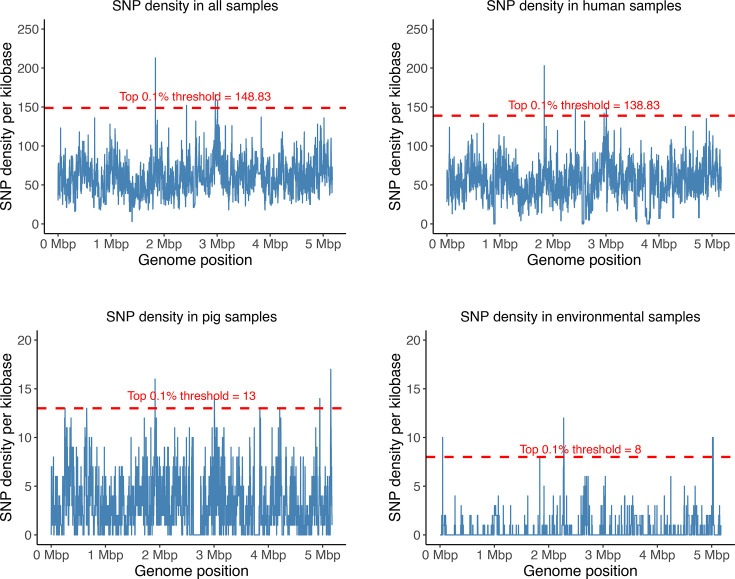 Figure 5
Peer Reviews
No public reviews on file for this paper yet. If you reviewed it on a platform where reviews are public (OpenReview, ICLR, NeurIPS, ICML), you can paste yours below so the community can read it here.
Videos
No videos yet. Explain this paper in a talk, walkthrough, or lecture? Add one.
Taxonomy
TopicsMycobacterium research and diagnosis · Tuberculosis Research and Epidemiology · Evolution and Genetic Dynamics