Reducing Oxygen Stress and Improving Hydrogen Availability Boosts Microbial Electrosynthesis by Clostridium ljungdahlii
Anne Kuchenbuch, Sara Al‐Sbei, Luis F. M. Rosa, Santiago T. Boto, Martin Westermann, Miriam A. Rosenbaum, Falk Harnisch

TL;DR
Scientists improved a process that uses microbes to convert carbon dioxide into useful chemicals by reducing oxygen stress and boosting hydrogen availability.
Contribution
A combinatorial approach using specific cathode and anode materials with controlled current regimes significantly enhances microbial electrosynthesis performance.
Findings
Using a carbon fiber fabric cathode and nitrogen-flushed anodes achieved the highest acetate concentration of 12.44 g L−1.
The maximum acetate production rate reached 0.6 g L−1 d−1, the highest reported for pure culture MES from CO2.
The study shows that strict anaerobic MES has significant room for improvement at larger scales.
Abstract
Microbial electrosynthesis (MES) holds great promise for converting carbon dioxide (CO2) into building blocks of the (bio)chemical industry. Its advancement is hindered by limited process control and an incomplete understanding of the oxygen (O2) stress response of biocatalysts or key engineering parameters like the availability of hydrogen (H2). With Clostridium ljungdahlii as a model acetogen for strict anaerobic MES from CO2, the effect of O2 stress and H2 availability using 1‐L electrobioreactors is showcased, providing high process control and relevance for follow‐up engineering and scaling. Using a combinatorial approach of two cathode materials, three anode types, and various current regimes ranging from −5 to −80 mA, MES performance is boosted by overcoming O2 stress and insufficient H2 distribution at high current. It is demonstrated that a large‐surface‐area carbon fiber…
Genes, proteins, chemicals, diseases, species, mutations and cell lines named across the full text — each resolved to its canonical identifier and authoritative record.
Click any figure to enlarge with its caption.
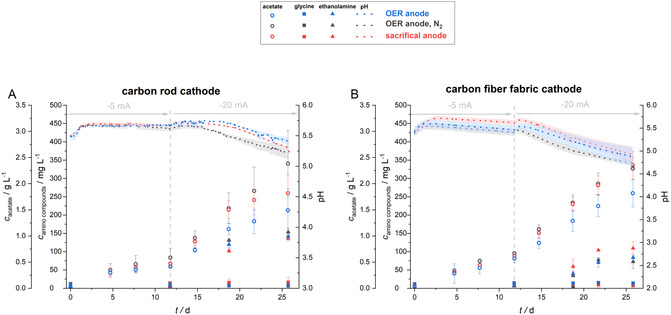 Figure 1
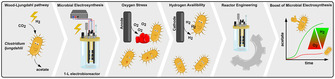 Figure 2
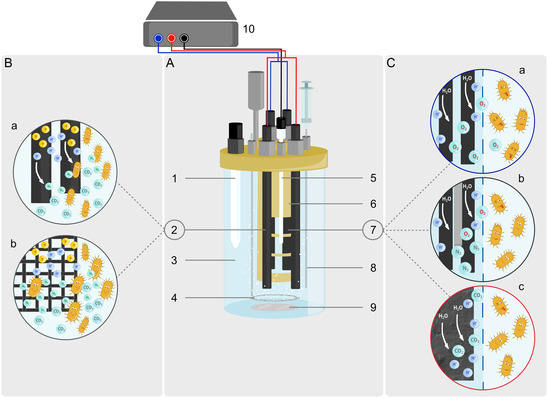 Figure 3
 Figure 4
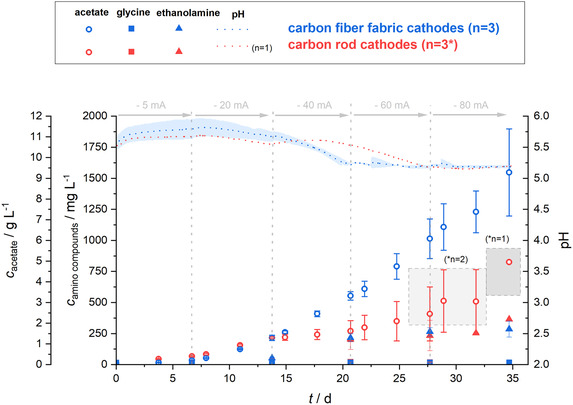 Figure 5
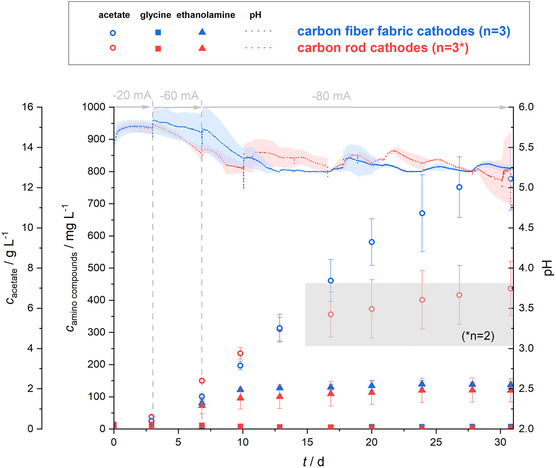 Figure 6
Peer Reviews
No public reviews on file for this paper yet. If you reviewed it on a platform where reviews are public (OpenReview, ICLR, NeurIPS, ICML), you can paste yours below so the community can read it here.
Videos
No videos yet. Explain this paper in a talk, walkthrough, or lecture? Add one.
Taxonomy
TopicsMicrobial Fuel Cells and Bioremediation · CO2 Reduction Techniques and Catalysts · Supercapacitor Materials and Fabrication