Long-term effectiveness and safety of benralizumab in EGPA: a 3-year single-center experience
Federica Davanzo, Luca Iorio, Marta Codirenzi, Eleonora Fiorin, Gabriella Guarnieri, Alessia Achille, Fulvia Chieco Bianchi, Maria Rita Marchi, Andrea Vianello, Andrea Doria, Roberto Padoan

TL;DR
This study shows that benralizumab is effective and safe for treating a severe form of asthma called EGPA over three years.
Contribution
The study provides new evidence on the long-term effectiveness and safety of benralizumab in treating EGPA.
Findings
Benralizumab increased clinical remission rates from 39.4% at 3 months to 65.0% at 36 months.
Corticosteroid use dropped from 90.9% to 15.4%, and eosinophil counts decreased significantly.
Drug retention rates were 81.8% at 1 year and 62.4% at 3 years, with mild adverse events reported.
Abstract
Benralizumab emerged as a promising treatment option for eosinophilic granulomatosis with polyangiitis (EGPA). This study assessed the long-term effectiveness and safety of benralizumab in patients with severe asthma and relapsing-refractory EGPA. This retrospective, single-center study evaluated patients treated with benralizumab (30 mg/8 weeks), followed for up to 36 months. Primary outcome included disease remission (defined as Birmingham Vasculitis Activity Score version 3 = 0 and prednisone dose ≤4 mg/day). Secondary endpoints were corticosteroid tapering, lung function, relapses, treatment failure and drug retention rates. The study included 33 EGPA patients (17 [51.5%] male; median age at benralizumab initiation 56 years [IQR: 47–62]). Before starting benralizumab, most patients were on corticosteroids (90.9%), prior treatments included mepolizumab (24.2%). Benralizumab showed…
Genes, proteins, chemicals, diseases, species, mutations and cell lines named across the full text — each resolved to its canonical identifier and authoritative record.
Click any figure to enlarge with its caption.
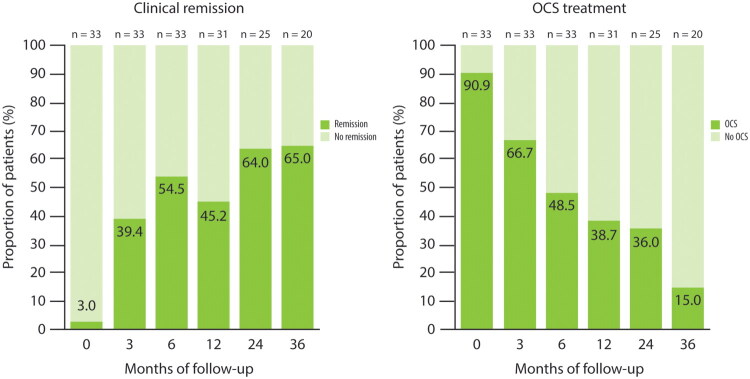 Figure 1
 Figure 2
Peer Reviews
No public reviews on file for this paper yet. If you reviewed it on a platform where reviews are public (OpenReview, ICLR, NeurIPS, ICML), you can paste yours below so the community can read it here.
Videos
No videos yet. Explain this paper in a talk, walkthrough, or lecture? Add one.
Taxonomy
TopicsAdrenal Hormones and Disorders · Systemic Lupus Erythematosus Research · Urticaria and Related Conditions