The selective culture and enrichment of major rumen bacteria on three distinct anaerobic culture media
Alice M. Buckner, Laura Glendinning, Juan M. Palma Hidalgo, Jolanda M. van Munster, Mark Stevens, Mick Watson, C. Jamie Newbold

TL;DR
This study shows how different culture media can selectively grow specific rumen microbes, which is important for improving digestion efficiency and reducing methane emissions in ruminants.
Contribution
The research identifies distinct microbial enrichment patterns on three media, offering insights into targeted microbial cultivation.
Findings
Three media (Med10, Med2, MedTC) enriched distinct microbial communities from rumen fluid.
Cultured microbes differed significantly in composition from the original rumen fluid microbes.
Selective media can help isolate and study key rumen microbes for improved digestion and methane reduction.
Abstract
Ruminants play an important part in global food security, but also emit methane, which contributes to global warming. Rumen microbes strongly influence the energy retention efficiency from the host’s plant-based diet and produce methane as a by-product. While thousands of novel microbial genomes have been assembled from metagenomic sequence data, their culturability is ill-defined. Here, different media (Med10, Med2, and MedTC) were used to isolate co-cultures of microbes from rumen fluid. Thirty-four OTUs were identified belonging to the phyla Bacillota (75.28 ± 6.34%), Bacteroidota (19.99 ± 4.85%), Pseudomonadota (2.46 ± 2.01%), and Actinomycetota (2.09 ± 1.07%). The most abundant genera were Selenomonas (28.08 ± 11.71%), Streptococcus (22.67 ± 6.06%), Prevotella (18.71 ± 4.02%), and unclassified Lachnospiraceae (11.50 ± 2.54%), and 31 significantly enriched on at least one medium,…
Genes, proteins, chemicals, diseases, species, mutations and cell lines named across the full text — each resolved to its canonical identifier and authoritative record.
Click any figure to enlarge with its caption.
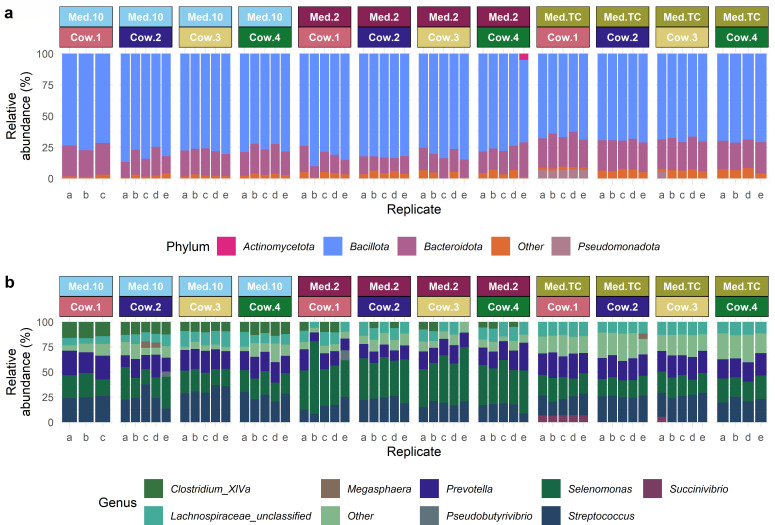 Figure 1
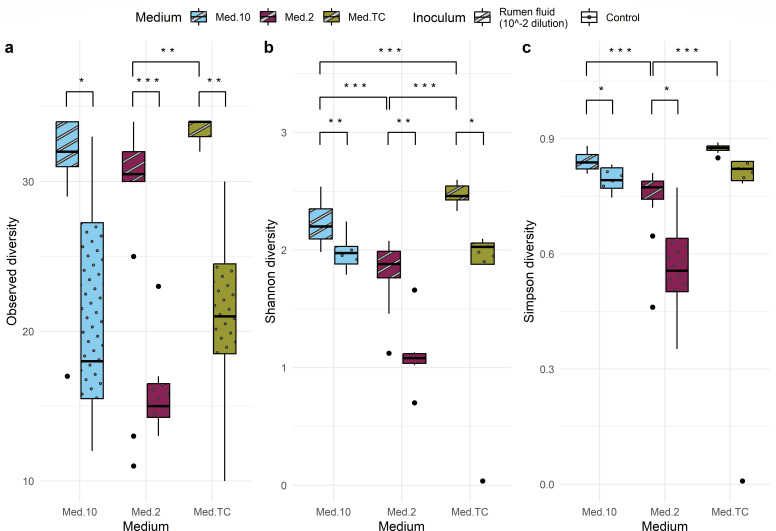 Figure 2
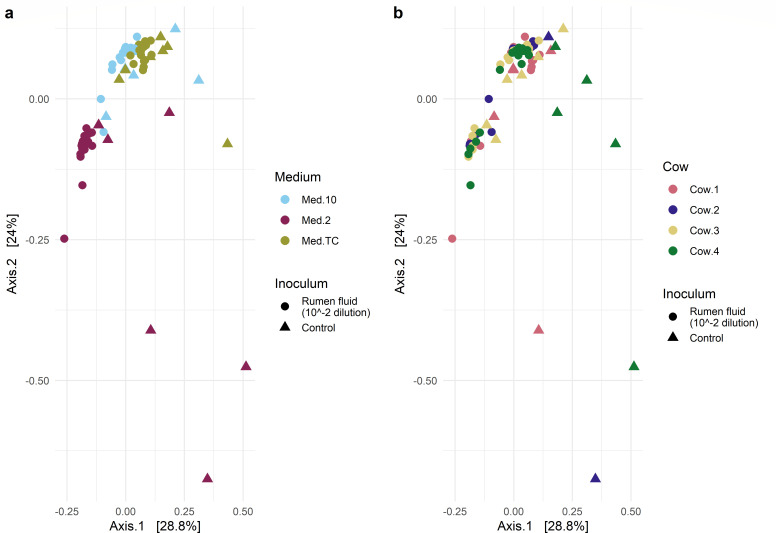 Figure 3
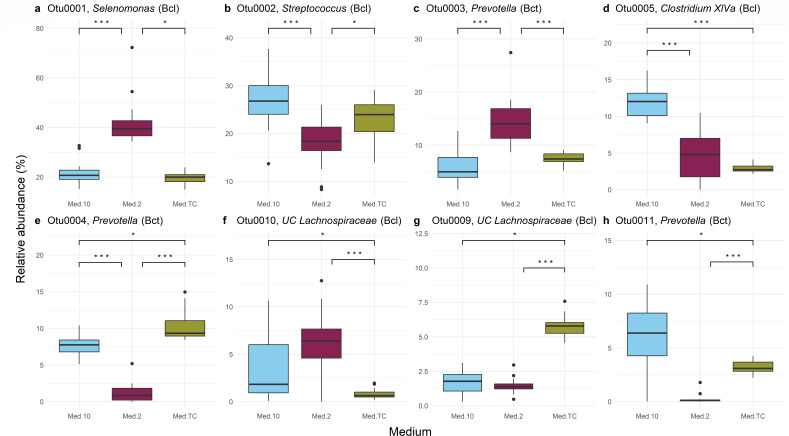 Figure 4
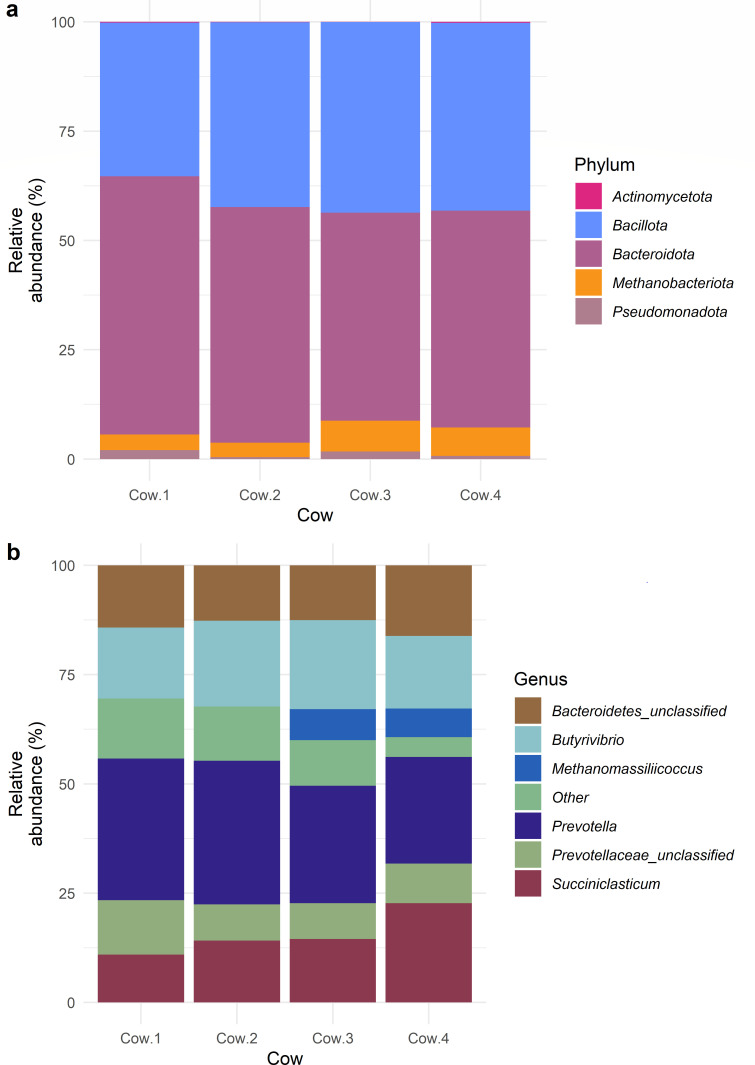 Figure 5
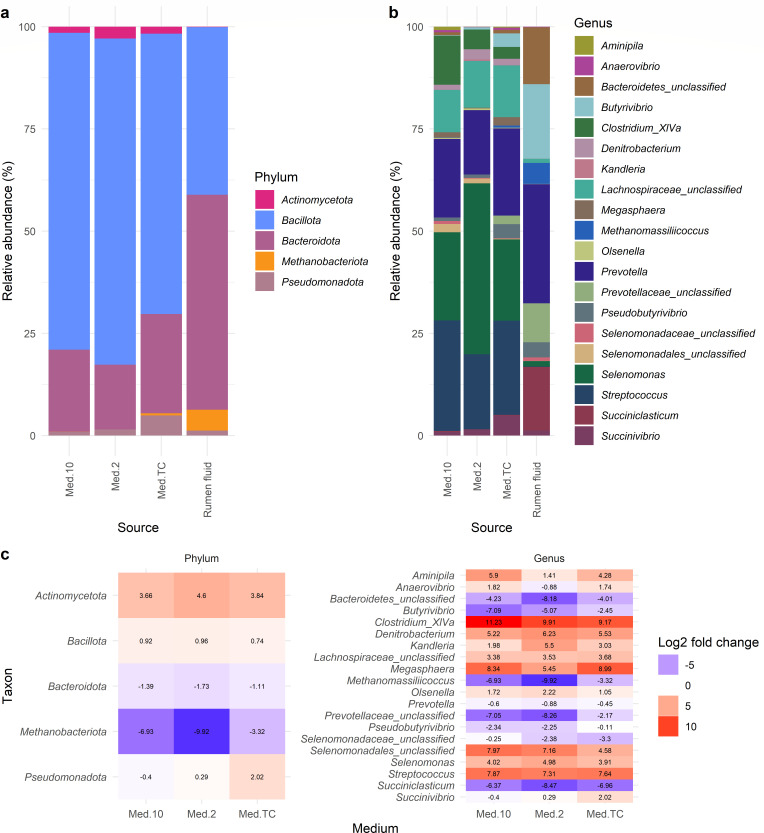 Figure 6
Peer Reviews
No public reviews on file for this paper yet. If you reviewed it on a platform where reviews are public (OpenReview, ICLR, NeurIPS, ICML), you can paste yours below so the community can read it here.
Videos
No videos yet. Explain this paper in a talk, walkthrough, or lecture? Add one.
Taxonomy
TopicsRuminant Nutrition and Digestive Physiology · Gut microbiota and health · Genomics and Phylogenetic Studies