Transcription factor RonA-driven GlcNAc catabolism is essential for growth, cell wall integrity, and pathogenicity in Aspergillus fumigatus
Xiufang Gong, Xinwei Ge, Qijian Qin, Bin Wang, Linqi Wang, Cheng Jin, Wenxia Fang

TL;DR
The study reveals that the transcription factor RonA is crucial for breaking down GlcNAc, maintaining cell wall structure, and causing disease in the fungus Aspergillus fumigatus.
Contribution
The study identifies RonA as a key regulator of GlcNAc catabolism and cell wall integrity in A. fumigatus, offering new insights for antifungal drug development.
Findings
ΔronA mutants show severe growth defects, impaired cell wall integrity, and reduced virulence in a Galleria mellonella model.
RonA regulates GlcNAc catabolism and conidial cell wall architecture, affecting host-pathogen interactions.
ΔronA conidia exhibit increased surface protein exposure and reduced melanin, leading to enhanced immune clearance.
Abstract
Aspergillus fumigatus, a saprophytic mold, demonstrates metabolic versatility by utilizing diverse carbon sources to sustain its growth and pathogenic potential. While N-acetylglucosamine (GlcNAc), an ubiquitous amino sugar, serves as a vital nutrient, its catabolic pathway in A. fumigatus remains unexplored. Here, we identified core components of this pathway, including GlcNAc-6-phosphate deacetylase (DacA), glucosamine-6-phosphate deaminase (NagA), and the transcription factor RonA. The expressions of dacA, nagA, and ronA were strongly induced when GlcNAc was the sole carbon source. Both ΔdacA and ΔnagA mutants exhibited abolished growth under GlcNAc condition, whereas the ΔronA mutant exhibited pleiotropic defects, including severe growth defects, impaired polarity, delayed development, reduced cell wall integrity, and decreased virulence in a Galleria mellonella infection model. The…
Genes, proteins, chemicals, diseases, species, mutations and cell lines named across the full text — each resolved to its canonical identifier and authoritative record.
Click any figure to enlarge with its caption.
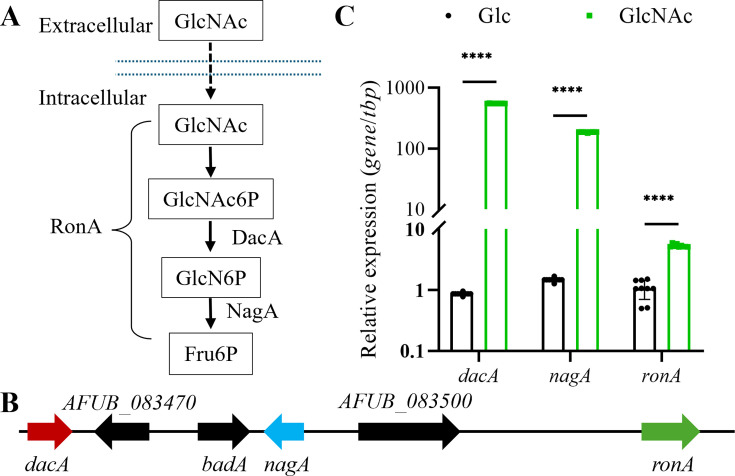 Figure 1
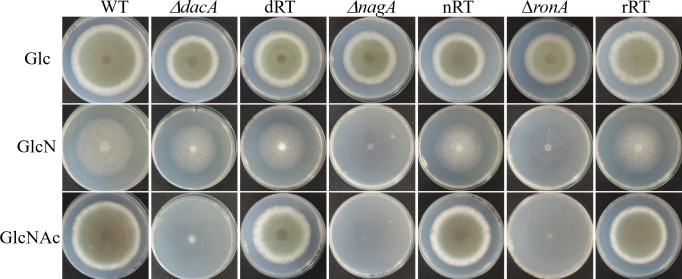 Figure 2
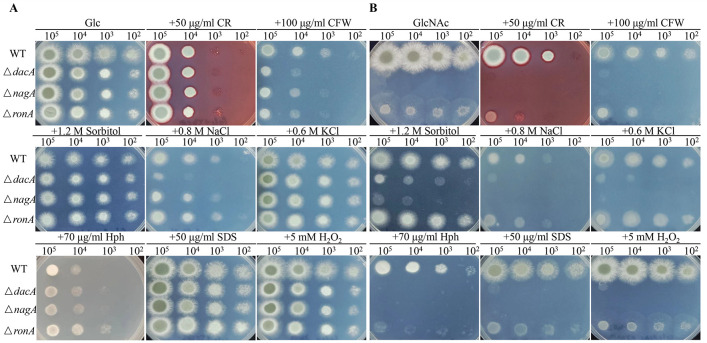 Figure 3
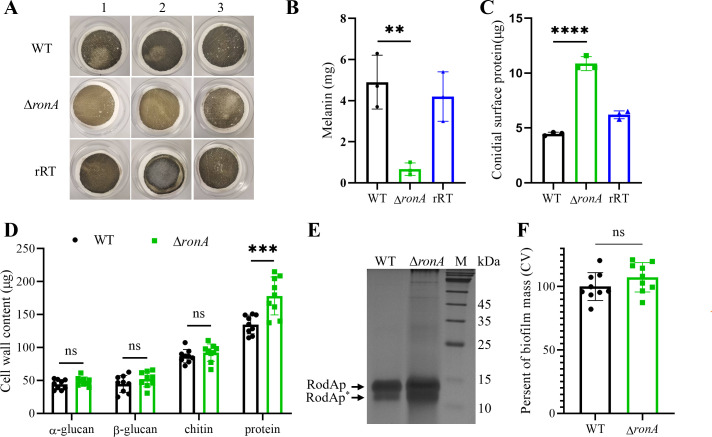 Figure 4
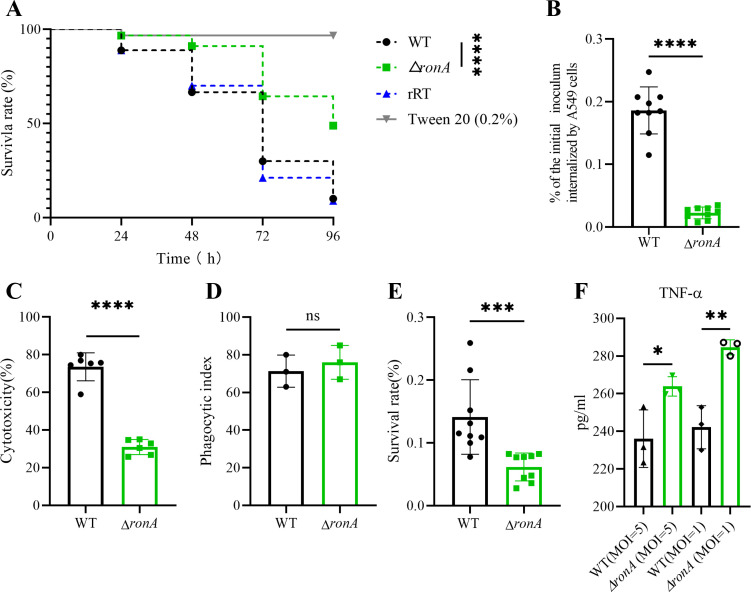 Figure 5
Peer Reviews
No public reviews on file for this paper yet. If you reviewed it on a platform where reviews are public (OpenReview, ICLR, NeurIPS, ICML), you can paste yours below so the community can read it here.
Videos
No videos yet. Explain this paper in a talk, walkthrough, or lecture? Add one.
Taxonomy
TopicsAntifungal resistance and susceptibility · Fungal Infections and Studies · Polysaccharides and Plant Cell Walls