Caenorhabditis elegans AWC neuron-mediated chemosensation negatively modulates dormancy during Salmonella fepB mutant infection
Swarupa Mallick, Jasmin Pradhan, Chamjailiu Daimai, Vidya Devi Negi

TL;DR
This study shows how C. elegans worms detect a Salmonella mutant strain using their olfactory neurons, which helps them adjust behavior to survive infection.
Contribution
The study identifies AWC neurons as key in sensing a ∆fepB Salmonella strain and mediating behavioral plasticity in C. elegans.
Findings
AWC neurons in C. elegans are involved in sensing the ∆fepB Salmonella strain and mediating plasticity.
Prolonged exposure to ∆fepB Salmonella increases lawn occupancy and associative learning in nematodes.
Chemosensory genes like odr-7, ceh-36, daf-11, tax-2, and tax-4 are upregulated after ∆fepB infection.
Abstract
In our earlier work, we demonstrated that continuous 8-day exposure of Caenorhabditis elegans to a Salmonella enterica serovar Typhimurium fepB mutant strain negatively regulates dauer larva development in the second generation of the population. Our current study aims to understand how specific chemosensory neurons in C. elegans recognize the ∆fepB Salmonella Typhimurium strain and undergo plasticity in response to infection. We observed the olfactory preference of C. elegans toward the pathogenic wild type Salmonella (WT-STM). However, prolonged exposure showed enhanced lawn occupancy of nematodes in the ∆fepB strain with better associative learning response than the WT-STM counterpart. We also observed upregulation of chemosensory genes odr-7, ceh-36, daf-11, tax-2, and tax-4 at 24 hours post ∆fepB infection. However, continuous exposure to defective olfactory neuron mutants of the…
Genes, proteins, chemicals, diseases, species, mutations and cell lines named across the full text — each resolved to its canonical identifier and authoritative record.
Click any figure to enlarge with its caption.
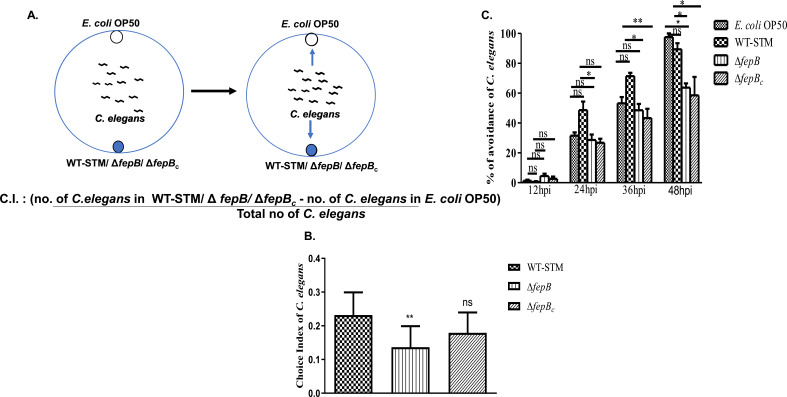 Figure 1
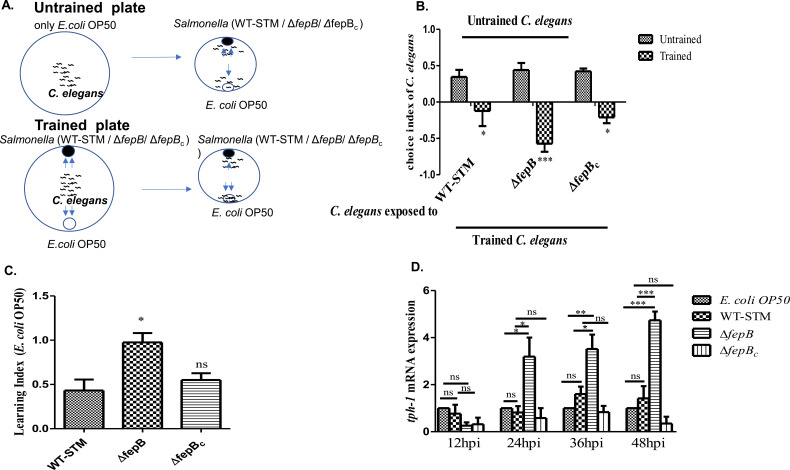 Figure 2
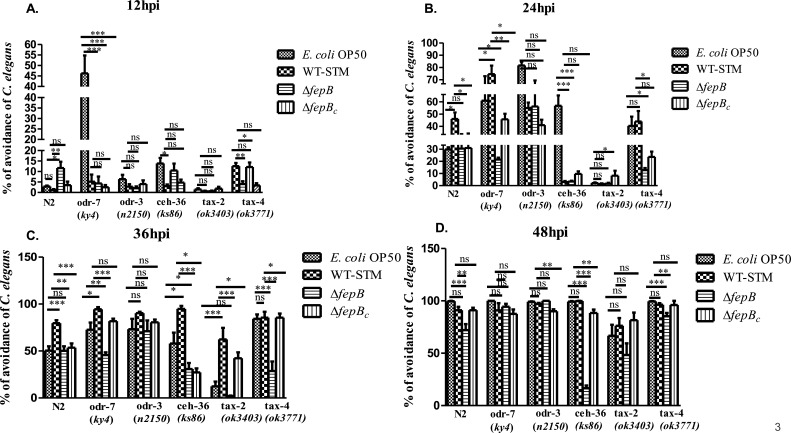 Figure 3
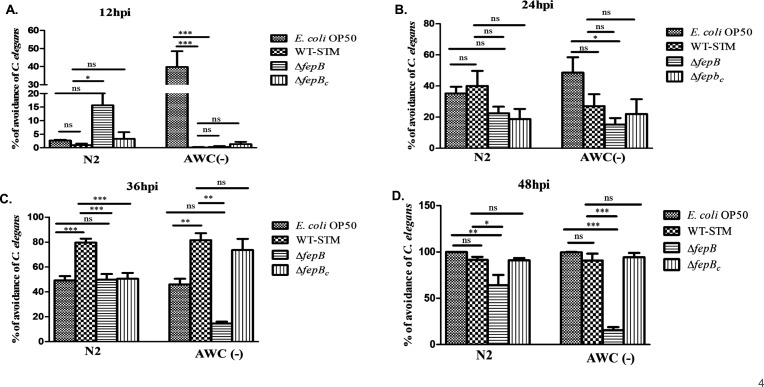 Figure 4
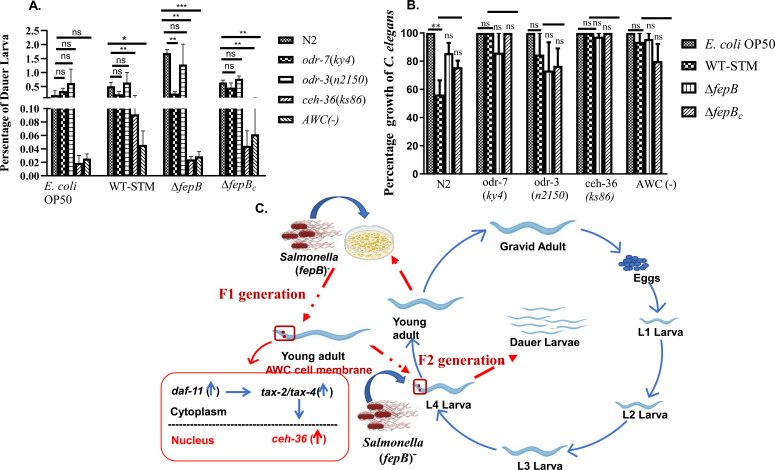 Figure 5
 Figure 6
 Figure 7
 Figure 8
Peer Reviews
No public reviews on file for this paper yet. If you reviewed it on a platform where reviews are public (OpenReview, ICLR, NeurIPS, ICML), you can paste yours below so the community can read it here.
Videos
No videos yet. Explain this paper in a talk, walkthrough, or lecture? Add one.
Taxonomy
TopicsGenetics, Aging, and Longevity in Model Organisms · Circadian rhythm and melatonin · Insect Utilization and Effects