Pangenome analysis of Lactobacillus mulieris strains reveals distinct subspecies clusters with defined ecological adaptations
Jake Adolf V. Montecillo, Heon Jong Yoo, Yoo-Young Lee, Chul Min Park, Angela Cho, Hyunsu Lee, Hee Yeon Yoon, Jong Mi Kim, Nan Young Lee, Sun-Hyun Park, Nora Jee-Young Park, Hyung Soo Han, Incheol Seo, Gun Oh Chong

TL;DR
This study explores the genetic diversity of Lactobacillus mulieris and identifies three distinct subspecies clusters, each adapted to specific human body environments.
Contribution
The study introduces a classification of L. mulieris into three clades with unique ecological adaptations based on pangenome analysis.
Findings
Clade 1 shows generalist traits with adaptive versatility across multiple environments.
Clade 2 is adapted to the urinary tract with genes for nutrient acquisition and osmotic regulation.
Clade 3 is specialized for the vaginal environment with genes for glycogen metabolism and capsular polysaccharide biosynthesis.
Abstract
Lactobacillus mulieris is a recently described species, reportedly isolated from human urine, vagina, and gut. Previous genomic studies of L. mulieris highlighted significant genetic diversity among its strains. To gain a deeper understanding of this genomic diversity, we conducted a comprehensive genomic comparison of 70 L. mulieris strains from diverse sources. Phylogenomic and genome relatedness analysis identified three distinct clades, each representing a potential subspecies cluster. Pangenome analysis revealed distinct gene clusters shaping the functional characteristics and unique ecological adaptations of each clade. Clade 1 demonstrated a generalist lifestyle, with strains isolated from diverse sources and enriched in serine/threonine protein kinases, suggesting adaptive versatility. Clade 2, predominantly composed of urinary isolates, displayed enrichment in genes…
Genes, proteins, chemicals, diseases, species, mutations and cell lines named across the full text — each resolved to its canonical identifier and authoritative record.
Click any figure to enlarge with its caption.
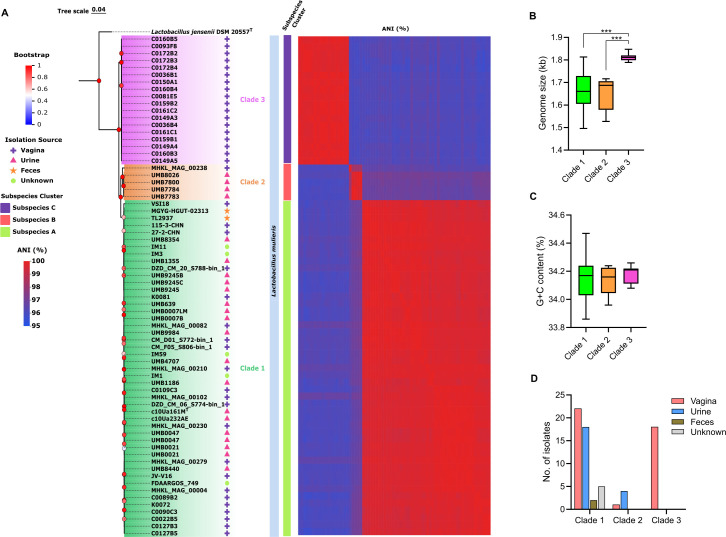 Figure 1
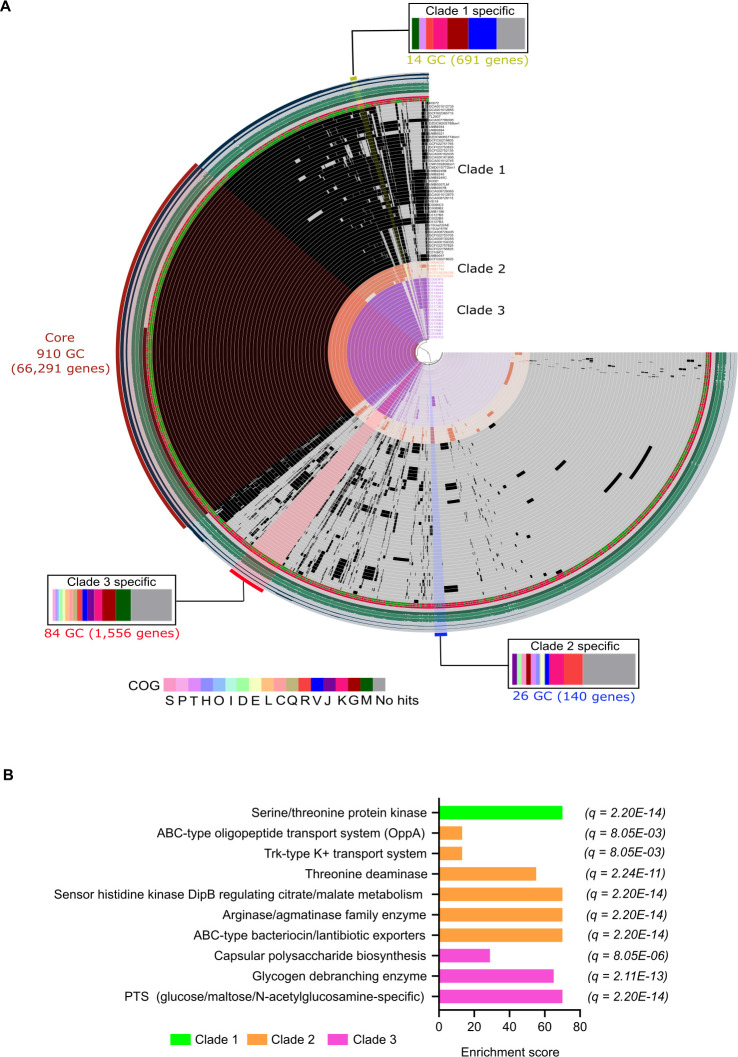 Figure 2
Peer Reviews
No public reviews on file for this paper yet. If you reviewed it on a platform where reviews are public (OpenReview, ICLR, NeurIPS, ICML), you can paste yours below so the community can read it here.
Videos
No videos yet. Explain this paper in a talk, walkthrough, or lecture? Add one.
Taxonomy
TopicsProbiotics and Fermented Foods · Gut microbiota and health · Reproductive tract infections research