Further delineation of the etiology of liver abscesses in cattle and indication of hindgut as a potential source of pathogens
Harith M. Salih, Alyssa Deters, Raghavendra G. Amachawadi, Haiyan Wang, Taghreed Mahmood, Xiaorong Shi, Mina Abbasi, Leigh Ann George, Ty E. Lawrence, T. G. Nagaraja

TL;DR
This study shows that the hindgut, in addition to the rumen, may be a source of bacteria causing liver abscesses in cattle.
Contribution
The study identifies the hindgut as a potential new source of liver abscess pathogens in cattle.
Findings
Fusobacterium necrophorum subsp. necrophorum was the most dominant species in liver abscesses.
Colonic tissues yielded more subsp. necrophorum isolates than ruminal tissues.
Escherichia coli was the second most prevalent species but at low concentrations.
Abstract
Liver abscesses (LA) in feedlot cattle are polymicrobial infections, initiated primarily by the translocations of the two subspecies of Fusobacterium necrophorum, necrophorum and funduliforme, and secondarily by Trueperella pyogenes and Salmonella enterica from the rumen into the liver via portal blood. The hindgut has not been investigated as a potential source of LA pathogens. Our objectives were to analyze LA and matched ruminal and colonic epithelial tissues (n = 96), collected at a commercial beef processor immediately after evisceration, to determine culture-based prevalence of pathogens, specifically, Escherichia coli, Klebsiella pneumoniae, Pseudomonas aeruginosa, and Bacteroides fragilis, which have not been targeted before, in addition to F. necrophorum, T. pyogenes, and S. enterica, and quantitative PCR-based prevalence and concentrations of the F. necrophorum subspecies. The…
Genes, proteins, chemicals, diseases, species, mutations and cell lines named across the full text — each resolved to its canonical identifier and authoritative record.
Click any figure to enlarge with its caption.
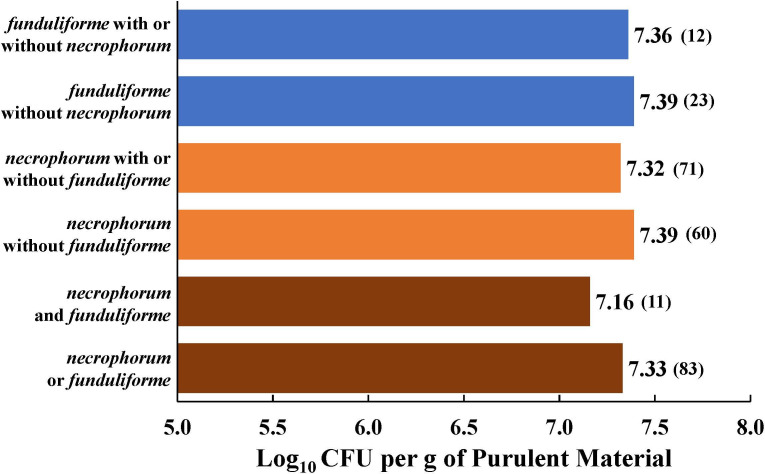 Figure 1
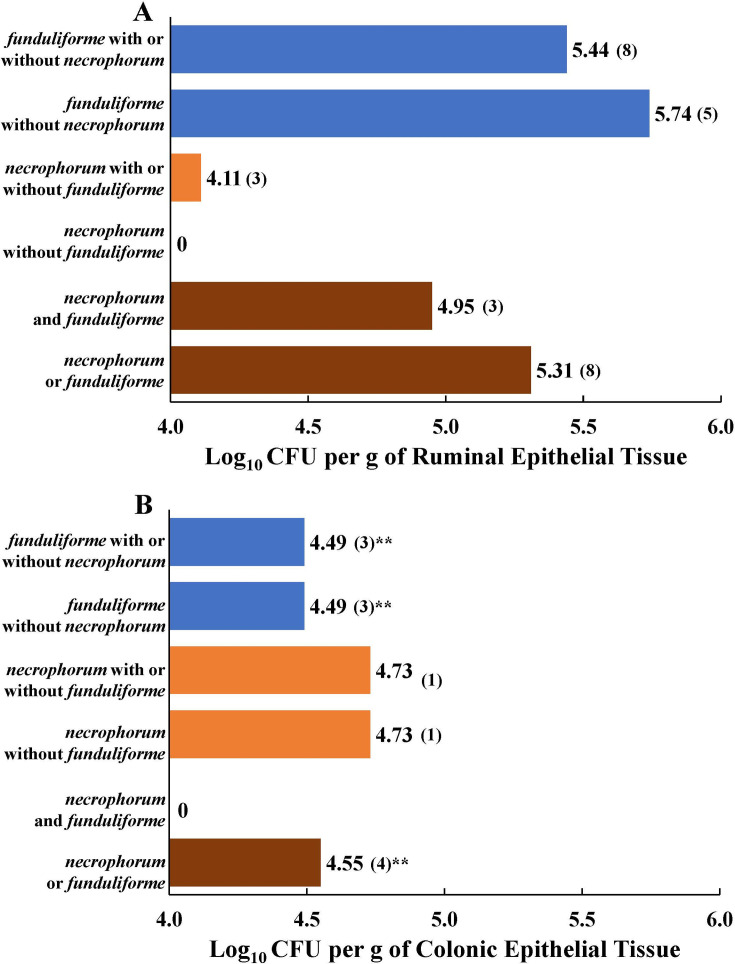 Figure 2
Peer Reviews
No public reviews on file for this paper yet. If you reviewed it on a platform where reviews are public (OpenReview, ICLR, NeurIPS, ICML), you can paste yours below so the community can read it here.
Videos
No videos yet. Explain this paper in a talk, walkthrough, or lecture? Add one.
Taxonomy
TopicsStreptococcal Infections and Treatments · Otolaryngology and Infectious Diseases · Clostridium difficile and Clostridium perfringens research