Population-based concordance of Chlamydia trachomatis genotypes between ocular and urogenital samples in Nauru
Kym Lowry, Sue-Chen Apadinuwe, Mitchell Starr, Susan Star, Kathleen D. Lynch, Anthony W. Solomon, Philip Cunningham, Stephen Lambert, David Whiley, John Kaldor, Susana Vaz Nery

TL;DR
This study found that in Nauru, eye infections in children and genital infections in adults are caused by different strains of Chlamydia trachomatis, with no evidence of cross-transmission.
Contribution
The study is the first to investigate genotype concordance between ocular and urogenital Chlamydia infections in a high-prevalence setting.
Findings
Only genotype C was found in children's eye samples, indicating ocular-specific transmission.
Six urogenital genotypes were detected in adult urine samples, with genotype D being the most common.
There was no evidence of crossover transmission between ocular and urogenital strains at the population level.
Abstract
Chlamydia trachomatis causes sexually transmitted urogenital infections, as well as ocular infections, the latter mostly spread between children and responsible for the blinding disease trachoma. The strains causing these two types of infection are generally distinct, but there is some evidence that urogenital strains can infect the eye and cause conjunctivitis, possibly indicating transmission on fingers of adults or adolescents to children. In what we believe is the first study of its kind in a setting of high prevalence of both urogenital and ocular infection, we characterized C. trachomatis strains from 107 ocular and 95 urine samples collected through cross-sectional population surveys in Nauru, employing household-based sampling. Ocular samples were collected during a national baseline prevalence survey in 2019 in children aged 1–9 years. Urine samples were collected from adults…
Genes, proteins, chemicals, diseases, species, mutations and cell lines named across the full text — each resolved to its canonical identifier and authoritative record.
Click any figure to enlarge with its caption.
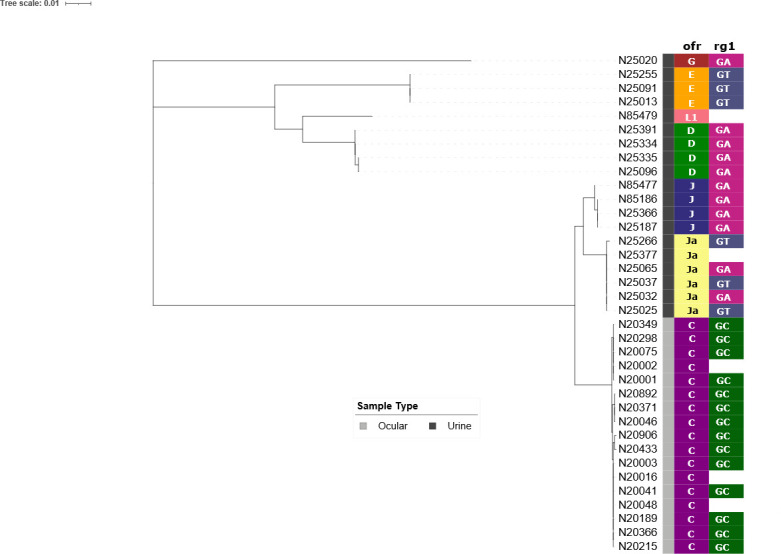 Figure 1
Peer Reviews
No public reviews on file for this paper yet. If you reviewed it on a platform where reviews are public (OpenReview, ICLR, NeurIPS, ICML), you can paste yours below so the community can read it here.
Videos
No videos yet. Explain this paper in a talk, walkthrough, or lecture? Add one.
Taxonomy
TopicsReproductive tract infections research · Syphilis Diagnosis and Treatment · Urinary Tract Infections Management