Decoding anaerobes: a comprehensive evaluation of MALDI-TOF Sirius and VITEK MS PRIME in clinical settings
Maria Florencia Rocca, Paula Etcheverry, Gastón D´Angiolo, Monica Prieto

TL;DR
This study compares two MALDI-TOF mass spectrometry platforms for identifying anaerobic bacteria, showing they offer fast, accurate, and cost-effective results for clinical use.
Contribution
A direct comparison of Bruker SIRIUS and VITEK MS PRIME platforms for anaerobe identification using FDA-approved clinical strains.
Findings
MALDI-TOF MS achieved over 97% genus-level identification accuracy for anaerobic bacteria.
Both platforms showed 100% precision but varied in overall performance agreement at 73.3%.
The study highlights practical insights for selecting MALDI-TOF systems in clinical labs.
Abstract
The timely identification of anaerobic bacteria at the genus and species levels is critical for managing infections and guiding antimicrobial therapy. Matrix-assisted laser desorption-ionization time-of-flight (MALDI-TOF) mass spectrometry (MS) has emerged as a powerful tool for the identification of anaerobic bacteria, overcoming challenges associated with their special culture requirements and low growth rates. This technique has proven to be both reliable and efficient, providing accurate identification with minimal bacterial biomass. The application of MALDI-TOF MS in clinical settings has significantly improved the identification of anaerobic bacteria, facilitating appropriate treatment decisions and enhancing patient outcomes with minor costs. This study evaluates the performance of two MALDI-TOF mass spectrometry platforms: SIRIUS (Bruker Daltonics) and VITEK MS PRIME…
Genes, proteins, chemicals, diseases, species, mutations and cell lines named across the full text — each resolved to its canonical identifier and authoritative record.
Click any figure to enlarge with its caption.
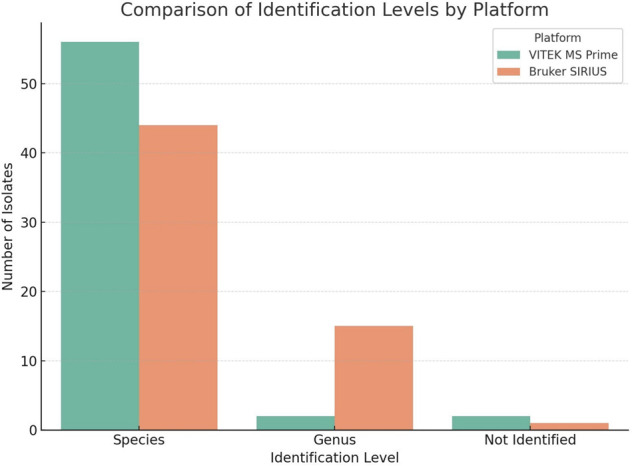 Fig 1
Fig 1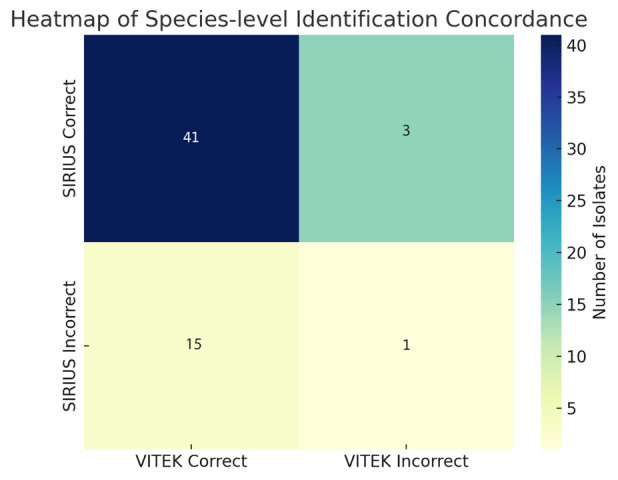 Fig 2
Fig 2| Anaerobes evaluated | Number of isolates tested |
|---|---|
| 4 | |
| 1 | |
| 9 | |
|
| 2 |
| 2 | |
| 14 | |
|
| 2 |
|
| 1 |
|
| 1 |
| 3 | |
| 16 | |
| 5 | |
| Total | 60 |
| MALDI-TOF MS platform | Accuracy | Precision | Sensitivity | Overall agreement |
|---|---|---|---|---|
| VMSP | 96.7% | 100% | 96.7% | 73.3% |
| SIRIUS | 98.3% | 100% | 98.3% |
Peer Reviews
No public reviews on file for this paper yet. If you reviewed it on a platform where reviews are public (OpenReview, ICLR, NeurIPS, ICML), you can paste yours below so the community can read it here.
Videos
No videos yet. Explain this paper in a talk, walkthrough, or lecture? Add one.
Taxonomy
TopicsBacterial Identification and Susceptibility Testing · Streptococcal Infections and Treatments · Infective Endocarditis Diagnosis and Management
INTRODUCTION
Anaerobic bacteria play a significant role in polymicrobial infections, particularly in deep tissue abscesses, bacteremia, and intra-abdominal infections. Rapid identification of these pathogens to the genus and species level is essential for effective management, as anaerobes are often associated with delayed diagnoses due to their challenging growth requirements and identification limitations using conventional methods. Matrix-assisted laser desorption-ionization time-of-flight (MALDI-TOF) mass spectrometry (MS) has revolutionized microbiological diagnostics, offering high-throughput and precise identification capabilities (1). Recent comparative studies of the latest MALDI-TOF MS systems, such as the VITEK MS PRIME (VMSP) and Bruker Biotyper Sirius, demonstrate their robust performance in clinical settings, with both platforms achieving high accuracy for anaerobic and fastidious bacteria (2, 3). These advancements underscore the reliability of MALDI-TOF MS as a frontline diagnostic tool.
In clinical settings, MALDI-TOF MS has been used to identify anaerobic bloodstream infections, with Bacteroides spp. and Clostridium spp. being the most commonly isolated organisms. The technique has helped identify risk factors for in-hospital mortality, such as age and the presence of solid tumors (4). The identification of anaerobes in clinical samples, such as pus aspirates and tissue samples, has been significant, with common isolates including Bacteroides fragilis and Prevotella spp. This has implications for evidence-based medicine and antibiotic therapy (5). Specific cases, such as the identification of Anaerobiospirillum succiniciproducens, highlight the precision of MALDI-TOF MS. This organism was identified with a score of 2.10, confirmed by 16S rRNA sequencing, demonstrating the method’s reliability in complex cases (6).
While MALDI-TOF MS has proven effective, it is important to note that a small percentage of isolates (2%) may still require molecular methods for final identification (7). This underscores the need for complementary techniques in certain scenarios to ensure comprehensive microbial identification. This study focuses on a comparative evaluation of two MALDI-TOF platforms, the SIRIUS by Bruker Daltonics and the VITEK MS PRIME by bioMérieux, using a panel of 60 isolates of anaerobic strains. The aim is to assess their ability to provide accurate and rapid identification, with a particular emphasis on the clinical relevance of immediate genus- and species-level confirmation, using the latest databases, building upon previous performance studies, including those by our group (8).
MATERIALS AND METHODS
Strain selection
Anaerobic species from our reference culture collection included in the k510 Food and Drug Administration validation for IVD databases (https://www.accessdata.fda.gov/scripts/cdrh/cfdocs/cfpmn/pmn.cfm?ID=K163536; https://www.accessdata.fda.gov/scripts/cdrh/cfdocs/cfpmn/pmn.cfm?id=K212461). (9, 10). The sources included deep tissue biopsies, abscesses, and sterile site fluids. All isolates were obtained from monomicrobial cultures.
A total of 60 anaerobic strains were selected, representing genera and species of clinical relevance. These included Bacteroides (4), Bifidobacterium (1), Clostridium (9), Finegoldia (2), Fusobacterium (2), Lactobacillus (14), Peptoniphilus (2), Peptostreptococcus (1), Porphyromonas (1), Prevotella (3), Propionibacterium (16), and Veillonella (5) as outlined in Table 1.
TABLE 1: Clinically relevant microorganisms evaluated in this study and number of isolates tested in duplicate each day, three different days
Although Lactobacillus species are not considered strict anaerobes, their inclusion in this performance evaluation was justified by their frequent recovery from anaerobic culture conditions and their clinical relevance in polymicrobial infections involving anaerobic flora. In routine diagnostic workflows, particularly when using enriched anaerobic media, these facultative or aerotolerant anaerobes often grow alongside strict anaerobes, necessitating their reliable identification. (11). Therefore, their presence in the testing panel reflects real-world laboratory conditions and contributes to a more comprehensive assessment of MALDI-TOF MS platform performance in identifying clinically relevant anaerobic and microaerophilic bacteria.
Sample preparation
Strains were cultured under anaerobic conditions following standard protocols: isolates were plated on 5% sheep blood agar plates and incubated for 48 hours under anaerobic conditions at 37°C. The purity of the culture was verified, and the samples were then analyzed using MALDI-TOF MS. According to the national network guidelines, developed after the verification of the identification through several years by reference laboratories in Argentina, all microorganisms were identified using the in situ extraction method, which consists of adding 1 µL of formic acid prior to sealing with the commercial hidroxicianocinamicacid (HCCA) matrix. Analyses were performed by duplicate (two spots) on both MALDI-TOF MS instruments: SIRIUS PRIME and VITEK MS PRIME. The assay was conducted by the same operator over 3 consecutive days to assess reproducibility and consistency of results. (12)The entire procedure was developed according to the guide mentioned available at http://sgc.anlis.gob.ar/handle/123456789/2632.
Instrumentation and databases
On SIRIUS equipment (Bruker Daltonics), the identification was performed using the MBT Compass IVD v.13 database. On VMSP (bioMérieux), the identification was conducted using the Knowledge Base version 3.3.
For identification, the recommendations of each manufacturer were considered as follows: score value ≥2.00 for the species level and ≥1.7 for the genus. Scores values under 1.69 were considered no reliable identification on the SIRIUS platform. When identification was carried out using the VMSP system, values of confidence between 60.0 and 99.9% indicated reliable species identification. Low discrimination occurs when there is more than one significant organism/group, but no more than 4. When there is similarity with more than four organisms or a coincidence is not found, it is considered as No Identification.
To calculate the overall percentage agreement, we considered how many isolates were identified the same (either at the species or genus level) by both platforms. Then, discrepant results, which occurred only with some Lactobacillus species/groups, were resolved using 16S rRNA gene sequencing according to CLSI standards for this group. (5)Sequencing and amplification of the 16S rRNA gene were carried out using the primers corresponding to the position 8-27F (5´-AGAGTTTGATYMTGGCTCAG-3´) and 1492R (5´-ACCTTGTTACGACTT-3´) of the 16S rRNA gene of Escherichia coli, as described previously (13). PCR products were sequenced using the BigDye Terminator v.3.1 Cycle Sequencing Kit Equipment (Applied Biosystems) and analyzed in the ABI 377 Genetic Analyzer (PE Applied Biosystems). The sequences obtained were compared with standard sequences deposited in the NCBI GenBank (National Center for Biotechnology Information; https://www.ncbi.nlm.nih.gov/genbank/), using the BLAST v.2.0 software (Blast Internet Services, Pittsboro, NC, USA) and interpreted according to CLSI standards.
Statistical comparison of species-level identification performance
To assess whether the observed difference in species-level identification performance between the two MALDI-TOF MS platforms was statistically significant, McNemar’s test was applied to paired categorical data. A 2 × 2 contingency table was constructed based on the identification outcomes of the 60 tested isolates, comparing the number of correct species-level identifications by each platform.
Then, performance metrics such as identification rates at both the genus and species levels for each platform were evaluated.
RESULTS
Sixty isolates were evaluated to determine the accuracy, precision, and sensitivity of the VITEK MS PRIME and SIRIUS platforms. The detailed results are described in the supplemental material, then the metrics summary table, including accuracy at the genus and species level where applicable for two MALDI-TOF MS platforms evaluated and their updated databases, is presented in Table 2.
TABLE 2: Metrics summary table for two MALDI-TOF MS platforms evaluated and their updated databases
The overall agreement between both platforms was 73.3% (44 isolates). Specifically, agreement at the species level was achieved for 41 isolates, at the genus level for 2 isolates, and 1 isolate remained unidentified by either platform. This results in a genus-level agreement in 43 out of 60 cases (71.7%) and a species-level agreement (68.3%) (Tables S2 and S3).
Both platforms demonstrated very high precision, with no false positives. Bruker SIRIUS showed slightly higher accuracy, correctly identifying one additional isolate at the genus level, but VITEK MS PRIME provided more species-level identifications, which can be clinically valuable in specific cases, such as Peptoniphilus asaccharolyticus. While the SIRIUS system identified the microorganism only to the genus level (Peptoniphilus spp.), the VITEK MS PRIME system provided a definitive species-level identification. This distinction is crucial, as different species within the genus can exhibit varying virulence and antimicrobial susceptibility profiles. For instance, P. asaccharolyticus has been implicated in polymicrobial infections, such as bone and joint infections, and may play a more active pathogenic role than previously recognized (14). Moreover, antimicrobial susceptibility studies have shown that while P. asaccharolyticus is generally susceptible to agents like imipenem and metronidazole, resistance to clindamycin and levofloxacin has been observed in certain strains (15).
Therefore, accurate species-level identification, as achieved by VITEK MS PRIME, is essential for guiding effective antimicrobial therapy and improving patient outcomes (16).
In our study, the SIRIUS system successfully identified Peptostreptococcus anaerobius at the genus level, whereas the VITEK MS PRIME system failed to identify it in any instance, despite its presence in the database. This discrepancy underscores the variability in performance among MALDI-TOF MS platforms, particularly concerning anaerobic bacteria. This highlights the importance of continuously updating and expanding MALDI-TOF MS databases to enhance the identification accuracy of clinically significant anaerobes (17). Graphical representation of the performance: to complement the statistical analysis, three graphical visualizations were generated to illustrate the performance and concordance between the VITEK MS PRIME and SIRIUS platforms.
Of the 60 clinical isolates evaluated, both platforms correctly identified 41 at the species level. VITEK MS PRIME alone correctly identified 15 isolates that Bruker SIRIUS could not, whereas SIRIUS identified 3 isolates that VITEK failed to classify at the species level. Only one isolate remained unidentified by both systems.
Figure 1 compares the distribution of identifications made by each platform. VITEK MS PRIME identified 56 isolates at the species level, 2 at the genus level, and failed to identify 2 isolates. In contrast, Bruker SIRIUS identified 44 isolates at the species level, 15 at the genus level, and failed to identify 1 isolate.
Comparison of the identification levels by platform.
Figure 2 presents a heat map summarizing the species-level identification concordance. The most frequent outcome was agreement between platforms, followed by correct identification by VITEK MS PRIME only. The heat map highlights the asymmetry in performance, which was also confirmed by McNemar’s test.
Heat map of species-level identification concordance.
These graphical summaries reinforce the superior species-level identification capacity of the VITEK MS PRIME system under the tested conditions and emphasize the relevance of integrating visual and statistical tools for performance evaluation (with score values <2.0) and failed to identify only one isolate.
Finally, the overall agreement between platforms was 73.3%, highlighting generally good concordance but also some performance differences, as we describe below.
Discrepancies were primarily observed within the genus Prevotella, where both platforms performed excellently with Prevotella baroniae. However, the Biotyper system consistently failed to identify Prevotella veroralis, with scores under 1.69, which are considered no reliable identification. Within the genus Veillonella, VMSP was unable to identify the atypical species, whereas the Biotyper assigned the isolate to the genus level with score values below the 2.0 threshold recommended by the manufacturer. Nevertheless, both platforms correctly identified four isolates of Veillonella parvula.
In the case of Peptoniphilus asaccharolyticus, the Biotyper system only achieved genus-level identification, while VMSP successfully identified it at the species level. All Cutibacterium species evaluated, C. acnes, C. avidum, and C. namnetense, were recognized by both systems with high confidence scores, although the Biotyper yielded scores below 2.0 in five instances. Correct species-level identification was also consistently achieved for Fusobacterium nucleatum, Fusobacterium necrophorum, Finegoldia magna, and most of the Lactobacillus species tested (L. iners, L. brevis, L. salivarius, L. fermentum, L. jensenii). However, while VMSP reported clusters such as Lactobacillus acidophilus/gasseri, Lactobacillus casei/paracasei/rhamnosus, and Lactobacillus pentosus/plantarum/paraplantarum, the Biotyper failed to identify Lactobacillus buchneri in any case, despite multiple attempts.
Neither database was able to differentiate between Bacteroides faecis and Bacteroides thetaiotaomicron. However, both platforms correctly identified B. fragilis at the species level. In one instance, Peptostreptococcus anaerobius was identified at the species level by the Bruker Sirius system, while it was not recognized by the VMSP library. Porphyromonas asaccharolytica was identified with high confidence by the IVD library of bioMérieux as P. asaccharolytica/uenonis, while the Bruker system produced a score value above 2.0 in only one occasion.
Finally, Clostridium/Clostridioides species, including C. perfringens, C. septicum, C. tertium, C. fallax, and C. difficile, were all accurately identified. Regarding isolates not identified by either system, these accounted for an average of 6 out of every 60 tested. However, all were correctly resolved upon repeat testing. This outcome is attributed to the reproducibility evaluation protocol employed in our study, in which each isolate was tested on 3 consecutive days. As a result, isolates that initially failed identification due to poor-quality spectra or low confidence scores were successfully identified upon retesting. This approach highlights the importance of repeated analysis to overcome transient technical limitations and ensure reliable species-level identification in routine clinical workflows.
To improve future performance, it is essential to evaluate and optimize technical conditions in the SIRIUS system to reduce the occurrence of “non-peaks,” which directly impacts identification outcomes. Additionally, further work is needed to analyze and fine-tune the confidence thresholds (percentages and score values) in both platforms to enhance identification reliability. While VMSP IVD demonstrated greater reproducibility, it may still introduce errors in fine-grained taxonomic resolution.(18) In contrast, SIRIUS shows greater dependence on spectral peak quality, which, although potentially more accurate in some cases, affects its consistency when spectra quality is suboptimal.
Statistical comparison of species-level identification performance
Among the isolates tested, both systems correctly identified 41 isolates at the species level. VITEK MS PRIME correctly identified 15 isolates that Bruker SIRIUS failed to classify at the species level, while SIRIUS succeeded in identifying three isolates that VITEK MS PRIME did not. One isolate was not correctly identified by either platform. The resulting McNemar’s test yielded a chi-square value of 8.0 (P ≈ 0.0047), indicating a statistically significant difference in performance. These results support the conclusion that VITEK MS PRIME had a higher accuracy in species-level identification compared to Bruker SIRIUS under the conditions of this evaluation.
DISCUSSION
The findings of this study highlight both the strengths and limitations of current MALDI-TOF platforms in the identification of anaerobic pathogens (19). Our results align with recent evaluations comparing VITEK MS PRIME and Biotyper Sirius, which reported similar discrepancies in species-level identification rates for anaerobes, particularly for genera like Prevotella and Peptoniphilus (3, 20). While VITEK MS PRIME excelled in reproducibility, observed in the lower number of poor-quality spectra reducing the need for repeat analyses, the Biotyper Sirius occasionally outperformed in taxonomic resolution for select taxa, emphasizing the need for platform-specific optimization (2).
While SIRIUS and VITEK MS PRIME are capable of providing genus- and species-level identifications, their performance varied significantly across the isolates tested. Notably, VITEK MS PRIME demonstrated higher reproducibility and consistency in repeated identifications, even though it failed to identify certain species, such as Peptostreptococcus anaerobius. Conversely, SIRIUS showed better coverage for select taxa but was more affected by spectral quality, resulting in occasional failure to generate peaks or low-confidence matches. Both systems showed a moderate-to-high level of concordance, but SIRIUS exhibited lower specificity and was more sensitive to technical variables such as spectrum quality. These discrepancies underline the importance of optimizing technical protocols and database parameters and suggest that MALDI-TOF identification should be complemented with reference methods (e.g., 16S rRNA sequencing) in critical or ambiguous cases. Ultimately, system selection should be guided by the clinical context and laboratory needs, balancing throughput, reproducibility, and taxonomic resolution. Rapid identification of anaerobic pathogens facilitates prompt initiation of targeted antimicrobial therapy, reducing patient morbidity and healthcare costs. The clinical utility of MALDI-TOF is further reinforced by its alignment with molecular gold-standard methods, such as 16S rRNA sequencing. Future studies should explore its application in direct-from-sample workflows to further reduce diagnostic turnaround times.
Economic impact
The use of MALDI-TOF for the identification of anaerobic pathogens offers significant cost savings for clinical laboratories. Traditional methods, such as biochemical testing or molecular approaches, often require additional reagents, labor-intensive procedures, and extended turnaround times, leading to higher operational costs. MALDI-TOF systems reduce these expenses by enabling rapid, high-throughput identification with minimal consumable requirements. In our experience—albeit anecdotal and not derived from a formal cost analysis—consistent with previous studies (21, 22), MALDI-TOF can reduce per-sample costs by up to 60% and shorten identification times by 24–72 hours compared to biochemical methods. However, it is important to acknowledge the substantial upfront investment required for the instrumentation. The acquisition cost of a MALDI-TOF MS system typically ranges from USD 150,000 to 300,000, depending on the manufacturer, configuration, and service agreements. This high initial expense can be a limiting factor, particularly for small laboratories or institutions in low- and middle-income countries. When amortized over time and weighed against the reduced cost of consumables, labor, and time compared to conventional biochemical or molecular methods, the long-term economic benefits remain significant. Moreover, the scalability and high throughput of MALDI-TOF MS make it particularly cost-effective in laboratories processing large volumes of microbial identifications.
In line with previous studies, the implementation of MALDI-TOF MS for the rapid identification of anaerobic bacteria has been associated with improvements in clinical decision-making and, in some contexts, better patient outcomes (4, 16). While our study did not directly assess clinical endpoints, the capacity of MALDI-TOF to provide timely and accurate species-level identification supports early optimization of antimicrobial therapy and the reduction of unnecessary broad-spectrum antibiotic use, which are key factors influencing patient care. By providing accurate and timely species-level identification, this technique allows for the early optimization of antimicrobial therapy, reducing the empirical use of broad-spectrum antibiotics and minimizing the risk of resistance development.
Conclusion
This study underscores the importance of MALDI-TOF mass spectrometry in the rapid and accurate identification of anaerobic pathogens. Both SIRIUS and VITEK MS PRIME platforms are valuable tools for clinical microbiology, with complementary strengths that enhance the diagnostic landscape. These findings align with and expand upon previous evaluations, including those by Rocca et al., illustrating the ongoing evolution of MALDI-TOF technology in clinical diagnostics. The results of this experience are being transferred to participants of the Argentinian MALDI-TOF network (RENAEM, Red Nacional de Identificación microbiológica por Espectrometría de Masas MALDI-TOF, http://www.anlis.gov.ar/renaem/).
These findings are also being incorporated into the virtual assistant MALDI BOT, developed by Prieto, Rocca, and Palotay, which is currently under user validation testing. In addition, the information contributes to the open-access guide for the interpretation of MALDI-TOF results, freely available to clinical laboratories at the following link: https://sgc.anlis.gob.ar/handle/123456789/2627 (23).
These tools aim to strengthen interpretation, decision-making, and collaborative knowledge-sharing within the national MALDI-TOF diagnostic network in Argentina.
The reference list from the paper itself. Each links out to its DOI / PubMed record.
- 1Fall B, Lo CI, Samb-Ba B, Perrot N, Diawara S, Gueye MW, Sow K, Aubadie-Ladrix M, Mediannikov O, Sokhna C, Diemé Y, Chatellier S, Wade B, Raoult D, Fenollar F. 2015. The ongoing revolution of MALDI-TOF mass spectrometry for microbiology reaches tropical Africa. Am J Trop Med Hyg 92:641–647. doi:10.4269/ajtmh.14-040625601995 PMC 4350566 · doi ↗ · pubmed ↗
- 2Bosserman RE, Tarlton NJ, Alvarado K, Roemmich B, Yarbrough ML. 2025. Performance and workflow comparison of the VITEK MS PRIME and bruker biotyper MALDI-TOF MS systems. J Clin Microbiol 63:e 0021125. doi:10.1128/jcm.00211-2540539832 PMC 12345239 · doi ↗ · pubmed ↗
- 3Thelen P, Graeber S, Schmidt E, Hamprecht A. 2023. A side-by-side comparison of the new VITEK MS PRIME and the MALDI Biotyper sirius in the clinical microbiology laboratory. Eur J Clin Microbiol Infect Dis 42:1355–1363. doi:10.1007/s 10096-023-04666-x 37794128 PMC 10587274 · doi ↗ · pubmed ↗
- 4Watanabe T, Hara Y, Yoshimi Y, Yokoyama-Kokuryo W, Fujita Y, Yokoe M, Noguchi Y. 2021. Application of MALDI-TOF MS to assess clinical characteristics, risk factors, and outcomes associated with anaerobic bloodstream infection: a retrospective observational study. Ann Clin Microbiol Antimicrob 20:42. doi:10.1186/s 12941-021-00449-434107966 PMC 8191184 · doi ↗ · pubmed ↗
- 5Ayesha BB, Gachinmath S, Sobia C. 2022. Isolation of obligate anaerobes from clinical samples received for routine bacterial culture and sensitivity - a cross sectional study. IJM 14. doi:10.18502/ijm.v 14i 2.9179 PMC 916825235765557 · doi ↗ · pubmed ↗
- 6Fernández Vecilla D, Urrutikoetxea Gutiérrez MJ, Vidal García M, Baraia-Etxaburu Artetxe JM. 2023. Identification of Anaerobiospirillum succiniciproducens by MALDI-TOF mass spectrometer. A bacteremia in an immunocompetent patient. Rev Esp Quimioter 36:319–321. doi:10.37201/req/109.202236883006 PMC 10238796 · doi ↗ · pubmed ↗
- 7Alcalá L, Marín M, Ruiz A, Quiroga L, Zamora-Cintas M, Fernández-Chico MA, Muñoz P, Rodríguez-Sánchez B. 2021. Identifying anaerobic bacteria using MALDI-TOF mass spectrometry: a four-year experience. Front Cell Infect Microbiol 11:521014. doi:10.3389/fcimb.2021.52101433968791 PMC 8101409 · doi ↗ · pubmed ↗
- 8Rocca MF, Barrios R, Zintgraff J, Martínez C, Irazu L, Vay C, Prieto M. 2019. Utility of platforms Viteks MS and Microflex LT for the identification of complex clinical isolates that require molecular methods for their taxonomic classification. P Lo S One 14:e 0218077. doi:10.1371/journal.pone.021807731269022 PMC 6608940 · doi ↗ · pubmed ↗