
TL;DR
This paper explores how two specific genes evolved together in nematodes and adapted to function in their species.
Contribution
The study reveals coincident evolution and functional adaptation of taxonomically-restricted genes in Caenorhabditis nematodes.
Findings
The genes ivph-3 and gon-14 evolved together in Caenorhabditis nematodes.
These genes show functional adaptation specific to their species.
The research contributes to understanding gene evolution in nematodes.
Abstract
First Person is a series of interviews with the first authors of a selection of papers published in Biology Open, helping researchers promote themselves alongside their papers. Nikita Jhaveri is first author on ‘ Coincident evolution and functional adaptation of the taxonomically-restricted genes ivph-3 and gon-14 in Caenorhabditis nematodes’, published in BiO. Nikita conducted the research described in this article while a PhD student in Bhagwati Gupta's lab at McMaster University, Hamilton, Canada. She is now a post-doctoral researcher in the lab of Erik Andersen at Johns Hopkins University, investigating how genetic variation shapes adaptation to different environments.
Genes, proteins, chemicals, diseases, species, mutations and cell lines named across the full text — each resolved to its canonical identifier and authoritative record.
Click any figure to enlarge with its caption.
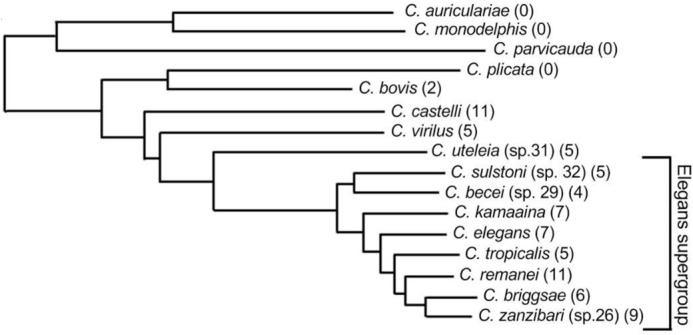 Figure 1
 Figure 2
Peer Reviews
No public reviews on file for this paper yet. If you reviewed it on a platform where reviews are public (OpenReview, ICLR, NeurIPS, ICML), you can paste yours below so the community can read it here.
Videos
No videos yet. Explain this paper in a talk, walkthrough, or lecture? Add one.
Taxonomy
TopicsGenetics, Aging, and Longevity in Model Organisms · Evolution and Genetic Dynamics · Nematode management and characterization studies
Nikita Jhaveri
Describe your scientific journey and your current research focus
My scientific journey began with studying negative regulators of cell proliferation, where I compared the function of these genes in closely related species and uncovered novel mechanisms of regulation. I then shifted my focus to understanding how organisms adapt to thermal stress, which led me to broader questions about local adaptation. Building on this, my current postdoctoral research focuses on investigating local adaptation in Caenorhabditis species, exploring how genetic and physiological variation contributes to survival and reproduction in different environments.
Who or what inspired you to become a scientist?
One of the first things that truly captivated me was learning how incredibly long DNA is and how it's packed so neatly into the tiny cells of our bodies. The idea that something so vast and complex could be organized on such a microscopic scale fascinated me and sparked my curiosity about biology. It made me realize that there's an entire world of intricate processes happening inside us that we are not aware of, yet they determine our lives. That sense of awe - recognizing the hidden complexity of life was one of the key inspirations for me to become a scientist. For me, science is about facts and uncovering the elegant systems that make life possible.For me, science is about facts and uncovering the elegant systems that make life possible.
How would you explain the main finding of your paper?
Genes that are unique to certain round worms, like ivph-3 and gon-14, can become essential for their survival and development. While these genes work similarly within a species, their effects can differ between species, showing that species-specific genes can adapt in different ways to ensure survival. This means that evolution doesn't just change existing genes – it can also create new genes important for how a species lives and adapts.
What are the potential implications of this finding for your field of research?
Our findings imply that taxonomically-restricted genes like ivph-3 and gon-14, although poorly conserved across species, play essential and species-specific roles. Their functional divergence between two closely related species - C. elegans and C. briggsae indicate that lineage-specific genes may contribute to differences in traits. Moreover, because ivph-3 broadly affects gene regulation, these genes may illustrate how new genes integrate into existing regulatory networks to influence key biological processes.
Which part of this research project was the most rewarding?
The most rewarding part of this research project was collaborating with Dr Helen Chamberlin's lab, which gave me the opportunity to learn a new technique in a different research environment. I gained hands-on experience with CRISPR-Cas9–mediated gene editing, and I was thrilled when I successfully edited my first gene.
What do you enjoy most about being an early-career researcher?
What I enjoy most about being an early-career researcher is the balance of independence and mentorship. My PIs are incredibly supportive, allowing me to pursue my own ideas and explore new directions while providing guidance when needed. I also appreciate that I don't have to worry about securing grants or funding, which lets me focus fully on the science and on developing my skills. This combination of freedom, mentorship, and focus on research makes the experience both challenging and deeply rewarding.
What piece of advice would you give to the next generation of researchers?
When you begin your research, it's natural to feel excited and inspired by ideas. The excitement can drive you, but the true challenge lies in staying consistent and disciplined over the long term. Experiments will often fail, results may be unexpected, and setbacks can feel discouraging – but these are not signs of personal failure. Every unexpected result is an opportunity to learn something new and to refine your approach. Embrace the process, remain curious, and let persistence guide you, because resilience and consistency are just as important as creativity in shaping a successful scientific journey.the true challenge lies in staying consistent and disciplined over the long term
What's next for you?
I am currently a postdoctoral researcher in Erik Andersen's lab at Johns Hopkins University, USA, and I am eager to transition into an industry role where I can leverage my expertise and skills to drive innovation and contribute to the advancement of the biotechnology sector.
The reference list from the paper itself. Each links out to its DOI / PubMed record.