Enhanced Solubility and Deprotection of Pyrene-4,5,9,10-tetraones through Propylene Glycol and Propanediol Protection
Robin Wessling, Kylie Chinner, Paula Wenz, Clara Douglas, Oliver Dumele, Birgit Esser

TL;DR
This paper introduces new methods to improve the solubility and chemical protection of a key organic material building block using different glycols.
Contribution
The study introduces propylene glycol and propanediol as novel protecting groups for PTO with enhanced solubility and milder deprotection.
Findings
PrG-protected PTO shows 44-fold higher solubility than EtG-protected PTO.
PD and DMPD produce 'half' protected PTOs with milder deprotection conditions.
Protected PTOs enable functionalization reactions with high yields and chiral-optical properties.
Abstract
Pyrene-4,5,9,10-tetraone (PTO) is a building block of significant interest for functional organic materials. Due to the sensitivity of the vicinal diones toward bases and metal-ion chelation, and low solubility, PTO is typically protected as a ketal with ethylene glycol (EtG). Herein, we report the use of propylene glycol (PrG), propane-1,3-diol (PD) or 2,2-dimethylpropane-1,3-diol (DMPD) for its protection. The PrG-protected PTO has a 44-fold increased solubility relative to EtG-protected PTO due the introduced regio- and stereoisomerism. Protection with PD and DMPD surprisingly produced “half” protected PTOs, with maintained protective capabilities, and milder deprotection conditions for PD. All protected PTOs underwent successful functionalization reactions with high yields. Due to its stereocenter, use of PrG-protecting groups gives entry to protected PTOs with chiral-optical…
Genes, proteins, chemicals, diseases, species, mutations and cell lines named across the full text — each resolved to its canonical identifier and authoritative record.
Click any figure to enlarge with its caption.
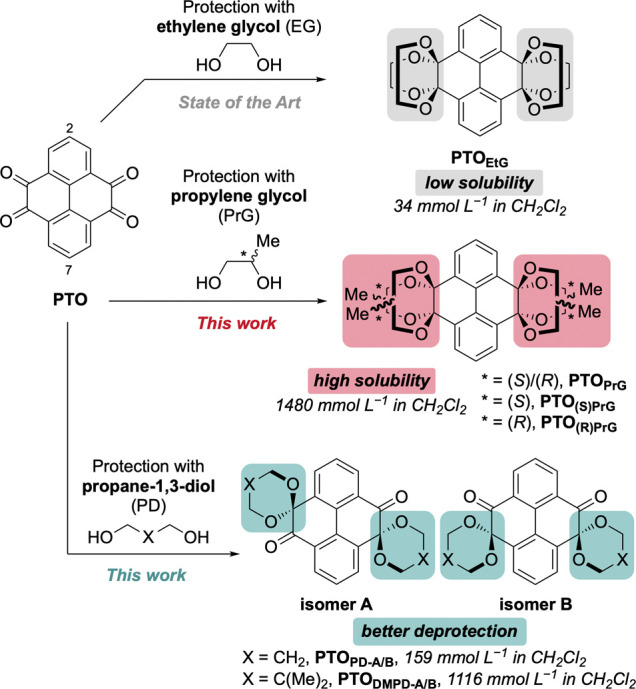 Figure 1
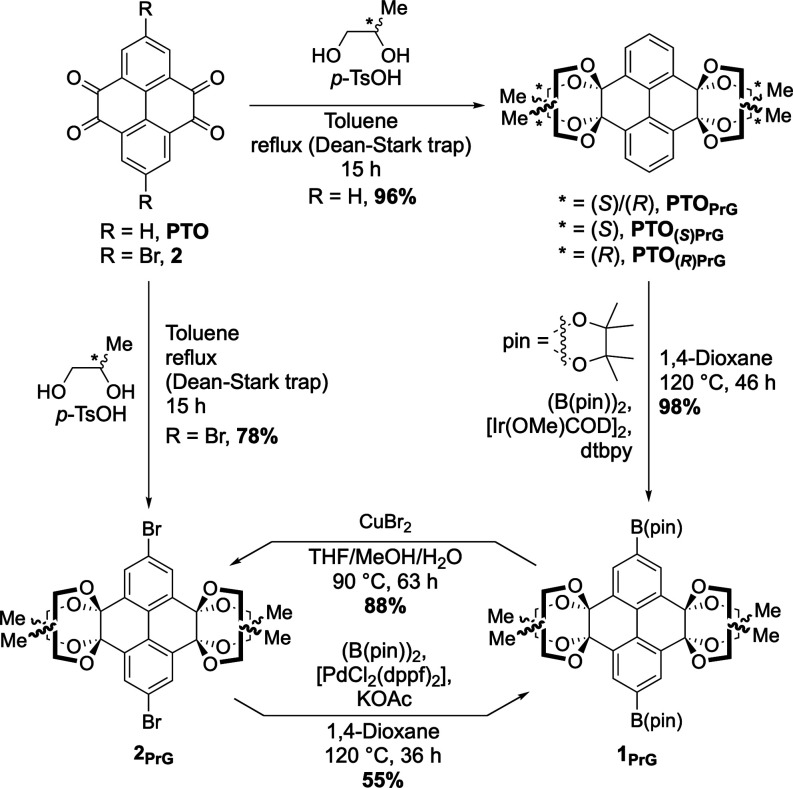 Figure 2
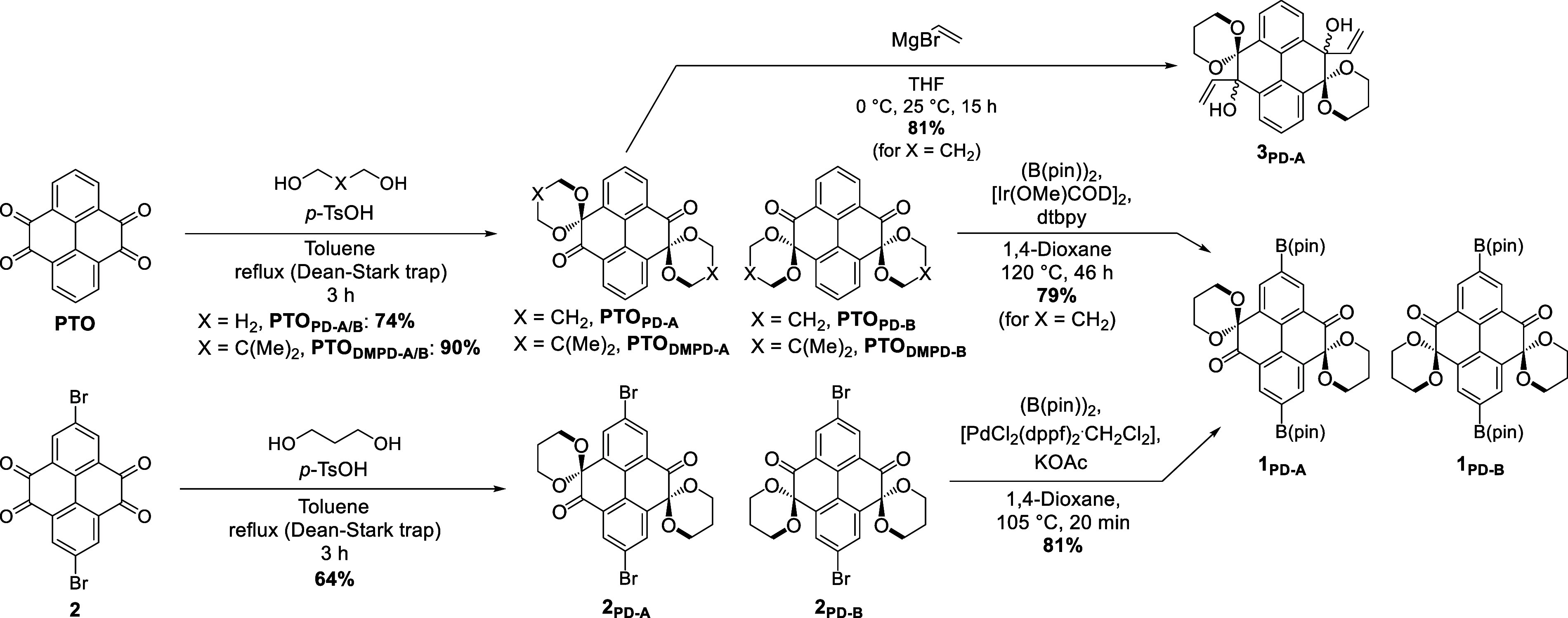 Figure 3
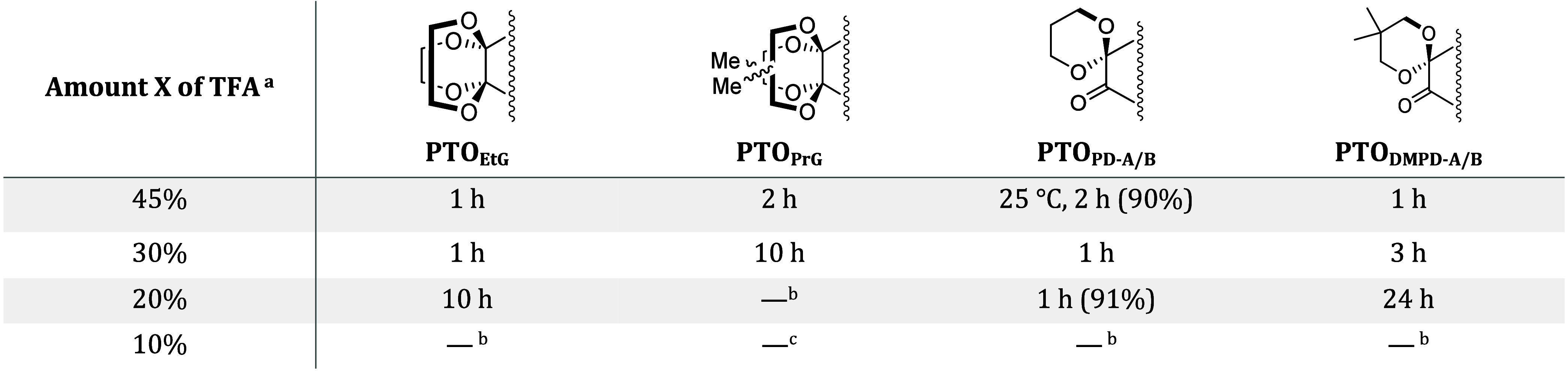 Figure 4
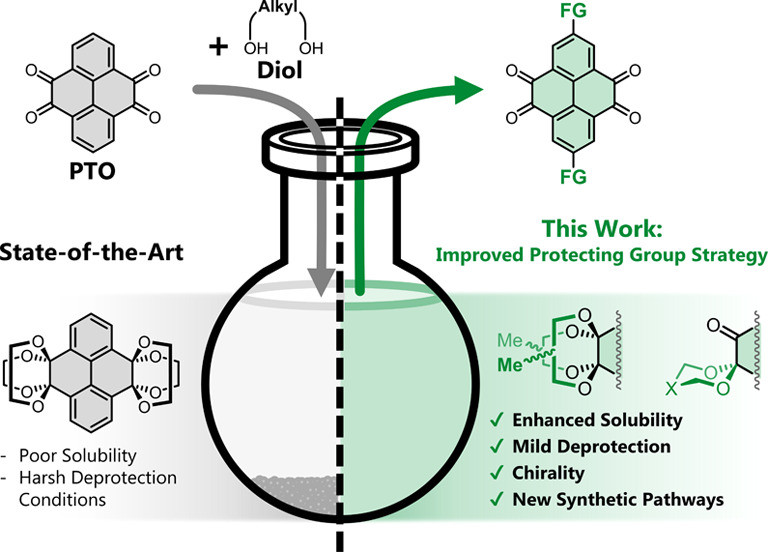 Figure 5
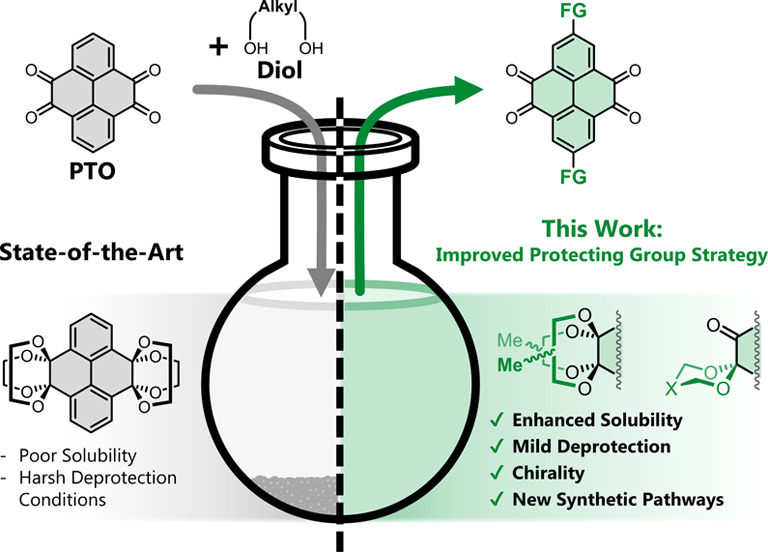 Figure 6
- —H2020 European Research Council10.13039/100010663
- —Deutsche Forschungsgemeinschaft10.13039/501100001659
- —Deutsche Forschungsgemeinschaft10.13039/501100001659
- —Deutsche Forschungsgemeinschaft10.13039/501100001659
- —Bundesministerium für Bildung und Forschung10.13039/501100002347
Peer Reviews
No public reviews on file for this paper yet. If you reviewed it on a platform where reviews are public (OpenReview, ICLR, NeurIPS, ICML), you can paste yours below so the community can read it here.
Videos
No videos yet. Explain this paper in a talk, walkthrough, or lecture? Add one.
Taxonomy
TopicsMolecular Sensors and Ion Detection · Chemical Synthesis and Reactions · Electrochemical Analysis and Applications
4,5,9,10-Pyrenetetraone (PTO, Scheme) is a synthetic building block of significant and increasing interest for a large variety of functional organic materials, used in organic batteries,? organic light-emitting diodes,? organic field-effect transistors,? and organic solar cells,? among others. PTO is often employed as an intermediate for certain synthetic routes, in particular, pyrene-fused azaacenes, ?,?,? covalent organic frameworks,? and nanoribbons. ?,? Recently, PTO has gained particular interest as a redox-active group for organic energy storage. ?,?−? ? ? ? ? ? ? ? ? ? ? ? ? ? ? ? The four carbonyl groups of PTO enable a reversible uptake of up to four electrons, while PTO possesses a low molecular weight. This leads to a high theoretical specific capacity of 408 mAh g^–1^ for the four electrons in monomeric PTO. It has been employed both as a small-molecule battery-electrode-active material and in polymeric form (homopolymer and copolymers). ?,? Additionally, PTO shows promising results in so-called post-lithium cell technologies, such as sodium,? magnesium,? and aluminum batteries,? due to its geminal diones, which are beneficial for the chelation of cations. However, these diones, in the K-region of the molecule, are also one of its greatest chemical weaknesses. While their reduction is electrochemically highly reversible and can serve as “handles” for ring fusion in many synthetic strategies, the two diones show little chemical resistance when exposed to alkaline conditions. Contact with bases in the presence of trace amounts of oxygen can irreversibly decompose PTO (see SI section S2.5). An additional shortcoming is the tendency for cation chelation, which inhibits the use of metal catalysis in many cases during synthesis. ?−? ? These issues, alongside its intrinsic poor solubility in organic solvents, greatly limit the versatility of PTO from a synthetic standpoint.
A common strategy to circumvent these issues is the protection of the diones as ketals using ethylene glycol (EtG) (Scheme, top). The ketals offer protection against basic decomposition, inhibit cation chelation, and slightly increase solubility.? However, the protection step usually suffers from moderate yields (50–82%) ?,?,?,?−? ? ? due to the still poor solubility of EtG-protected PTO (PTO _ EtG _). This presents a limitation to, for instance, the synthesis of polymers. Additionally, deprotection of PTO _ EtG _ often requires high concentrations of acid (i.e., 90% aq TFA), ?,?,? limiting the synthesis of more delicate functional organic materials, such as strained aromatic macrocycles? (SI Figure S34).
To alleviate these issues, which we frequently struggle with in both polymerization reactions and the synthesis of strained PTO-containing macrocycles, we set out to investigate new protecting group strategies for PTO. We herein report new synthetic pathways to functionalized PTO derivatives with the goal of increasing the solubility of intermediates, and enabling subsequent deprotection at milder conditions.? These significantly improve the synthetic versatility of PTO and facilitate new applications. The basis of this new approach is the simple and inexpensive exchange of the EtG protecting groups for an alternative diol that is sterically more demanding and introduces regio- and/or stereoisomerism to increase solubility.
For this purpose, we screened a plethora of options (SI Section S7). We found racemic and enantiomerically pure propylene glycol (1,2-propanediol, PrG), propane-1,3-diol (PD), and its derivative 2,2-dimethylpropane-1,3-diol (DMPD) to be the best options (Scheme) (price comparison: SI Section S1.1). The extra methyl groups of PrG drastically increase solubility through introduction of regio- and stereoisomerism compared to nonisomeric PTO _ EtG _. Protection with PD and DMPD surprisingly produced “half” protected PTOs which maintained the same protective capabilities as “fully” protected PTO _ EtG _ (Scheme, bottom). Deprotection at milder conditions is now also possible due to the different nature of the ketal and resulting steric and electronic effects.
First, we investigated PrG as a protecting group and obtained PTO _ PrG _ in an outstanding yield of 96% by acid-catalyzed ketalization (Scheme). This yield was reliably >90% in repeated reactions of different batch sizesa drastic increase in overall atom economy compared to PTO _ EtG _. For PTO _ PrG _, a total of 76 different regio- and stereoisomers theoretically exist (SI Figure S62). The multitude of isomers are evident in the nuclear magnetic resonance (NMR) spectrum of PTO _ PrG _, which appears chaotic in comparison to PTO _ EtG _. The crystal structure of a PTO _ EtG _ analogue, reported by Mateo-Alonso and co-workers, indicates that instead of 1,3-dioxolanes (one protecting group per carbonyl), 1,4-dioxanes (two protecting groups over two carbonyls) are formed during protection.? These 1,4-dioxane rings assume a chair conformation for PTO _ EtG _ and PTO _ PrG _ (SI Figure S4). For PTO _ EtG _, which has four chemically equivalent methylene protons, two broad signals are observed in the ^1^H NMR spectrum, in line with literature reports. ?,?,?
The regio- and stereoisomerism introduced with PrG dramatically increase the solubility of PTO _ PrG . While the solubility of PTO _ EtG _ in dichloromethane amounts to merely 34 mmol L^–1^, PTO _ PrG _ exhibits a solubility of 1480 mmol L^–1^, representing a considerable 44-fold increase. This enhanced solubility significantly facilitates the purification (the removal of undesired side products; the isomers of **PTO_PrG ** are inseparable) of PTO _ PrG _ compared to PTO _ EtG _, allowing for the use of column chromatography.
Implementing enantiomerically pure (S)-(+)- or (R)-(−)-PrG as the protecting group gave PTO _ ( S )PrG _ and PTO _ ( R )PrG _, respectively, as geometric isomers analogous to rac-PTO _ PrG _ (both, >90% yield, Scheme). This drastically reduces the isomer complexity from 76 inequivalent isomers to only 7 regioisomers, as all four stereocenters of each regioisomer are homochiral. A calculated energy range of 7 kcal mol^–1^ among the isomers was found via density functional theory (DFT) calculations, indicating that multiple isomers are likely populated (SI Section S10.1). The ^1^H NMR spectra between racemic and homochiral isomer mixtures reflect this reduction in complexity, with a sharpening of signal shape for the homochiral isomer mixtures compared to that for rac-PTO _ PrG _ (SI Figure S29).
Electronic circular dichroism (ECD) spectra of the homochiral isomers revealed the transfer of chirality of (S)- and (R)-PrG to the central pyrene core (SI Figure S58). Intense Cotton effects in the UV range indicate a chiral twisting of the central core. Hence, this motif could be implemented in PTO-based chiroptical materials.
As with PTO _ EtG _, functional groups at the 2,7-positions can be introduced before (Br, I)? or after protection (pinacol boronic esters (Bpin)),? with potential follow-up reactions, and a final deprotection of the diones upon treatment with aqueous trifluoroacetic acid (TFA). To test the robustness of the PrG protection, we subjected the protected PTOs to transition-metal-containing reactions at the 2,7-positions, typically employed in the construction of functional organic materials (Scheme). The iridium-catalyzed borylation of protected PTO is a feasible method to introduce boronic ester groups, enabling consecutive Suzuki–Miyaura coupling reactions. Borylation of PTO _ PrG _ furnished 1 _ PrG _, the corresponding 2,7-dipinacol boronic ester, with close to quantitative yield (98%), and the PrG protection groups were fully retained.
For access to dibrominated PrG-protected PTO (2 _ PrG ) two options are available: transformation of 1 _ PrG _ via a CuBr_2-mediated bromodeborylation (88% yield, compared to <30% for less soluble intermediates),? or beginning from 2,7-dibromo-PTO (2)? and protecting the diones with PrG (78%) (Scheme). The bromides of 2 _ PrG _ can also be converted into boronic esters via Miyaura borylation to obtain 1 _ PrG _ (55%).
Our second approach was based on propane-1,3-diols as protecting groups (PD and DMPD) due to their symmetric, yet slightly bulkier, structure compared to EtG (Scheme).
Surprisingly, instead of a 4-fold protection of the diones, only a 2-fold protection occurred to give PTO _ PD‑A/B _, with PTO _ PD‑A _ unambiguously confirmed by single-crystal X-ray crystallography (SI Section S8) and PTO _ PD‑A/B _ confirmed by NOESY NMR (SI Figures S17 and S20). Increasing PD from 25 to 250 equiv in the protecting step, or the reaction time from 3 to 24 h, did not result in any conversion to a “fully” protected PTO. Interestingly, PTO _ PD‑A/B _ exists as a mixture of two isomers with anti-protected ketones (PTO _ PD‑A _) and syn-protected ketones (PTO _ PD‑B _) on alternate sides of the molecule. This isomeric mixture is obtained in a 1:1 ratio from the chromatographed isomer mixture (74% yield, determined by ^1^H NMR spectroscopy) and can be separated by recrystallization from hot ethyl acetate to give PTO _ PD‑A _ (42%) and PTO _ PD‑B _ (26%, both isolated yields with regard to starting material of the reaction). The component of dissymmetry between the isomers in their mixture likely contributes to the 5-fold increased solubility of PTO _ PD‑A/B _ (159 mmol L^–1^) in comparison to PTO _ EtG _ (34 mmol L^–1^).
Again, this solubility can be dramatically increased through the introduction of additional methyl groups. Acid-catalyzed ketalization of PTO with DMPD gave PTO _ DMPD‑A/B _ in an overall increased yield (90%) and solubility (1116 mmol L^–1^).
Although it only yields “half” protected PTO _ PD‑A/B _, the protection with PD or DMPD is just as effective as that with EtG or PrG. The resulting PTO derivatives can successfully undergo transition-metal catalysis while retaining both protecting groups (Scheme). The protected 2,7-dipinacol boronic esters 1 _ PD‑A/B _ can be achieved via iridium-catalyzed borylation of PTO _ PD‑A/B _ (79%) or from palladium-catalyzed Miyaura borylation of dibrominated 2 _ PD‑A/B _ (68%). Dibrominated 2 _ PD‑A/B _ was obtained by the PD protection of 2 (64%).
Analysis of crude ^1^H NMR spectra of the borylated products (1 _ PD‑A/B _) showed a 1:1 ratio between the A and B isomers (starting from a 1:1 PTO _ PD‑A/B _ isomeric mixture) (SI Figure S33). This indicates that during this transformation there is no chemical preference between isomers.
Further expanding on the dual protection offered by propane diol, we found that the two unprotected ketones in PTO _ PD‑A _ undergo Grignard addition while maintaining their PD protection. Reaction with vinylmagnesium bromide furnished 3 _ PD‑A _ in 81% yield (Scheme). This enables the use of PD-protected PTO moieties as precursors for PTO-based materials with unsymmetric functionalization (SI Section S2.2).
To investigate subsequent synthetic possibilities toward PTO-containing functional materials, the deprotection of our series of ketal-PTOs was investigated to identify the mildest conditions required for full deprotection (Table).
PTO _ PD‑A/B _ demonstrated the most efficient deprotection, achieving full conversion to PTO at 25 °C within 2 h using TFA/CHCl_3_/H_2_O 45:45:10 (v/v/v) with an isolated yield of 90%. Under the same conditions, PTO _ EtG _, PTO _ PrG _, and PTO _ DMPD‑A/B _ achieved only partial deprotection and required heating to 60 °C for full deprotection to PTO (SI Figure S31). At the lowest tested ratio (10% TFA) no ketal-PTO was fully deprotected, even after 48 h at 60 °C. However, increasing the TFA ratio to 20% allowed PTO _ PD‑A/B _ to be fully deprotected within 1 h at 60 °C (91% yield)considerably faster than PTO _ EtG _, which required 10 h under identical conditions (both PTO _ PrG _ and PTO _ DMPD‑A/B _ did not fully convert at these conditions). Furthermore, both PTO _ PD‑A _ and PTO _ PD‑B _ exhibited nearly identical rates of deprotection (SI Figure S32), indicating that they can be used as an isomeric mixture without affecting the overall outcome for deprotection.
Interestingly, while an increased solubility is extremely beneficial for synthesis in the construction of PTO-based materials (yields, purification, and characterization), the increased solubility had no significant effect on the conditions required to fully deprotect the ketal-PTOs, with PTO _ PrG _ and PTO _ DMPD‑A/B _ performing slightly worse than their less soluble counterparts. These findings suggest that a balance between solubility and deprotection efficiency is necessary with PD emerging as the optimal protecting group for PTO within this context.
In conclusion, we present new protecting-group strategies for PTO. Using PrG or PD derivatives instead of the state-of-the-art EtG furnishes a significantly higher solubility of protected PTO _ PrG _ (44-fold increase), PTO _ PD‑A/B _ (5-fold), and PTO _ DMPD‑A/B _ (33-fold) compared to PTO _ EtG _. The new series of protected PTOs all undergo successful functionalization reactions with higher yields and in simpler reaction setups compared to PTO _ EtG _ due to increased solubility. Subsequent deprotection of PTO _ PD‑A/B _ (60 °C, 1 h, 91% yield) could be performed under milder conditions (20% TFA) compared to PTO _ EtG _ (60 °C, 10 h). Thus, demonstrating a clear advantage in using PrG as a protecting group for increased solubility and overall yields during postprotected functionalizations, as well as full protection of all ketones, and PD as a protecting group for subsequent deprotection under milder conditions. These results should greatly facilitate the synthesis of future PTO-based materials, enabling the use of PTO in a broader range of synthetic and materials contexts.
Supplementary Material
The reference list from the paper itself. Each links out to its DOI / PubMed record.
- 1Peng X.Guo J.Huang D.Ouyang B.Du Y.Yang H.Progress in Pyrene-4,5,9,10-Tetraone-Based Organic Electrode Materials for Rechargeable Batteries Chem Sus Chem 202518 e 20240197510.1002/cssc.20240197539585216 · doi ↗ · pubmed ↗
- 2Wang X.-J.Liu H.Zhang K.Yang D.Pan Z.-H.Wang C.-K.Fung M.-K.Ma D.Fan J.Using Azaacene as an Acceptor Unit to Construct an Ultraefficient Red Fluorophore with an EQE over 40%Mater. Horizons 202310393894410.1039/D 2MH 01322 C 36598032 · doi ↗ · pubmed ↗
- 3Kaafarani B. R.Lucas L. A.Wex B.Jabbour G. E.Synthesis of Novel Pyrene Discotics for Potential Electronic Applications Tetrahedron Lett.200748345995599810.1016/j.tetlet.2007.06.121 · doi ↗
- 4Wang N.Bao X.Yan Y.Ouyang D.Sun M.Roy V. A. L.Lee C. S.Yang R.Synthesis and Photovoltaic Properties of Conjugated D-A Copolymers Based on Thienyl Substituted Pyrene and Diketopyrrolopyrrole for Polymer Solar Cells J. Polym. Sci. Part A Polym. Chem.201452223198320410.1002/pola.27378 · doi ↗
- 5Merz J.Dietz M.Vonhausen Y.Wöber F.Friedrich A.Sieh D.Krummenacher I.Braunschweig H.Moos M.Holzapfel M.Lambert C.Marder T. B.Synthesis, Photophysical and Electronic Properties of New Red-to-NIR Emitting Donor–Acceptor Pyrene Derivatives Chem.Eur. J.202026243845310.1002/chem.20190421931593316 PMC 6973242 · doi ↗ · pubmed ↗
- 6Ueberricke L.Mizioch D.Ghalami F.Mildner F.Rominger F.Oeser T.Elstner M.Mastalerz M.Quinoxalinophenanthrophenazine Based Cruciforms Eur. J. Org. Chem.20212021344816482310.1002/ejoc.202100701 · doi ↗
- 7Guo J.Xu Y.Jin S.Chen L.Kaji T.Honsho Y.Addicoat M. A.Kim J.Saeki A.Ihee H.Seki S.Irle S.Hiramoto M.Gao J.Jiang D.Conjugated Organic Framework with Three-Dimensionally Ordered Stable Structure and Delocalized π Clouds Nat. Commun.201341273610.1038/ncomms 373624220603 PMC 3868157 · doi ↗ · pubmed ↗
- 8Mateo-Alonso A.Pyrene-Fused Pyrazaacenes: From Small Molecules to Nanoribbons Chem. Soc. Rev.20144317631110.1039/C 4CS 00119 B 24841033 · doi ↗ · pubmed ↗