NEW CLINICAL MEASURES OF HAND AND WRIST PROPRIOCEPTION: A PILOT STUDY FOR EVALUATING DISCRIMINATIVE VALIDITY AND TEST-RETEST RELIABILITY IN INDIVIDUALS WITH WRIST DISABILITY
Maria SONTAG, Ulrik RÖIJEZON, Christina BROGÅRDH, Elisabeth EKSTRAND

TL;DR
This study tested new methods to measure hand and wrist proprioception in people with wrist injuries, finding that some tests could reliably detect differences between injured and uninjured wrists.
Contribution
The study introduces and evaluates new clinical tests for proprioception in wrist disability, identifying promising measures for future use.
Findings
The pointing acuity test with eyes closed showed good discriminative validity and reliability for affected wrists.
The active joint position sense test in flexion also demonstrated promising discriminative ability.
Other tests like grip force reproduction had poor reliability and discriminative ability.
Abstract
To evaluate psychometric properties of newly developed hand and wrist proprioception tests. Cross-sectional and test-retest comparisons. Twenty-six individuals (mean age 40 years) with wrist disability (> 3 months) due to traumatic injury or general instability. Pointing acuity (with eyes open and closed), active joint position sense (in extension, flexion, radial- and ulnar deviation) and grip force reproduction were measured by 1 rater on 2 occasions, 1 week apart. The mean absolute error was calculated for each test. Discriminative validity (affected vs non-affected hand/wrist) was evaluated by paired t-test and test-retest reliability with Intraclass Correlation Coefficient (ICC). The pointing acuity test with eyes closed gave higher errors for the affected hand/wrist (p = 0.08) and good ICCs (0.80–0.85), while the test with eyes open had poor discriminative ability (p = 0.32)…
Genes, proteins, chemicals, diseases, species, mutations and cell lines named across the full text — each resolved to its canonical identifier and authoritative record.
Click any figure to enlarge with its caption.
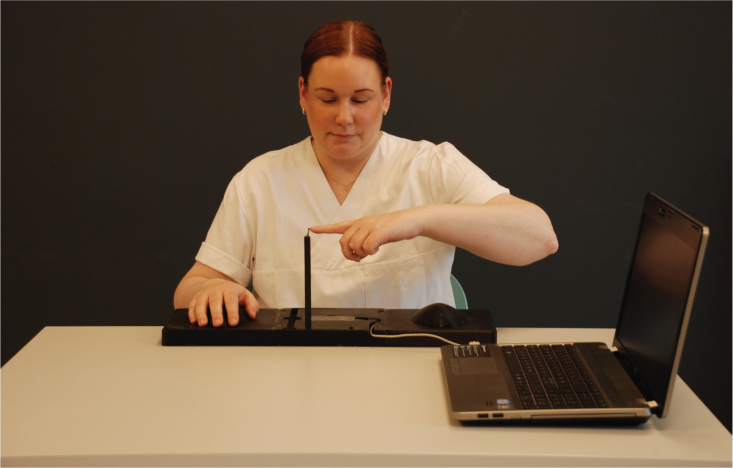 Fig. 1
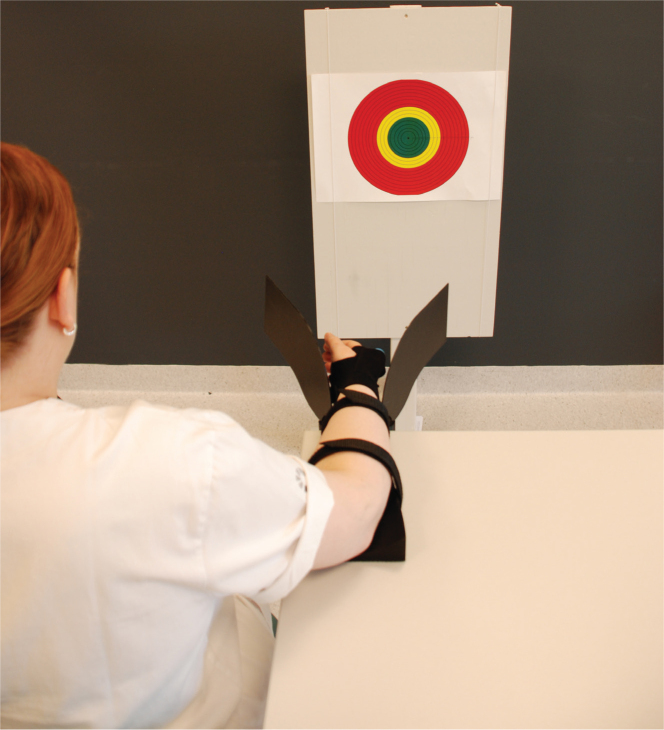 Fig. 2
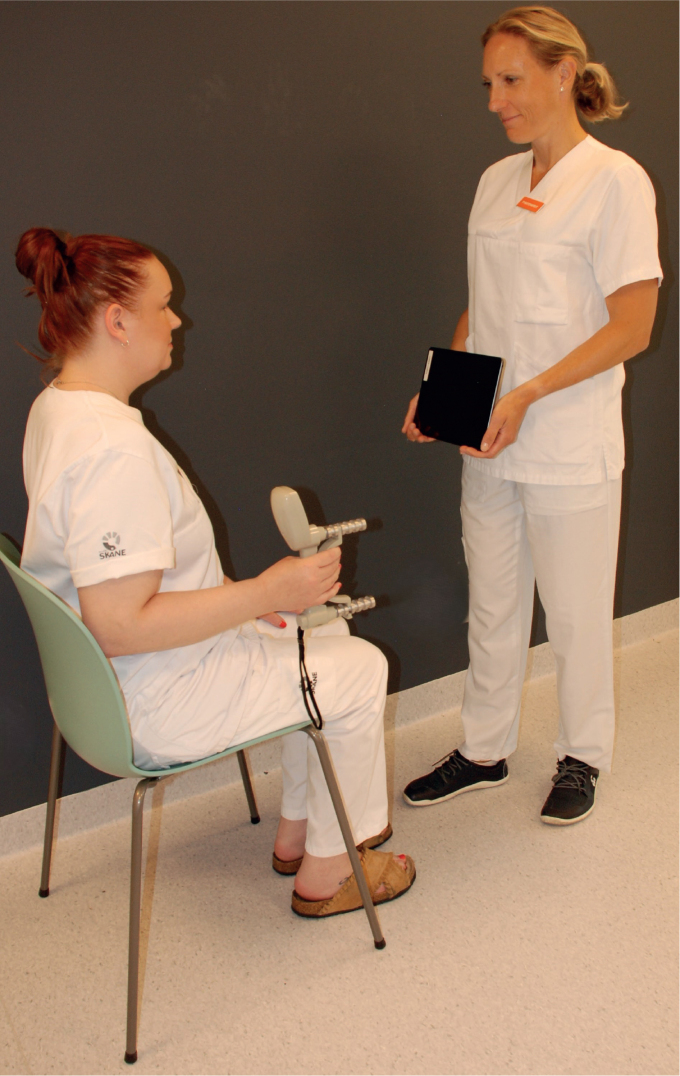 Fig. 3
| Characteristics | |
|---|---|
| Age, mean (SD; min-max) | 40 (13; 20–69) |
| Sex ( | |
| Men | 7 |
| Women | 18 |
| Other | 1 |
| Dominant hand, % ( | |
| Right | 100 (26) |
| Affected hand, % ( | |
| Dominant | 65 (17) |
| Non-dominant | 35 (9) |
| Time with symptoms (months), mean (SD; min-max) | 37 (56; 6–240) |
| Injury, % ( | |
| Posttraumatic injury | 96 (25) |
| General instability | 4 (1) |
| PRWE, median (IQR) | |
| Total | 57 (40–67) |
| Pain | 33 (23–38) |
| Function | 46 (35–59) |
| Grip strength, MVC (kg), mean (SD) | |
| Grip strength NA | 36 (12) |
| Grip strength A | 26 (12) |
| Discriminative validity ( | Non-affected hand/wrist Mean AE (mm) (SD) | Affected hand/wrist Mean AE (mm) (SD) | ||
| Eyes open | 15.7 (14.8) | 12.3 (11.9) | 0.32 | |
| Eyes closed | 40.9 (18.2) | 52.1 (28.8) | 0.08 | |
| Test-retest ( | Test occasion 1Mean AE (mm) (SD) | Test occasion 2Mean AE (mm) (SD) | ICC (95% CI) | SEM |
| Eyes open NA | 16.2 (15.7) | 13.3 (12.0) | 0.16 (0.00–0.66) | 13.3 |
| Eyes open A | 12.9 (12.6) | 11.6 (7.5) | 0.13 (0.00–0.65) | 9.8 |
| Eyes closed NA | 42.3 (18.8) | 47.5 (23.3) | 0.85 (0.64–0.94) | 11.0 |
| Eyes closed A | 53.0 (28.7) | 49.7 (23.8) | 0.80 (0.49–0.92) | 15.3 |
| Discriminative validity ( | Non-affected hand/wrist Mean AE (°) (SD) | Affected hand/wrist Mean AE (°) (SD) | ||
| Extension | 3.5 (1.3) | 3.5 (1.4) | 0.94 | |
| Flexion | 3.2 (1.2) | 4.0 (1.4) | 0.03 | |
| Radial deviation | 3.3 (1.2) | 3.2 (0.8) | 0.57 | |
| Ulnar deviation | 3.6 (1.1) | 3.3 (1.5) | 0.21 | |
| Test-retest ( | Test occasion 1Mean AE (°) (SD) | Test occasion 2Mean AE (°) (SD) | ICC (95% CI) | SEM |
| Extension NA | 3.4 (1.2) | 3.0 (1.5) | 0.49 (0.00–0.78) | 1.1 |
| Extension A | 3.3 (1.1) | 3.2 (1.2) | 0.55 (0.00–0.81) | 0.9 |
| Flexion NA | 3.2 (1.2) | 2.9 (1.0) | 0.37 (0.00–0.73) | 1.1 |
| Flexion A | 4.0 (1.5) | 3.0 (1.1) | 0.51 (0.00–0.78) | 1.2 |
| Radial deviation NA | 3.2 (1.2) | 3.0 (1.4) | 0.29 (0.00–0.70) | 1.2 |
| Radial deviation A | 3.2 (0.8) | 2.8 (0.8) | 0.36 (0.00–0.72) | 0.8 |
| Ulnar deviation NA | 3.6 (1.1) | 3.0 (0.9) | 0.00 (0.00–0.53) | 1.1 |
| Ulnar deviation A | 3.1 (1.4) | 2.7 (1.0) | 0.65 (0.21–0.84) | 0.9 |
| Discriminative validity ( | Non-affected hand/wrist Mean AE (%) (SD) | Affected hand/wrist Mean AE (%) (SD) | ||
| Force sense | 19.2 (13.1) | 20.0 (13.4) | 0.84 | |
| Test-retest ( | Test occasion 1Mean AE (%) (SD) | Test occasion 2Mean AE (%) (SD) | ICC (95% CI) | SEM |
| Force sense NA | 19.9 (13.3) | 18.1 (11.9) | 0.25 (0.00 – 0.68) | 11.5 |
| Force sense A | 18.7 (11.7) | 19.3 (13.1) | 0.14 (0.00 – 0.64) | 11.8 |
Peer Reviews
No public reviews on file for this paper yet. If you reviewed it on a platform where reviews are public (OpenReview, ICLR, NeurIPS, ICML), you can paste yours below so the community can read it here.
Videos
No videos yet. Explain this paper in a talk, walkthrough, or lecture? Add one.
Taxonomy
TopicsOrthopedic Surgery and Rehabilitation · Stroke Rehabilitation and Recovery · Hemispheric Asymmetry in Neuroscience
Sensorimotor control involves the ability to use complex sensory information, which is crucial for controlled movements and joint stability (1). In the absence of visual input, manual tasks are largely guided by proprioception. Proprioception is sensory information, provided to the central nervous system by mechanoreceptors located in joint capsules, ligaments, skin, muscles and tendons, which enables the perception of movements, positions and forces (2).
As the wrist is a complex joint, injuries and instability may affect proprioceptive processes, which, in turn, can negatively affect movement control and joint stability (3). It has been suggested that such changes may result in a vicious circle of muscle weakness, excessive joint loading and chronic wrist pain (3, 4). In rehabilitation, the reduction of pain and the restoration of hand and wrist functioning are contingent on an improvement of proprioception (5–10). Therefore, valid and reliable outcome measures of proprioception are needed to follow treatment effects in rehabilitation.
Various aspects of proprioception can be measured in different tests, for example, in a goal-directed movement, so-called pointing acuity. This test is normally assessed in advanced laboratory equipment environments (11). However, technological progress of small optical sensors has enabled the development of new tests applicable for the clinical setting. Proprioception can also be assessed in an active joint position sense test, commonly performed manually using a goniometer, but psychometric evaluations have reported varied results ranging from poor to excellent reliability (12–15). Furthermore, proprioception can also be captured in force reproduction where the ability to reproduce submaximal grip strength is measured (16). To the best of our knowledge, only 1 study has evaluated the reproduction test psychometrically, which showed poor to moderate test-retest reliability (16). This underscores the necessity for further development, standardization and validation of proprioception tests to be used in clinical setting, as well as the evaluation of such tests for specific patient groups.
Taken together, there is a strong need for objective clinically applicable tests for examination of hand and wrist proprioception to be able to assess progress and guide treatment in rehabilitation. The tests should be able to distinguish impaired proprioceptive ability from normal function (discriminative validity) and produce similar results when performed under similar conditions (test-retest reliability). This is an important research area, as reliable and valid evaluation methods enable the development of more precisely targeted interventions for the individual and a more specific evaluation of treatment effects.
The aim of the study was to evaluate psychometric properties of newly developed hand and wrist proprioception tests in individuals with wrist disability.
METHODS
Study design
This pilot study includes cross-sectional and test-retest comparisons to evaluate discriminative validity and test-retest reliability for tests of proprioception in the hand and wrist.
Participants
Participants were recruited at the Department of Hand Surgery, Skåne University Hospital in Malmö. Inclusion criteria include individuals with wrist disability (> 3 months) due to a traumatic injury or general instability diagnosed by a hand surgeon, with pain (> 2 according to Numeric Rating Scale (NRS) 0–10 (17) and self-perceived difficulties to use the hand/wrist in daily activities. Exclusion criteria include individuals with bilateral hand/wrist problems, ongoing fracture healing in the upper extremity, surgical exploration of the posterior interosseous nerve or significant other injury/disease (not related to the wrist injury) that could affect the ability to perform the tests, as well as inability to communicate in Swedish or other difficulties to understand and follow test instructions.
Before being included in the study, the participants gave informed consent to participate. The principles of the Declaration of Helsinki were followed, and this study was approved by the Swedish Ethical Review Authority 2022-09-05 (Dnr 2022-03946-01).
Proprioception tests
The pointing acuity test was performed using an optical 3D tracking sensor, the Leap Motion Controller (LMC) (Ultraleap, California, United States, www.ultraleap.com) (Fig. 1), together with a custom-made software. The test was performed by moving the index finger (from a resting position on a platform) to a target (plastic stick), positioned 20 cm above the sensor, as precisely as possible (Fig. 1). To calibrate the target position of the index finger, participants were instructed to hold their finger on the target for 3 s and memorize this exact location, during which an initial measurement was taken. The test was thereafter repeated 10 times, and the pace was set by a metronome within the software, giving a beep sound at 2 s intervals. The test was first performed with eyes open and thereafter with eyes closed, with each hand. In the test with eyes closed, the target was removed to avoid any tactile input. Before the actual test, trials were performed to let the participants get familiar with the procedure. The score was calculated as the mean absolute error (AE), the absolute distance in mm between the fingertip and the target.
Pointing acuity test performed with an optical 3D tracking sensor (Leap Motion Controller), a computer with custom-made software and a prefabricated platform with a target (plastic stick) positioned 20 cm above the sensor.
The active joint position sense test was performed using a poster (A3 format) containing a circular diagram (268 mm diameter) with a bullseye and a laser pointer (Motion Guidance Clinical kit, Denver, United States, www.motionguidance.com) attached between the metacarpal II and III (Fig. 2). Active joint position sense was tested in 4 directions: wrist extension, flexion, radial- and ulnar deviation. The forearm was fixed on a prefabricated rig, the first carpometacarpal joint 90 cm from the diagram. First, the wrist was set in neutral position (laser beam pointing at the centre of the eye). Thereafter, the participants moved the wrist in the direction tested and returned to as close as possible to the neutral position without using vision. In extension/flexion, the movement was limited to 30 degrees by the rig, and in ulnar/radial deviation, the movement was limited by the normal range of motion. The test was repeated 6 times in each direction with reset movements (oscillations) between each repetition. Before the actual test, trials were performed to get familiar with the procedure. The score was calculated as the mean AE, the deviation from the centre of the bullseye in degrees from 0° to 9°.
Active joint position sense test performed with a bullseye poster (268 mm diameter) positioned 90 cm in front of the participant with a laser pointer attached between metacarpal II and III.
The grip force reproduction test was performed using a digital dynamometer JAMAR Smart Hand Dynamometer (ASP Global, Austell, United States, www.aspglobal.com) together with the Jamar^®^ Smart application (ASP Global, Austell, United States, www.aspglobal.com) on a tablet (Apple, iPad, Cupertino, California, United States, www.apple.com) (Fig. 3). The standardized position (elbow in 90 degrees, and forearm and wrist in neutral position) (18) was used in the force tests. First, maximum voluntary contraction (MVC) was measured to calculate the target force, 50% of MVC. Thereafter, the participants should attain the target force with visual feedback from the tablet and memorize this force. In the reproduction test, the target force was to be reproduced without visual input. The test was repeated 3 times per hand. The score was calculated as the mean AE (kg) in relation to the target force (%).
Force reproduction test performed with JAMAR Smart Hand Dynamometer together with the Jamar® Smart application on a tablet.
Procedures
First, pointing acuity was measured, followed by the tests of active joint position sense and grip force reproduction. The tests were administered by a physiotherapist with clinical expertise in hand rehabilitation (MS) at the Department of Hand Surgery on 2 different occasions (Test occasion 1, T1 and Test occasion 2, T2), approximately 1 week apart according to a standardized test protocol. The group was balanced such that every other participant started the tests with the affected hand and every other participant with the non-affected hand, on both test occasions. The test protocol took approximately 60 min to complete.
At T1, background information was collected regarding age, gender, handedness, type of wrist injury/problem, grip strength (measured by dynamometer) and wrist disability [assessed by the Patient Rated Wrist Evaluation (PRWE) (19)]. The PRWE is valid and is a reliable questionnaire consisting of 15 questions on pain (5 questions) and functioning (10 questions) (20).
Statistical analysis
Statistical analyses were performed with the SPSS version 28.0 (IBM Corporation, Armonk, New York, United States). Probability values less than 0.05 were considered as statistically significant. For descriptive data, means (standard deviations, SD), frequencies and medians (interquartile ranges, IQR, and maximum and minimum values) were calculated. Data were judged to be normally distributed according to visual inspection of the histograms.
To evaluate discriminative validity, the measurements of the affected and non-affected hand/wrist at T1 were compared and analysed by a paired t-test. The test-retest reliability was evaluated by the Intraclass Correlation Coefficient (ICC) and 95% confidence interval (95% CI) and the Standard Error of Measurement (SEM). The strength of the ICC was interpreted as poor for values less than 0.5, moderate between 0.5 and 0.75, good between 0.75 and 0.9 and excellent for values greater than 0.90 (21).
RESULTS
The demographics and clinical characteristics of the participants are presented in Table I. The mean age of the participants was 40 years (69% women) and most had a diagnosis of post-traumatic pain. MVC in grip strength was impaired in the affected hand compared to the non-affected (p < 0.001) and reproducible between the test occasions (ICCs 0.96–0.97).
Data were collected from 26 participants at T1. At T2, 2 persons dropped out, 1 had an arm injury and 1 declined to further participate. The mean number of days between T1 and T2 was 7 days (SD 1).
For the pointing acuity test, technical problems occurred in 2 cases in both test sessions. Therefore, data from 24 participants at T1 and 22 at T2 were available. The test with eyes open showed a non-significant difference between the hands (p = 0.32). For eyes closed, there was a larger AE for the affected hand/wrist, albeit non-significant (p = 0.08) (Table II). The ICC values ranged from 0.13 to 0.16 for eyes open and 0.80 to 0.85 for eyes closed. The SEM values ranged from 9.8 to 15.3.
The active joint position sense test demonstrated a significantly larger error for the affected hand/wrist than for the non-affected in flexion (p = 0.03). For the other 3 directions (extension, radial- and ulnar deviation), the differences were non-significant (Table III). The ICCs of the active joint position sense tests for the non-affected hand/wrist were poor (0.00–0.49), and the SEMs ranged from 1.1 to 1.2. For the affected hand/wrist in extension, flexion and ulnar deviation, the ICCs were moderate (0.51–0.65), radial deviation showed poor ICC (0.36) and the SEMs ranged from 0.8 to 1.2.
In the force reproduction test, the difference between the hands was non-significant, the ICCs were poor (0.36–0.45) (Table IV) and SEMs were 11.5 and 11.8, respectively.
DISCUSSION
This pilot study evaluated discriminative validity and intra-rater test-retest reliability for 3 newly developed tests of proprioception in the hand and wrist for the clinical setting. The pointing acuity test with eyes closed showed promising results of higher AEs for the affected hand/wrist compared to the non-affected, and the test-retest reliability was good. The results of the test with eyes open could not discriminate between hands, and the reliability was poor. For the active joint position sense test in flexion, the AE for the affected hand/wrist was significantly higher compared to the non-affected and showed moderate test-retest reliability. The other directions of the joint position sense tests had poor discriminative validity and poor to moderate reliability. The force sense test show-ed both poor discriminative ability and test-retest reliability.
Pointing acuity was measured using a small optoelectronic sensor. The test with eyes open could not identify proprioceptive impairment in the affected hand/wrist and demonstrated poor test-retest reliability. However, with eyes open, the participants could rely on vision. Conversely, with eyes closed, the accuracy of the test was dependent on proprioception, and the affected hand/wrist showed higher errors than the unaffected. The statistical difference (p = 0.08) in our relatively small sample size (n = 22) suggests that psychometric evaluation should be performed in a larger study sample. Furthermore, the reproducibility of the test with eyes closed was good. Overall, the test of pointing acuity with eyes closed appears to be a promising test of proprioception, but further evaluation is necessary before it can be implemented in the clinical setting.
Active joint position sense is commonly measured manually with a goniometer (12–15). In this study, the test was further standardized using a laser pointer and a circular diagram with a bullseye figure. The joint position test in flexion showed significantly higher errors for the affected hand/wrist, thus had the ability to discriminate between hands/wrists. This is in line with previous studies that have reported larger errors in the affected hand/wrist in active joint position sense in flexion (14, 15). The test in flexion showed moderate test-retest reliability. Previous reliability studies of active joint position tests have reported poor to moderate ICCs (0.07–0.58) (12, 13, 15), in agreement with the results of our study. Another reliability study (14) demonstrated higher ICCs (0.62–0.92); however, the retest was performed shortly after the first test (in the same session), which is questionable as recall and learning effects can improve the reliability (22). The result of the present study suggests that flexion may be the most useful direction to measure when assessing joint position sense.
The force reproduction test according to our protocol was unable to discriminate between the affected and non-affected hands, and the measurements were not reproducible. However, the maximal grip strength measurement demonstrated a capacity for distinction between the hands (lower strength for the affected hand, p < 0.001) and exhibited excellent test-retest reliability (ICC 0.96–0.97). The findings suggest that further refinement of the test is necessary, or that alternative methods for assessing the force sense modality should be explored.
Clinical perspective
The wrist is a complex joint with numerous ligaments and muscles that work as static and dynamic stabilizers. As an injury to the wrist may negatively affect proprioceptive information and thereby the joint stability and sensorimotor control, it is essential to improve proprioception in wrist rehabilitation programs. Consequently, the development of valid and reliable outcome measures of proprioception is imperative to facilitate the clinical evaluation of interventions. Technological progress creates new possibilities to develop tests for the clinical setting that are more advanced.
Strengths and limitations
A strength of the present study was that the proprioception tests were standardized concerning procedure, positioning, instructions and equipment, and that 1 examiner performed all measurements. As discriminative validity was investigated by comparing the affected and non-affected hand/wrist, cross-over effects (23) might have impaired the non-affected wrist and thereby influenced the results. Hence, future studies should evaluate discriminative validity by comparing individuals with and without injured wrists. The tests were newly developed, and therefore, their validity and reliability are not fully established. Another limitation of this pilot study was the small sample. Further development and evaluation in larger studies is needed before these new proprioception tests can be implemented and used in the clinical settings.
Conclusion
The pointing acuity test with eyes closed and the active joint position sense test in flexion showed promising results of discriminative validity and test-retest reliability but need further evaluation in larger study samples. The other proprioception tests need additional development and evaluation before they can be used in the clinical settings.
The reference list from the paper itself. Each links out to its DOI / PubMed record.
- 1Riemann BL, Lephart SM. The sensorimotor system, part I: the physiologic basis of functional joint stability. J Athl Train 2002; 37: 71–79.16558670 PMC 164311 · pubmed ↗
- 2Fortier S, Basset FA. The effects of exercise on limb proprioceptive signals. J Electromyogr Kinesiol 2012; 22: 795–802. 10.1016/j.jelekin.2012.04.00122579804 · doi ↗ · pubmed ↗
- 3Hagert E, Rein S. Wrist proprioception – an update on scientific insights and clinical implications in rehabilitation of the wrist. J Hand Ther 2024; 37: 257–268. 10.1016/j.jht.2023.09.01037866985 · doi ↗ · pubmed ↗
- 4Lötters FJ, Schreuders TA, Videler AJ. S Mo C-Wrist: a sensorimotor control-based exercise program for patients with chronic wrist pain. J Hand Ther 2020; 33: 607–615. 10.1016/j.jht.2018.11.00230905496 · doi ↗ · pubmed ↗
- 5Chen Z. A novel staged wrist sensorimotor rehabilitation program for a patient with triangular fibrocartilage complex injury: a case report. J Hand Ther 2019; 32: 525–534. 10.1016/j.jht.2018.04.00330017412 · doi ↗ · pubmed ↗
- 6Bonhof-Jansen E, Kroon G, Brink S, van Uchelen J. Rehabilitation with a stabilizing exercise program in triangular fibrocartilage complex lesions with distal radioulnar joint instability: a pilot intervention study. Hand Ther 2019; 24: 116–122. 10.1177/1758998319861661 · doi ↗
- 7Milner Z, Klaic M, Withiel T, O’Sullivan H. Targeted sensorimotor retraining in the clinical setting: improving patient outcomes following distal upper extremity injury. J Hand Ther 2022; 35: 107–114. 10.1016/j.jht.2020.11.00233573827 · doi ↗ · pubmed ↗
- 8Tse YL-F, Chau W-W, Wong CW-Y. A structured non-operative treatment program for traumatic triangular fibrocartilage complex tear: a quasi-experimental study. Hand Surg Rehabil 2023; 42: 492–498. 10.1016/j.hansur.2023.07.00937490953 · doi ↗ · pubmed ↗