Functional soil microbes drive soil phosphorus fractions in response to nitrogen addition across aggregate levels
Jiaxin Hu, Haiying Cui, Mingcai Fan, Min Liu, Shanling Wang, Xiuping Li, Xia Peng, Fengxue Shi, Wenzheng Song, Wei Sun

TL;DR
This study shows how soil microbes influence phosphorus availability in different soil structures when nitrogen is added, affecting plant productivity in grasslands.
Contribution
The study reveals how soil functional microbes and microbial stoichiometry regulate phosphorus fractions differently in macro- and microaggregates under nitrogen addition.
Findings
Nitrogen addition reduced non-labile phosphorus in macroaggregates but increased all phosphorus fractions in microaggregates.
Soil labile and non-labile phosphorus fractions are controlled by phoD-harboring bacteria diversity and gene abundance in macroaggregates.
Microbial stoichiometry, rather than direct soil nutrient changes, indirectly regulates phosphorus fractions under nitrogen addition.
Abstract
Phosphorus (P) is one of the most important limiting nutrients for plant productivity in terrestrial ecosystems. As key drivers of P cycling processes, changes in soil microbial diversity and community structure can influence soil P cycling and availability. Nitrogen (N) deposition, as a global change factor, profoundly alters soil P cycling; yet how soil P fractions respond to N addition across multiple gradients, and the potential mechanisms driven by plant, microbial, and soil properties at the soil aggregate level, remains unclear. In this study, we conducted a seven-year, long-term field experiment to investigate the response patterns of soil labile and non-labile P fractions to N addition at the four gradient levels (0, 5, 10, and 20 g N m−2 y−1) in macroaggregates and microaggregates in a meadow steppe in Northeast China. We found that N addition reduced the content of soil…
Genes, proteins, chemicals, diseases, species, mutations and cell lines named across the full text — each resolved to its canonical identifier and authoritative record.
Click any figure to enlarge with its caption.
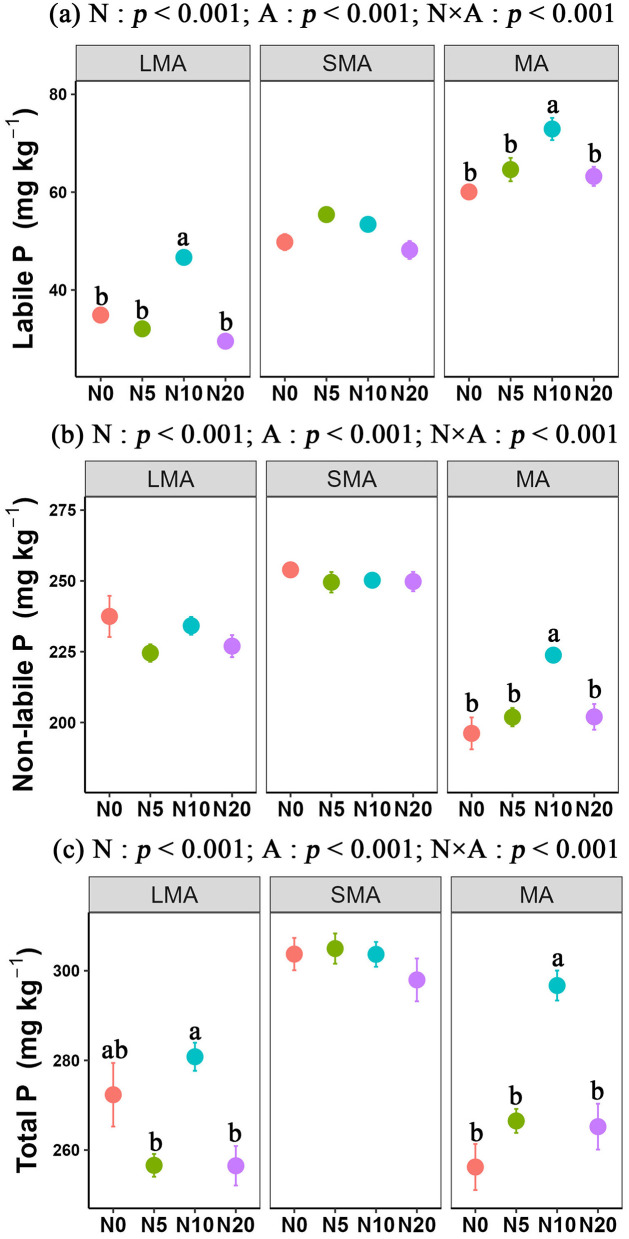 Figure 1
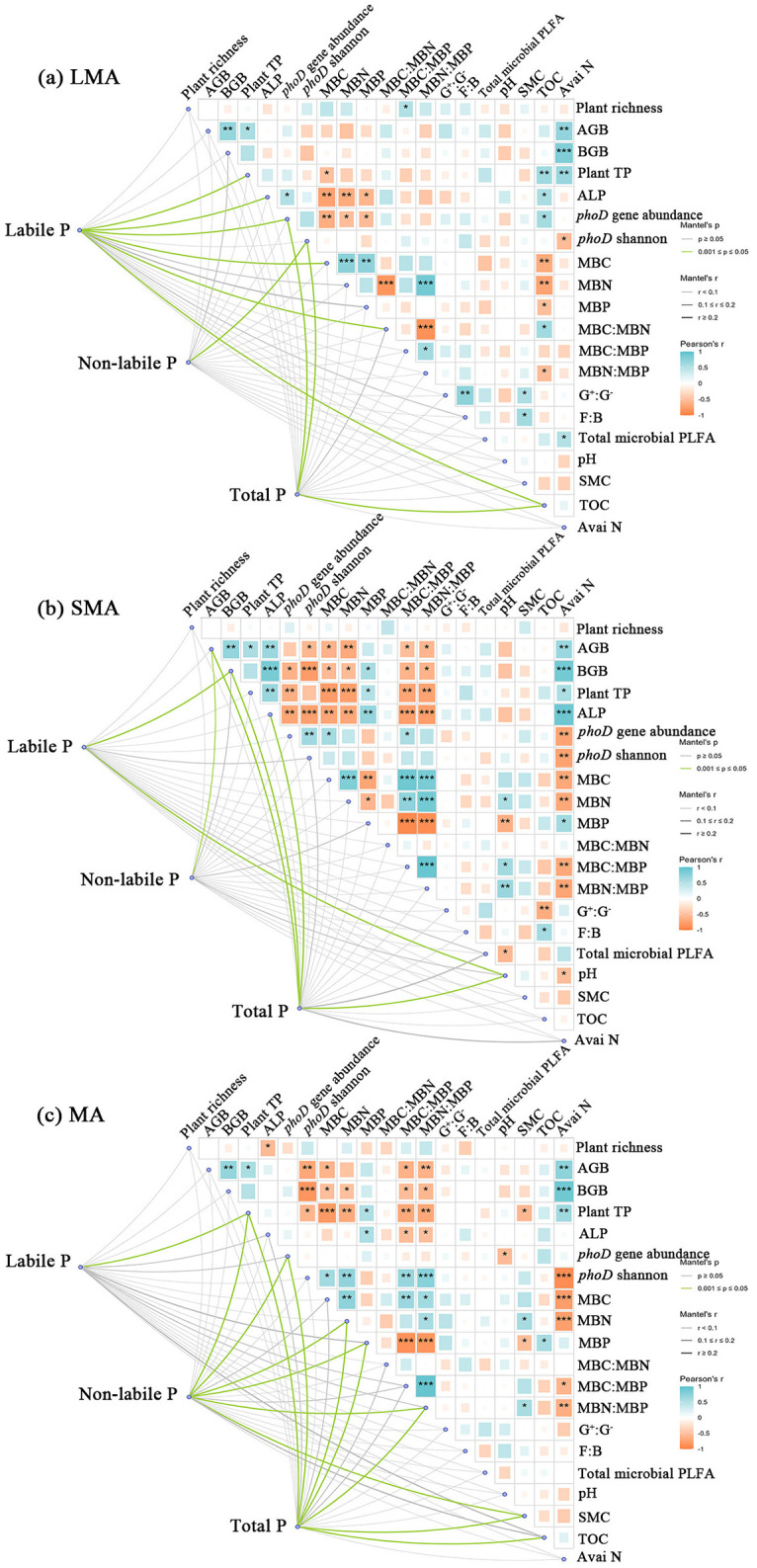 Figure 2
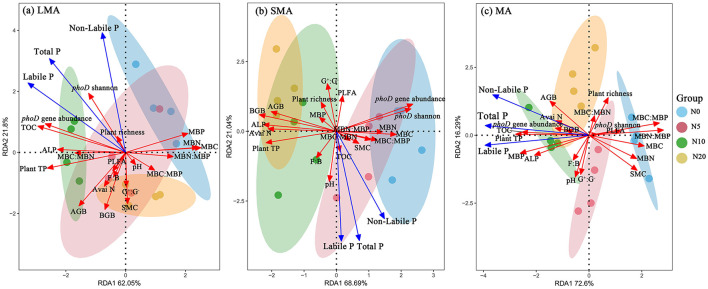 Figure 3
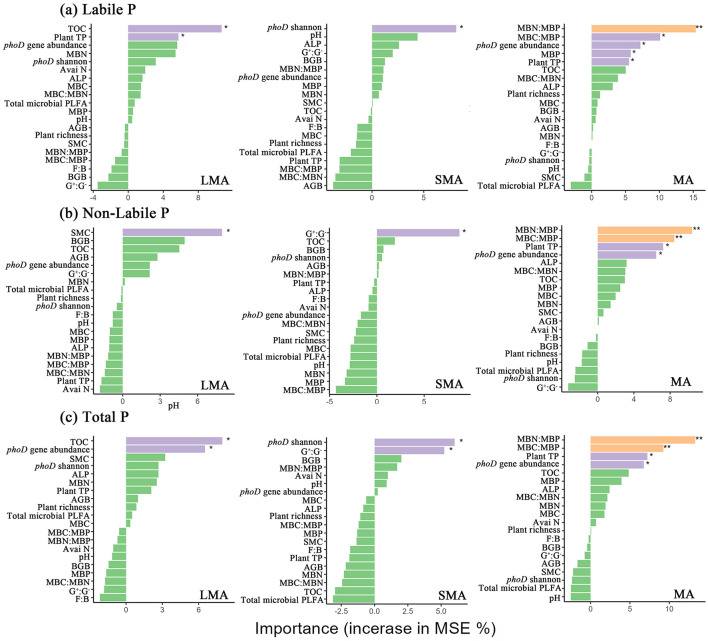 Figure 4
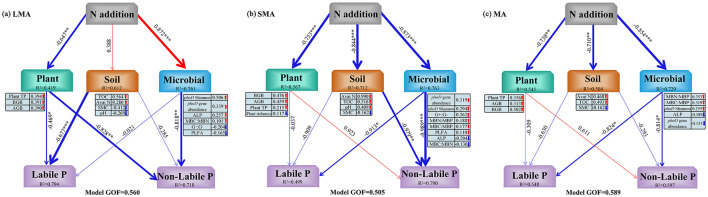 Figure 5
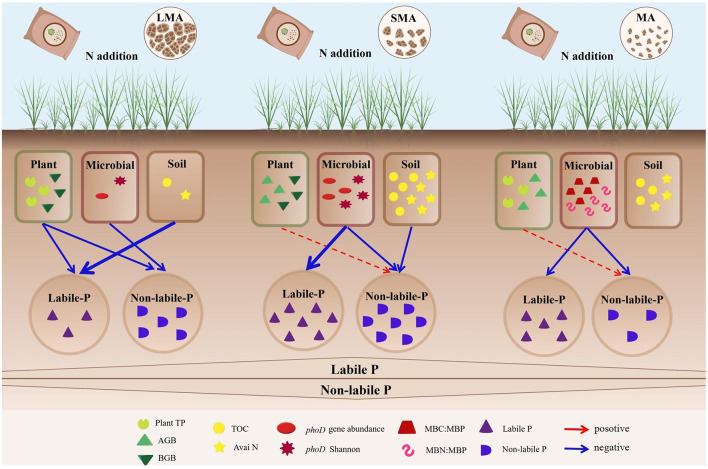 Figure 6
Peer Reviews
No public reviews on file for this paper yet. If you reviewed it on a platform where reviews are public (OpenReview, ICLR, NeurIPS, ICML), you can paste yours below so the community can read it here.
Videos
No videos yet. Explain this paper in a talk, walkthrough, or lecture? Add one.
Taxonomy
TopicsSoil Carbon and Nitrogen Dynamics · Soil and Water Nutrient Dynamics · Plant nutrient uptake and metabolism