Morphology and distribution of sensilla on the antennae and mouthparts of adult Monochamus saltuarius Gebler (Coleoptera: Cerambycidae)
Jianjun Wang, Jianguo Wang, Jingxian Wang, Xu Jiang, Shitan Ren, Chuanwang Cao

TL;DR
This paper describes the types and distribution of sensory structures on the antennae and mouthparts of Monochamus saltuarius, a wood-boring pest, to better understand its sense of smell and environmental perception.
Contribution
The study provides a detailed characterization of sensilla types and their potential functions on the antennae and mouthparts of Monochamus saltuarius.
Findings
Eight types of antennal sensilla were identified, including mechanoreceptors and chemoreceptors.
Seven sensillum types were found on maxillary and labial palps, with potential roles in mechanoreception and chemoreception.
Chemoreceptive sensilla were concentrated on the flagellum of the antennae.
Abstract
Monochamus saltuarius is an important wood-boring pest of forests and a vector insect for the transmission of Bursaphelenchus xylophilus in China and other East Asian regions. To gain insight into the Mo. saltuarius olfactory system, we characterized the sizes and morphological characteristics of sensilla on antennae, maxillary palps, and labial palps of adults by scanning electron microscopy. Eight types of antennal sensilla were identified on the antennae: Böhm bristles (BBs), sensilla chaetica (SChs, with subtypes SChI and SChII), sensilla trichodea (STs, with subtypes STI, STII and STIII), sensilla auricillica (SAus), sensilla basiconica (SBs, with subtypes SBI and SBII), sensilla grooved peg (SGPs), dome shaped organs (DSOs), and cuticular pores (CPs); among these, BBs, STIs, STIIs, SChIs, and SChIIs may be mechanoreceptors, and STIIIs, SAus, SBIs, SBIIs, SGPs and CPs may be…
Genes, proteins, chemicals, diseases, species, mutations and cell lines named across the full text — each resolved to its canonical identifier and authoritative record.
Click any figure to enlarge with its caption.
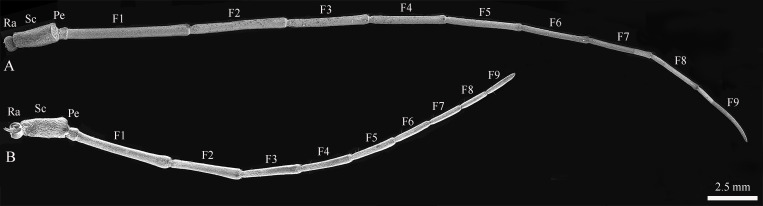 Figure 1
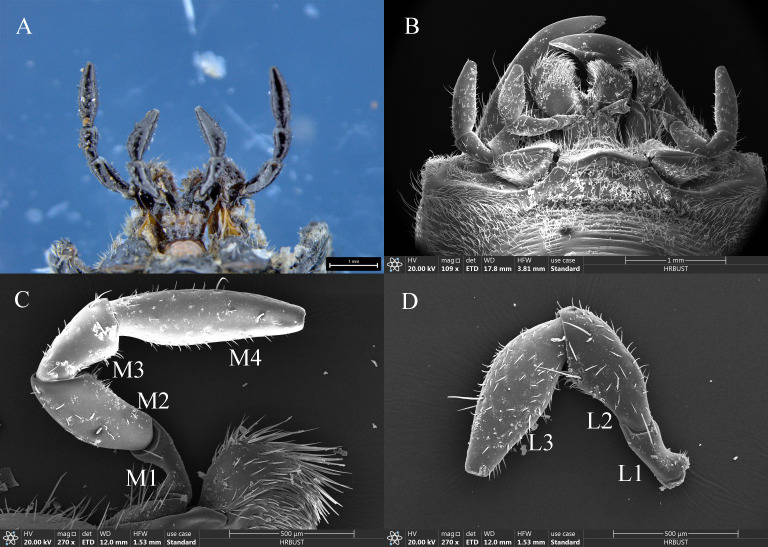 Figure 2
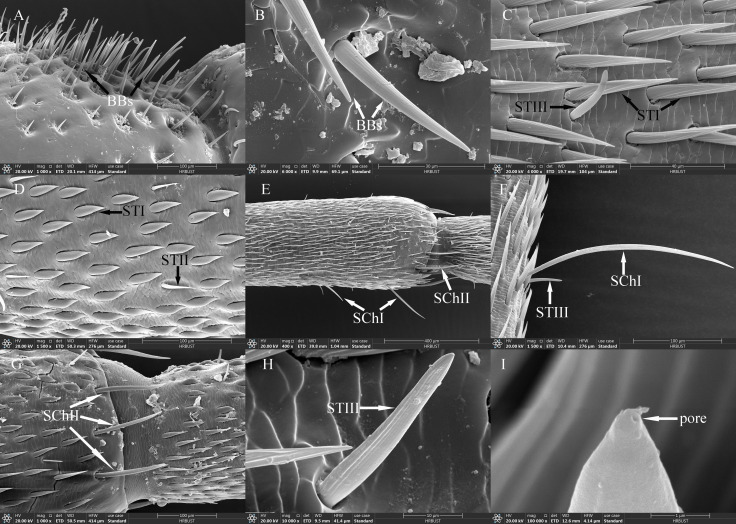 Figure 3
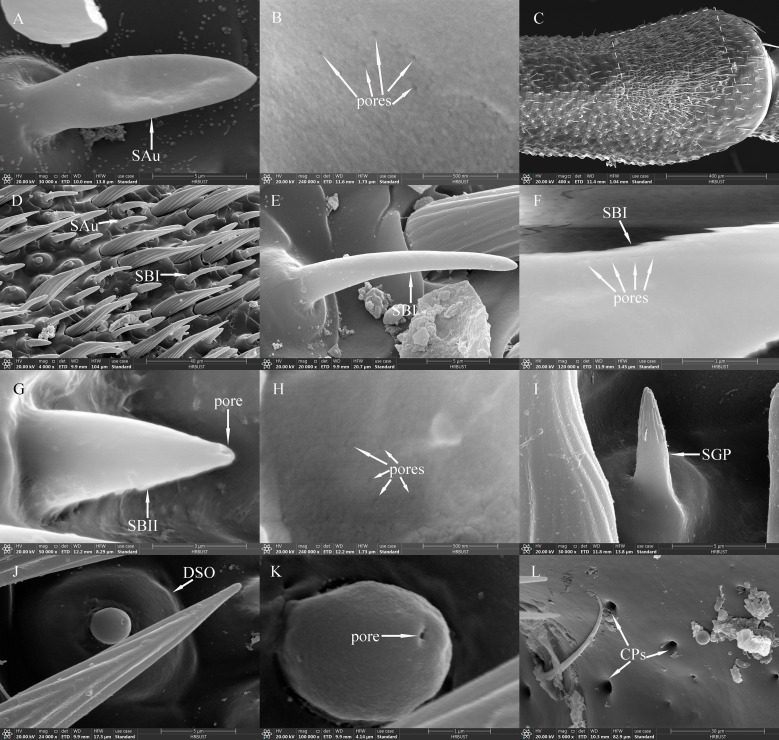 Figure 4
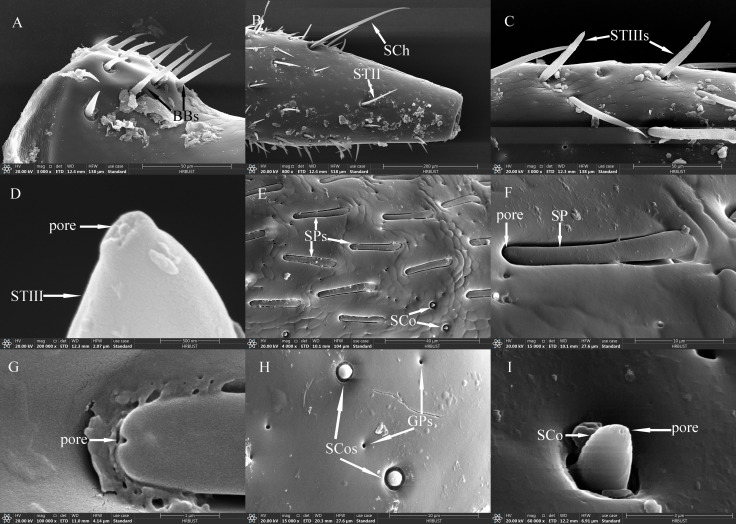 Figure 5
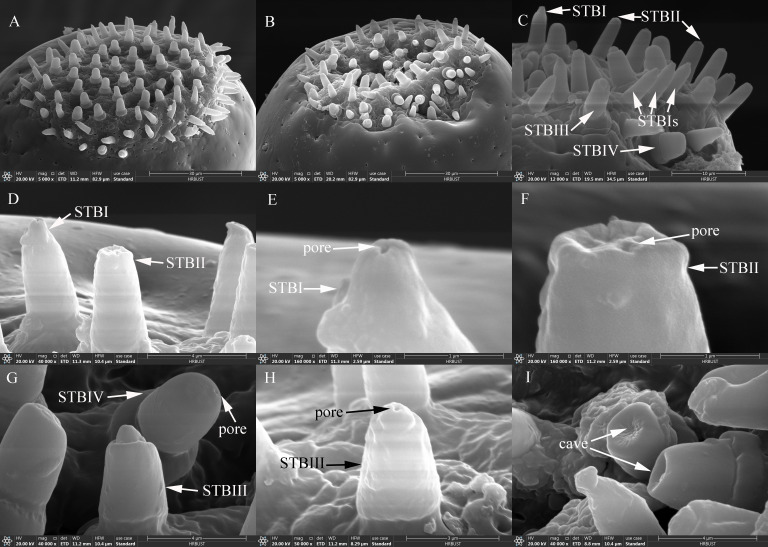 Figure 6
Peer Reviews
No public reviews on file for this paper yet. If you reviewed it on a platform where reviews are public (OpenReview, ICLR, NeurIPS, ICML), you can paste yours below so the community can read it here.
Videos
No videos yet. Explain this paper in a talk, walkthrough, or lecture? Add one.
Taxonomy
TopicsNeurobiology and Insect Physiology Research · Insect Resistance and Genetics · Forest Insect Ecology and Management