Anti-fibrotic effect of human amniotic fluid stem cells in biliary epithelial-mesenchymal transition of liver ductal organoid
Sinobol Chusilp, Poramate Klanrit, Carol Lee, Dorothy Lee, Bo Li, Felicia Balsamo, Kanokrat Thaiwatcharamas, Patchareeporn Tanming, Dolrudee Aroonsaeng, Paisarn Vejchapipat, Agostino Pierro

TL;DR
This study shows that human amniotic fluid stem cells can reduce liver fibrosis by preventing biliary cell transformation in a lab model of biliary atresia.
Contribution
A novel ex vivo model of biliary epithelial-mesenchymal transition and evidence that hAFSCs can mitigate this process in liver fibrosis.
Findings
hAFSCs significantly reduced TGF-β1-induced biliary EMT and collagen production in liver ductal organoids.
Wnt signaling was upregulated during EMT but downregulated by hAFSCs, decreasing myofibroblast and collagen expression.
Abstract
In biliary atresia (BA), it has been demonstrated that biliary epithelial-mesenchymal transition (EMT) of reactive ductular cells is associated with liver fibrosis. This study aimed to develop an ex vivo biliary EMT model of liver ductal organoids for exploring the involvement of biliary EMT in fibrogenesis and to investigate whether human amniotic fluid stem cells (hAFSCs) can mitigate the biliary EMT process. Liver ductal organoids were generated from the intrahepatic bile duct of healthy neonatal mice. Biliary EMT was induced in organoids by the administration of transforming growth factor beta-1 (TGF-β1) in culture medium. hAFSCs were co-cultured with organoids during biliary EMT induction. Expression of biliary epithelial cells, mesenchymal cells, myofibroblast, collagen I, and genes related to the Wnt signaling pathway were evaluated. Following administration of TGF-β1, we…
Genes, proteins, chemicals, diseases, species, mutations and cell lines named across the full text — each resolved to its canonical identifier and authoritative record.
Click any figure to enlarge with its caption.
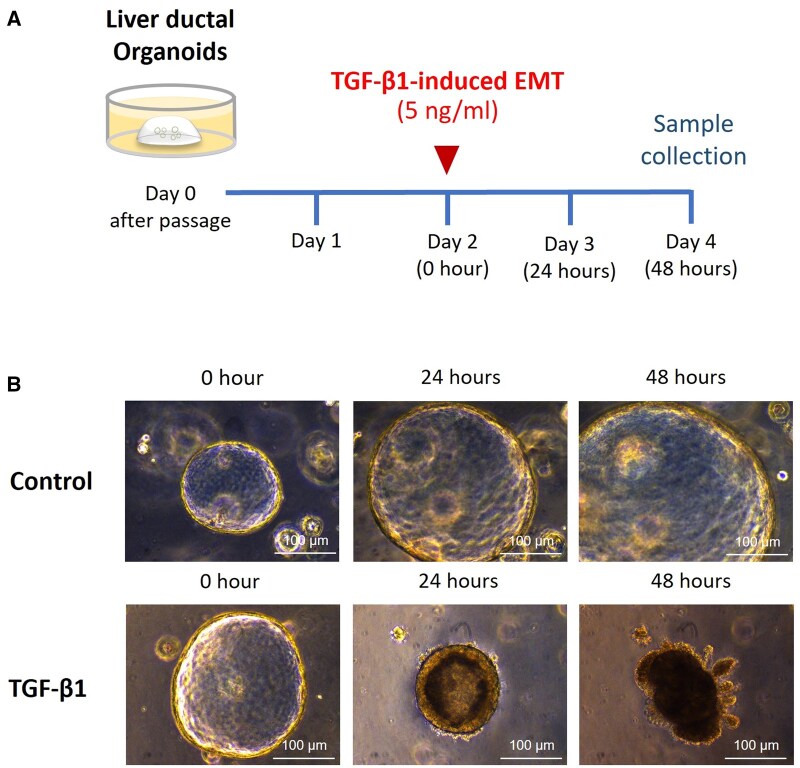 Figure 1
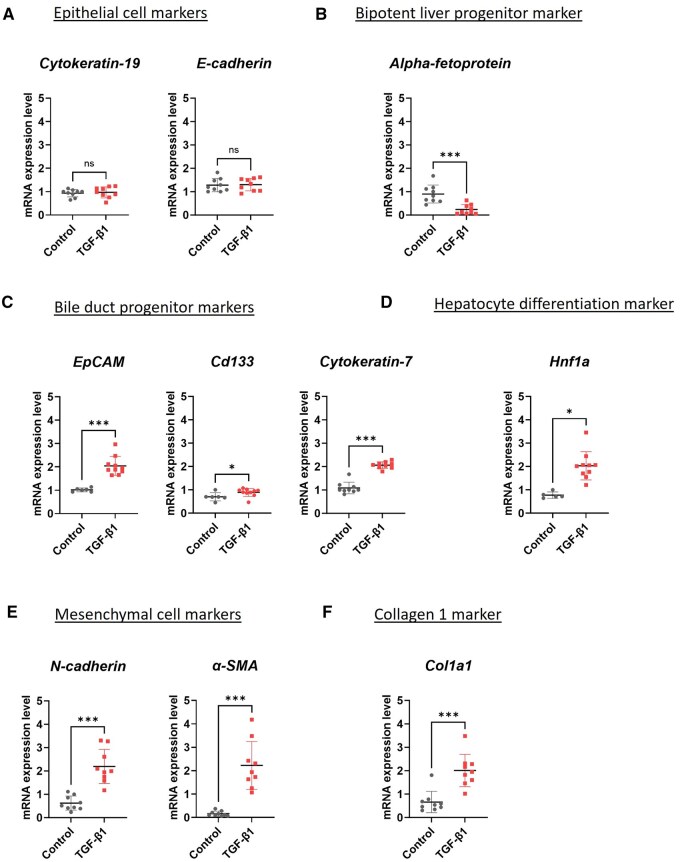 Figure 2
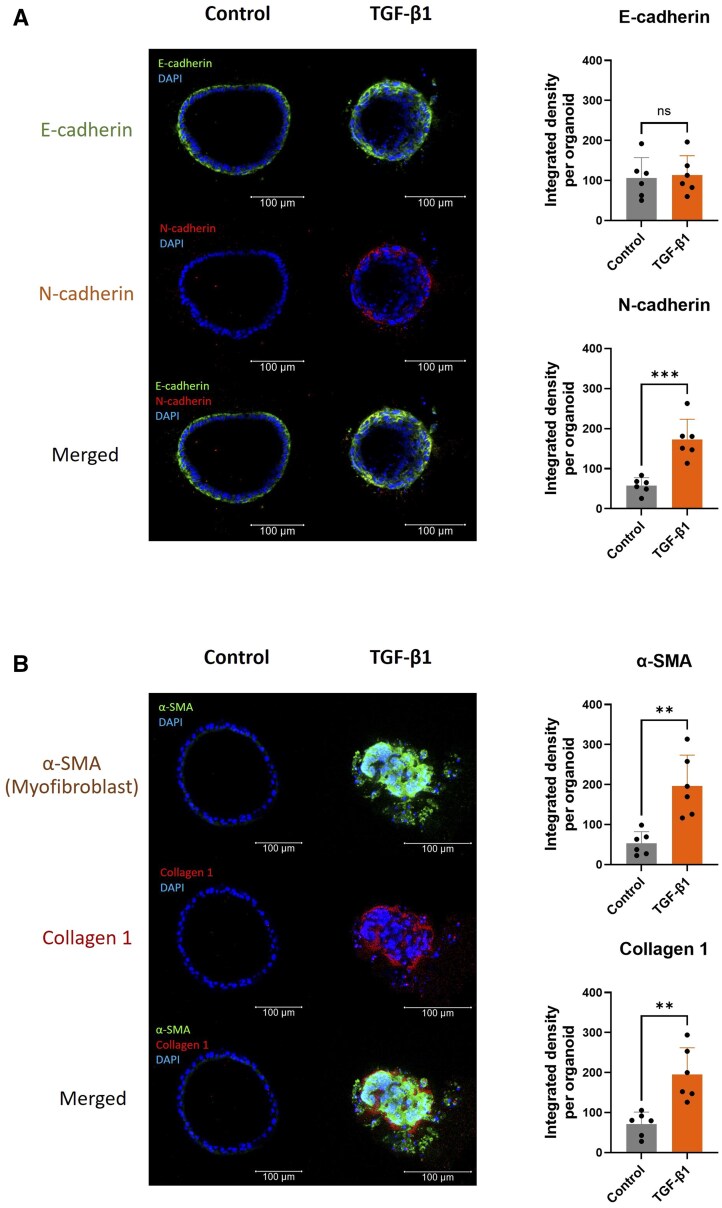 Figure 3
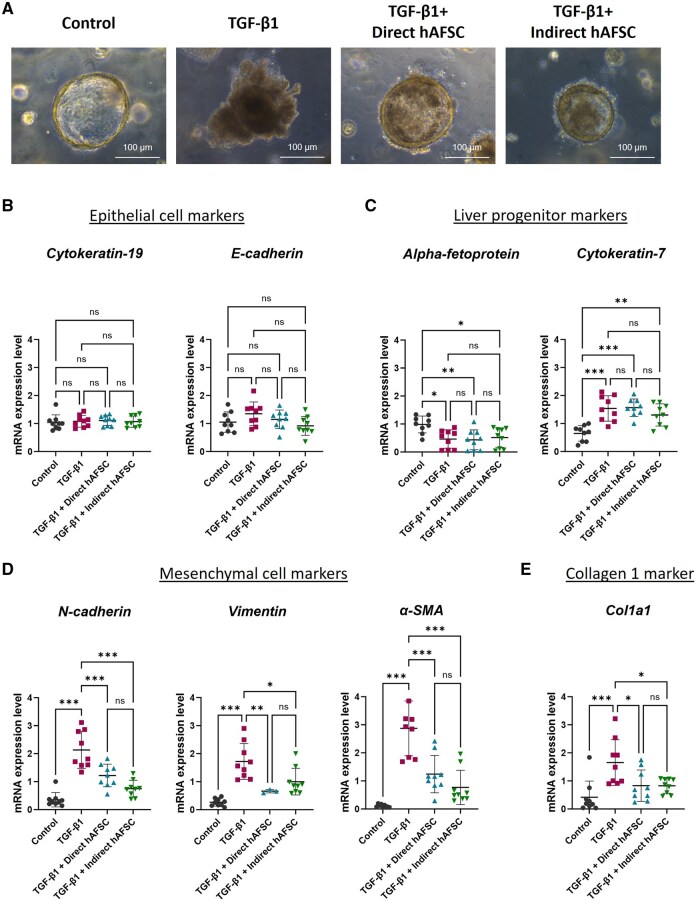 Figure 4
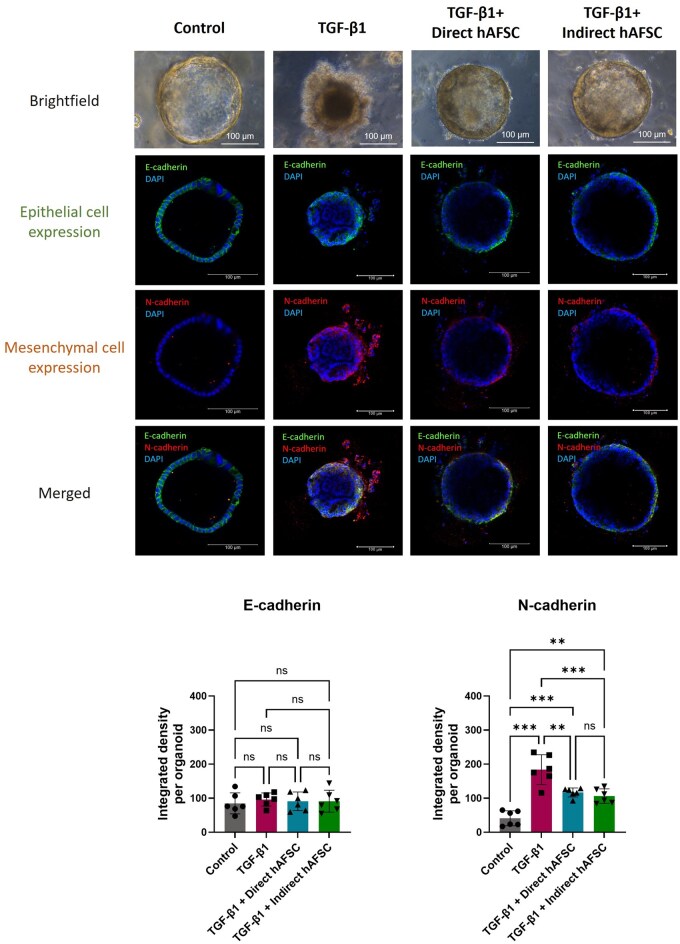 Figure 5
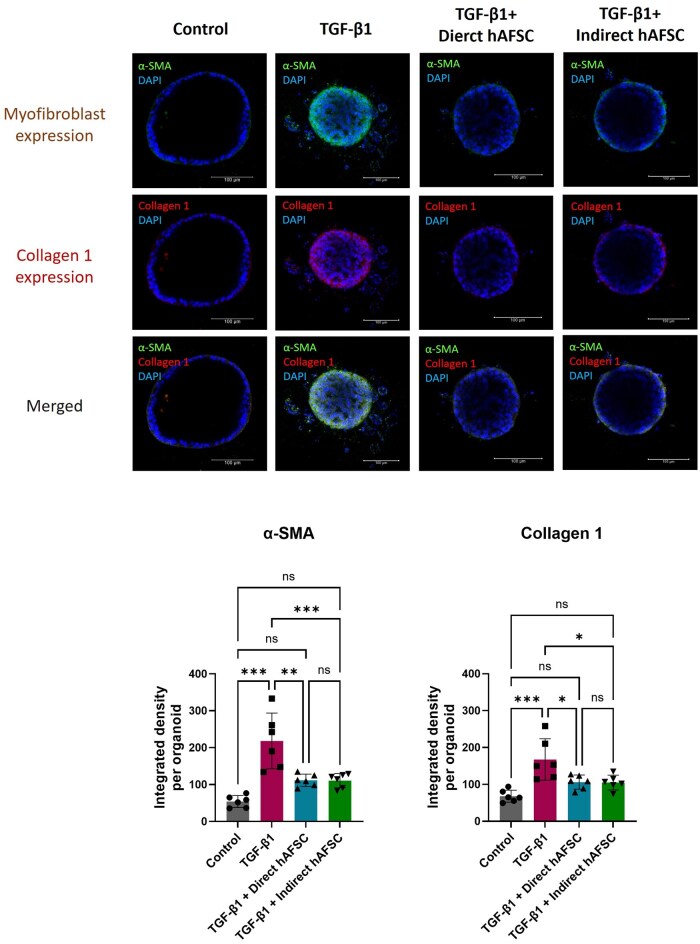 Figure 6
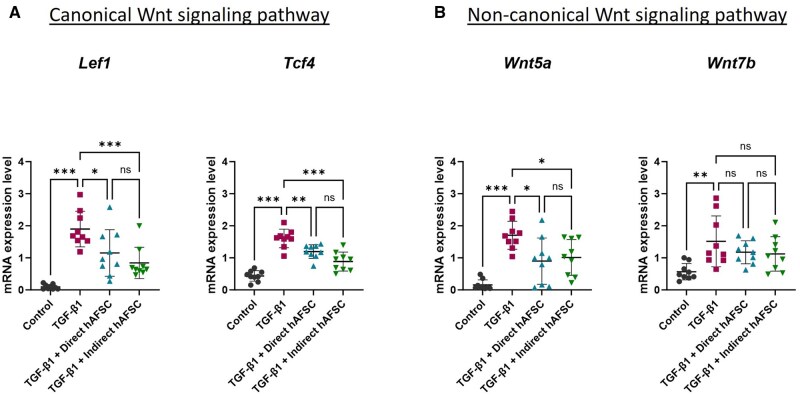 Figure 7
Peer Reviews
No public reviews on file for this paper yet. If you reviewed it on a platform where reviews are public (OpenReview, ICLR, NeurIPS, ICML), you can paste yours below so the community can read it here.
Videos
No videos yet. Explain this paper in a talk, walkthrough, or lecture? Add one.
Taxonomy
TopicsLiver physiology and pathology · Cancer Cells and Metastasis · Proteoglycans and glycosaminoglycans research