Case Report: Clinical and molecular features of a radiosensitive autoimmune polyendocrine syndrome type 1 patient with oral carcinoma
Asma Chikhaoui, Houda Hammami-Ghorbel, Dorra Najjar, Semia Zarraa, Safia Yahiaoui, Davor Lessel, Houda Yacoub-Youssef

TL;DR
This case report describes a patient with a rare autoimmune syndrome who developed oral cancer and showed extreme sensitivity to radiotherapy.
Contribution
The study identifies a novel co-occurrence of APECED and a CCM-related variant, linking it to poor cancer outcomes and radiosensitivity.
Findings
A homozygous loss-of-function variant in the AIRE gene was identified in the patient with APECED syndrome.
A gain-of-function variant in MAP3K3 was found, which may contribute to inflammatory and biochemical manifestations.
Overexpression of p38, TNF-α, and STAT3 was observed, potentially linking to the patient's atypical cancer progression and radiosensitivity.
Abstract
Autoimmune polyendocrine syndrome type-1 (APS1), also known as autoimmune polyendocrinopathy–candidiasis–ectodermal dystrophy (APECED), is an autoimmune genetic disease characterized by multiple endocrine disorders, chronic mucocutaneous candidiasis, and various ectodermal defects. Untreated candidiasis can increase the risk of oral cancer due to recurrent fungal infections. Radiotherapy is a curative option that can trigger an antitumoral response. However, exaggerated radiation-induced cytotoxicity can hinder this curative modality. APECED is caused by loss-of-function mutations in the autoimmune regulator AIRE gene, with only a few cases reported in Tunisia. In this study, we report the clinical, genetic, and molecular characteristics of a patient with APECED syndrome. This patient was initially referred for genetic inquiry due to extreme sensitivity to radiotherapy after developing…
Genes, proteins, chemicals, diseases, species, mutations and cell lines named across the full text — each resolved to its canonical identifier and authoritative record.
Click any figure to enlarge with its caption.
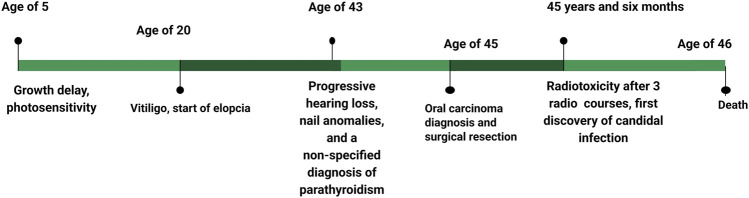 Figure 1
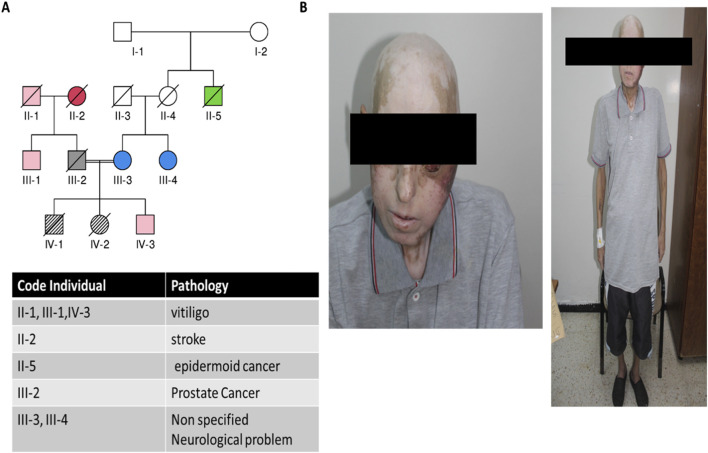 Figure 2
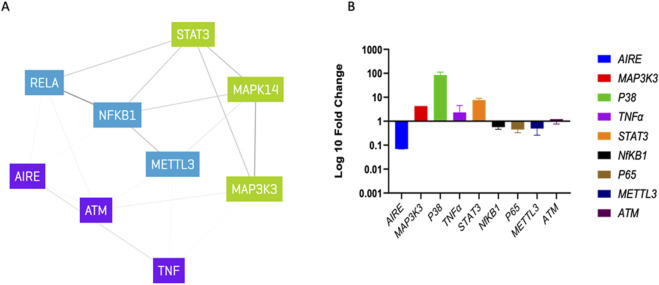 Figure 3
Peer Reviews
No public reviews on file for this paper yet. If you reviewed it on a platform where reviews are public (OpenReview, ICLR, NeurIPS, ICML), you can paste yours below so the community can read it here.
Videos
No videos yet. Explain this paper in a talk, walkthrough, or lecture? Add one.
Taxonomy
TopicsAdrenal Hormones and Disorders · Hormonal Regulation and Hypertension · Thyroid Disorders and Treatments