Spatial Clusters of Condyloma Acuminata and the Regional Risk Factors in South Korea: Bayesian Spatial Regression Analysis
Joonsu Jang, Seyul Park, Byung Chul Chun

TL;DR
This study maps high-risk areas for genital warts in South Korea and finds that factors like social welfare spending and adult entertainment venues are linked to higher infection rates.
Contribution
The study identifies geographic clusters of condyloma acuminata in South Korea and links them to regional socioeconomic and behavioral factors using Bayesian spatial regression.
Findings
Genital warts cases are clustered in metropolitan and southeastern regions of South Korea.
Higher incidence rates are associated with social welfare spending, single-person households, and adult entertainment venues.
Spatial clustering suggests the need for targeted public health interventions in high-risk areas.
Abstract
Condyloma acuminata (CA), the clinical manifestation of infection with low-risk human papillomaviruses 6 and 11, is a common sexually transmitted infection (STI) with recurrent lesions and notable psychosocial and health system burden. Recent evidence indicates a substantial global burden, with prevalence ranging from 0.5% to 33.1% and incidence ranging from 24 to 2940 per 100,000 person-years, varying by age, sex, time, and geography. In South Korea, national insurance data show sustained increases in patients receiving care for CA during 2010 to 2019. Beyond individual behaviors, spatial proximity and contextual factors can produce clustered STI risk. However, the municipal-level spatial distribution of CA in Korea and its contextual correlates remain understudied. This study aimed to identify high-risk geographic clusters of CA in South Korea and determine the regional factors…
Genes, proteins, chemicals, diseases, species, mutations and cell lines named across the full text — each resolved to its canonical identifier and authoritative record.
Click any figure to enlarge with its caption.
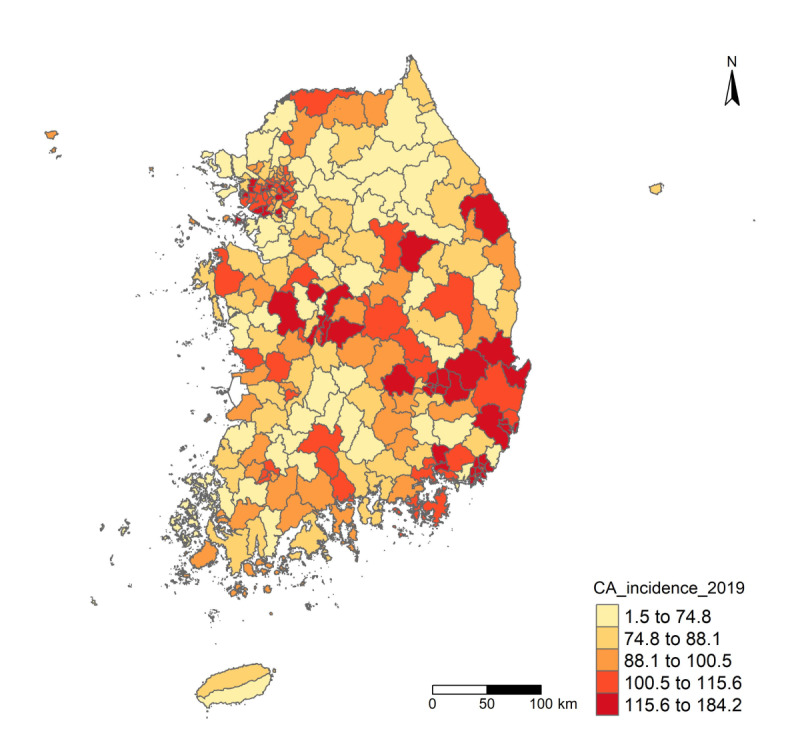 Figure 1
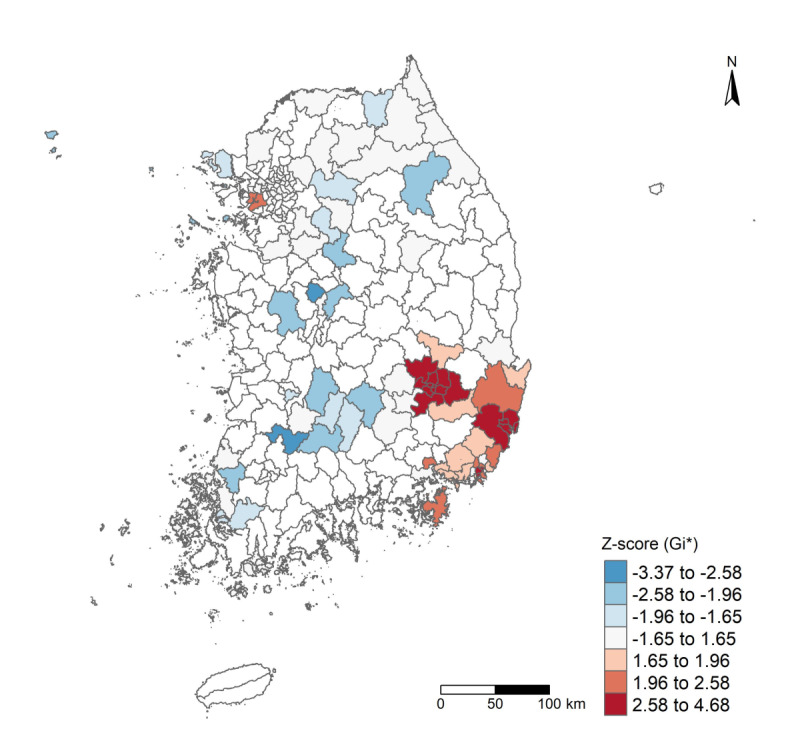 Figure 2
Peer Reviews
No public reviews on file for this paper yet. If you reviewed it on a platform where reviews are public (OpenReview, ICLR, NeurIPS, ICML), you can paste yours below so the community can read it here.
Videos
No videos yet. Explain this paper in a talk, walkthrough, or lecture? Add one.
Taxonomy
TopicsCervical Cancer and HPV Research · Head and Neck Cancer Studies · Reproductive tract infections research