Inferring effective networks of spiking neurons using a continuous-time estimator of transfer entropy
David P. Shorten, Viola Priesemann, Michael Wibral, Joseph T. Lizier

TL;DR
This paper introduces a new method for inferring effective networks from spike train data using a continuous-time estimator of transfer entropy.
Contribution
The paper demonstrates the first successful use of a continuous-time TE estimator for inferring effective networks from spike trains.
Findings
The continuous-time TE estimator outperforms pairwise TE and convolutional neural network approaches in inferring effective networks.
The method performs better than Generalised Linear Models in cases of high synchrony in spike trains.
The approach reveals how effective connections develop in recordings of developing neural cell cultures.
Abstract
When analysing high-dimensional time-series datasets, the inference of effective networks has proven to be a valuable modelling technique. This technique produces networks where each target node is associated with a set of source nodes that are capable of providing explanatory power for its dynamics. Multivariate Transfer Entropy (TE) has proven to be a popular and effective tool for inferring these networks. Recently, a continuous-time estimator of TE for event-based data such as spike trains has been developed which, in more efficiently representing event data in terms of inter-event intervals, is significantly more capable of measuring multivariate interactions. The new estimator thus presents an opportunity to more effectively use TE for the inference of effective networks from spike trains, and we demonstrate in this paper for the first time its efficacy at this task. Using data…
Genes, proteins, chemicals, diseases, species, mutations and cell lines named across the full text — each resolved to its canonical identifier and authoritative record.
Click any figure to enlarge with its caption.
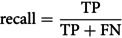 Figure 1
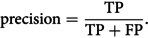 Figure 2
 Figure 3
 Figure 4
 Figure 5
 Figure 6
 Figure 7
 Figure 8
 Figure 9
 Figure 10
 Figure 11
 Figure 12
 Figure 13
 Figure 14
 Figure 15
 Figure 16
 Figure 17
 Figure 18
 Figure 19
 Figure 20
 Figure 21
 Figure 22
 Figure 23
 Figure 24
 Figure 25
 Figure 26
 Figure 27
 Figure 28
 Figure 29
 Figure 30
 Figure 31
 Figure 32
 Figure 33
 Figure 34
 Figure 35
 Figure 36
 Figure 37
 Figure 38
 Figure 39
 Figure 40
 Figure 41
 Figure 42
 Figure 43
 Figure 44
 Figure 45
 Figure 46
 Figure 47
 Figure 48
 Figure 49
 Figure 50
Peer Reviews
No public reviews on file for this paper yet. If you reviewed it on a platform where reviews are public (OpenReview, ICLR, NeurIPS, ICML), you can paste yours below so the community can read it here.
Videos
No videos yet. Explain this paper in a talk, walkthrough, or lecture? Add one.
Taxonomy
TopicsNeural dynamics and brain function · Advanced Memory and Neural Computing · stochastic dynamics and bifurcation