Rhesus macaques model human Mayaro virus disease and transmit to Aedes aegypti mosquitoes
Adam J. Moore, Koen K. A. Van Rompay, William Louie, Jennifer K. Watanabe, Sunny An, Rochelle Leung, Jodie L. Usachenko, Peter N. Chu, Katherine J. Olstad, Colleen S. McCoy, Rafael K. Campos, Scott C. Weaver, Shannan L. Rossi, Lark L. Coffey

TL;DR
Rhesus macaques infected with Mayaro virus show human-like symptoms and can transmit the virus to Aedes aegypti mosquitoes, but transmission is rare, which may explain why Mayaro outbreaks are uncommon.
Contribution
This study demonstrates that rhesus macaques can model human Mayaro virus disease and transmit it to Aedes aegypti mosquitoes, revealing limited transmission potential.
Findings
Rhesus macaques developed viremias that lasted 3 days and peaked 1–2 days post-inoculation.
Aedes aegypti mosquitoes fed on viremic macaques became infected, but only 2% had infectious virus in their saliva.
Macaques showed mild joint and muscle inflammation and transmitted MAYV to mosquitoes, but transmission rates were low.
Abstract
Mayaro virus (MAYV) is a mosquito-borne alphavirus endemic to Latin America that causes fever and arthritis. Unlike the related chikungunya virus, MAYV has not caused widespread, human-amplified epidemics. One possible explanation is that human viremia levels are too low to support transmission to urban Aedes (Stegomyia) aegypti mosquitoes. We used rhesus macaques (RM) to model human-to-Ae. aegypti transmission and to further expand understanding of their relevance to human MAYV disease. Twelve RM were inoculated with a genotype D lineage MAYV from an infectious clone using one of 3 dose and route combinations: 7 log10 plaque forming units (PFU) intravenously (IV), 7 log10 PFU subcutaneously (SC), or 3 log10 PFU SC. Viremia was measured daily in plasma and RM were euthanized 10- or 12-days post-inoculation (dpi). On 2, 3, 5, and 7 dpi, Ae. aegypti were allowed to bloodfeed on RM,…
Genes, proteins, chemicals, diseases, species, mutations and cell lines named across the full text — each resolved to its canonical identifier and authoritative record.
Click any figure to enlarge with its caption.
 Figure 1
 Figure 2
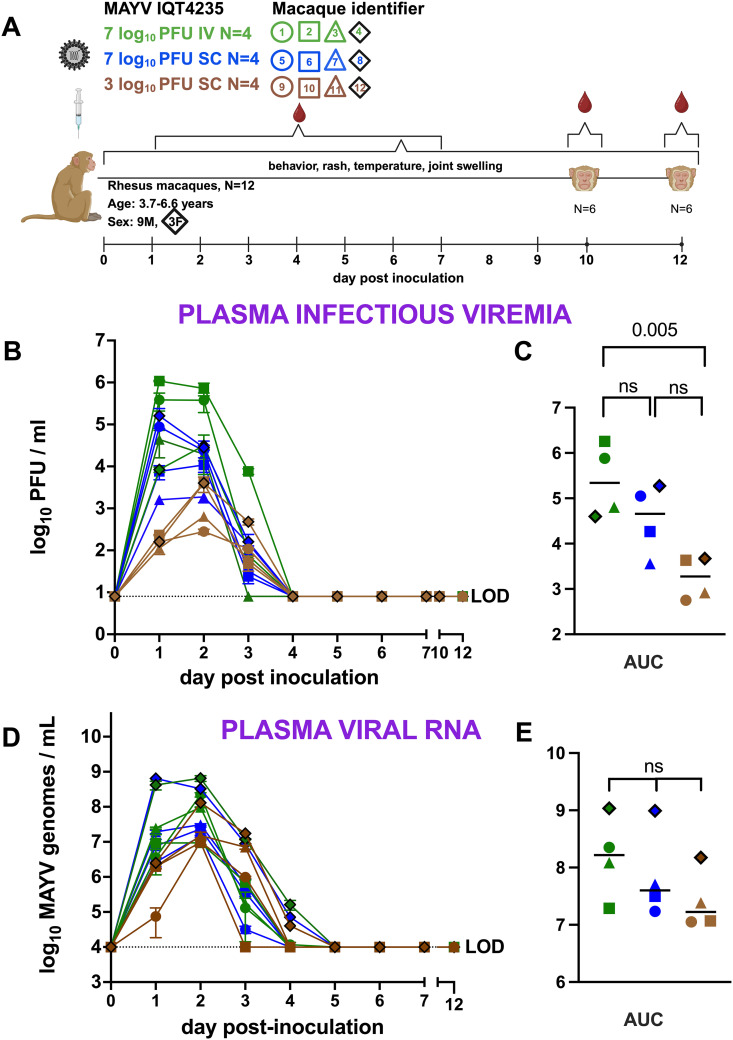 Figure 3
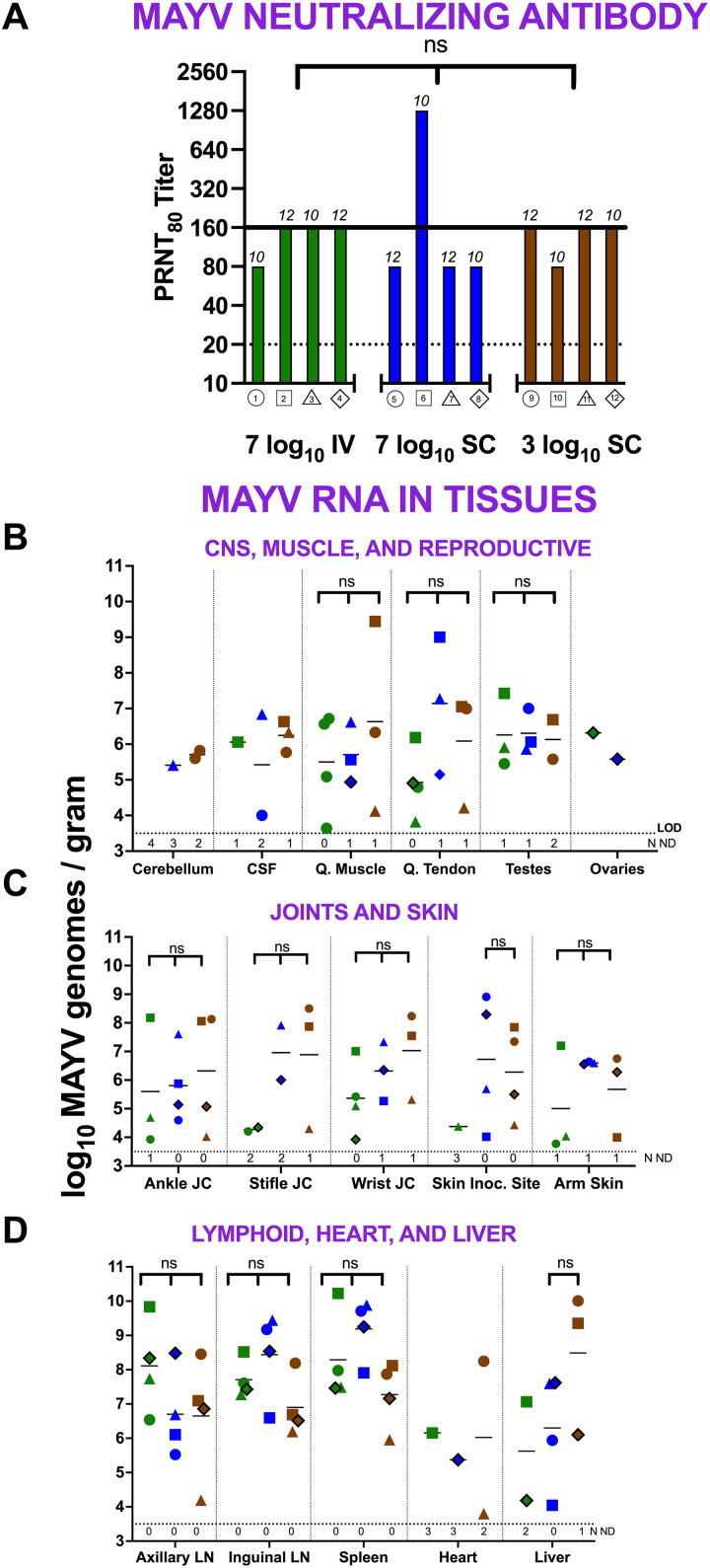 Figure 4
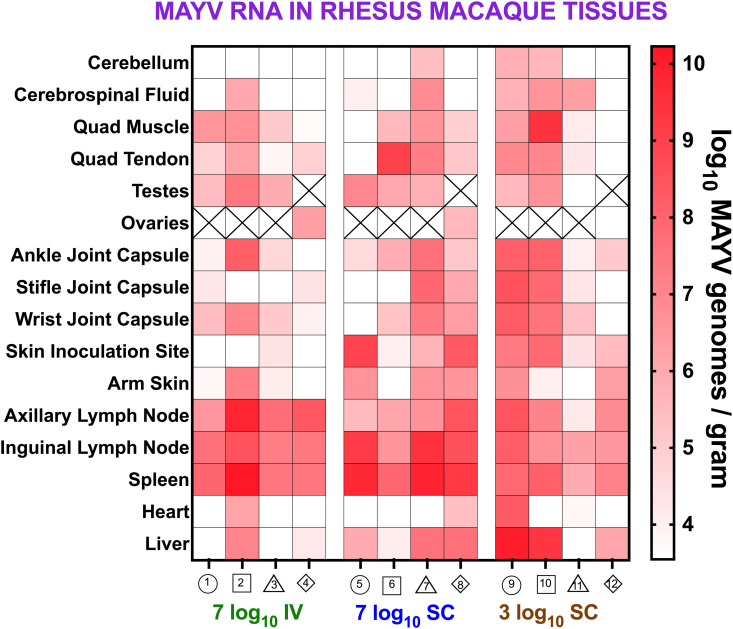 Figure 5
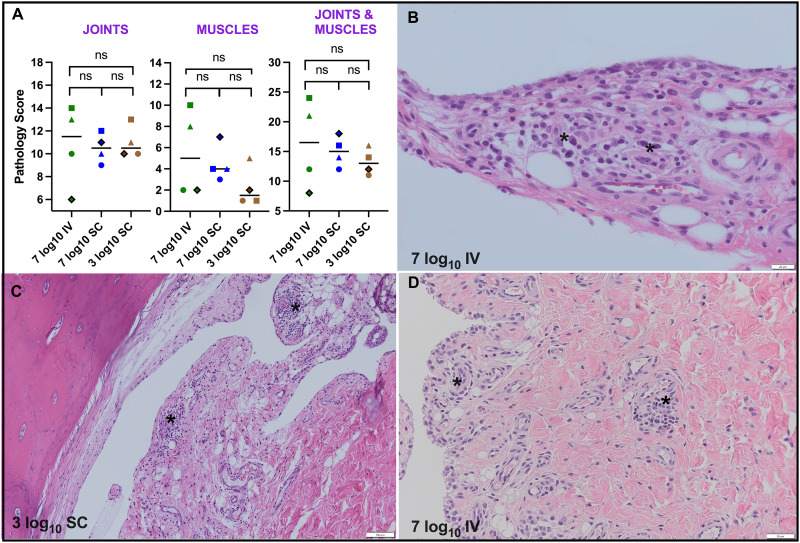 Figure 6
 Figure 7
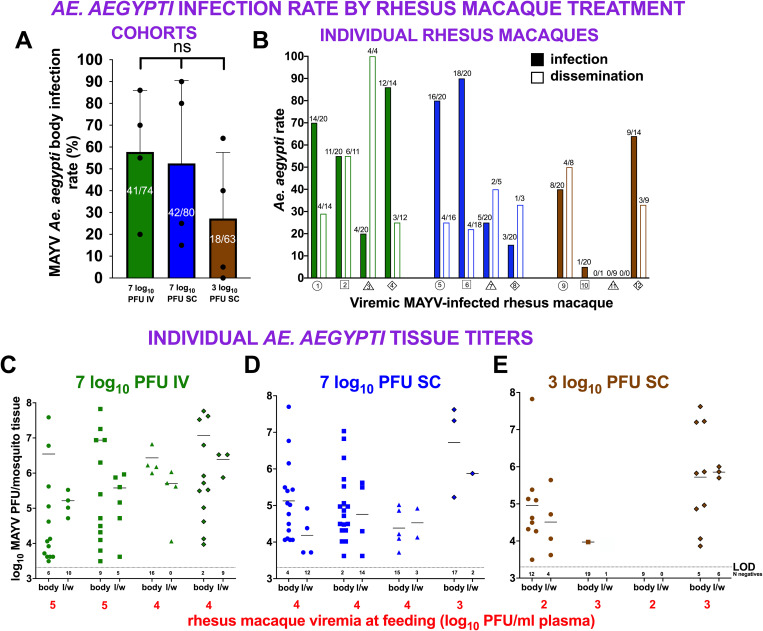 Figure 8
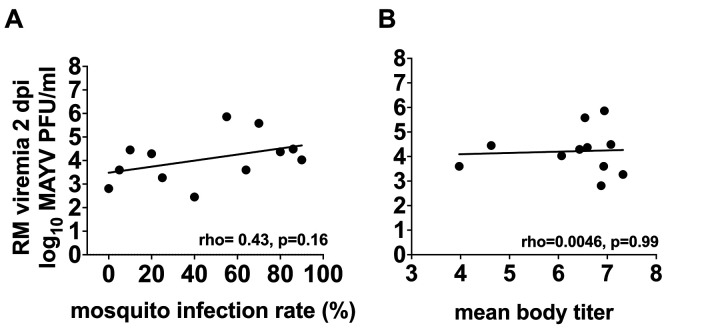 Figure 9
Peer Reviews
No public reviews on file for this paper yet. If you reviewed it on a platform where reviews are public (OpenReview, ICLR, NeurIPS, ICML), you can paste yours below so the community can read it here.
Videos
No videos yet. Explain this paper in a talk, walkthrough, or lecture? Add one.
Taxonomy
TopicsMosquito-borne diseases and control · Virology and Viral Diseases · T-cell and Retrovirus Studies