Detecting polynucleotide motifs: Pentads, hexads, and beyond
Michal Zurkowski, Maja Marusic, Dorota Gudanis-Sobocinska, Marta Szachniuk

TL;DR
This paper introduces a new tool for identifying complex nucleic acid structures called polyads, which are important for genome regulation and stability.
Contribution
The novel contribution is the development and validation of LinkTetrado, a computational tool for detecting and classifying polyadic nucleic acid motifs.
Findings
LinkTetrado identified 25 unique structures containing polyadic motifs in a dataset of 529 nucleic acid structures.
Manual validation confirmed the accuracy of motif assignments with a precision of 0.87.
Previously unreported pentads, hexads, heptads, and octads were found in both DNA and RNA.
Abstract
The structural diversity of nucleic acids extends far beyond the canonical Watson–Crick base pairing, encompassing higher-order motifs, such as triads, tetrads, pentads, hexads, heptads, and octads, which play critical roles in genome regulation and stability. Among these, tetrads – forming the core of G-quadruplexes – and their polyadic extensions have emerged as key determinants in fundamental processes ranging from replication and transcription to telomere maintenance. However, the detection and characterization of these complex motifs in experimental structures remain challenging. To address this, we present LinkTetrado, a computational tool for the automated identification and classification of polyadic motifs in nucleic acid 3D structures. Applied to a curated dataset of 529 nucleic acid structures, LinkTetrado identified 25 unique structures containing such motifs, including…
Genes, proteins, chemicals, diseases, species, mutations and cell lines named across the full text — each resolved to its canonical identifier and authoritative record.
Click any figure to enlarge with its caption.
 Figure 1
 Figure 2
 Figure 3
 Figure 4
 Figure 5
 Figure 6
 Figure 7
 Figure 8
 Figure 9
 Figure 10
 Figure 11
 Figure 12
 Figure 13
 Figure 14
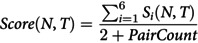 Figure 15
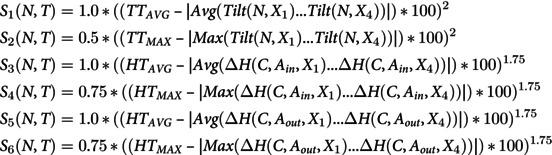 Figure 16
 Figure 17
 Figure 18
 Figure 19
 Figure 20
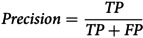 Figure 21
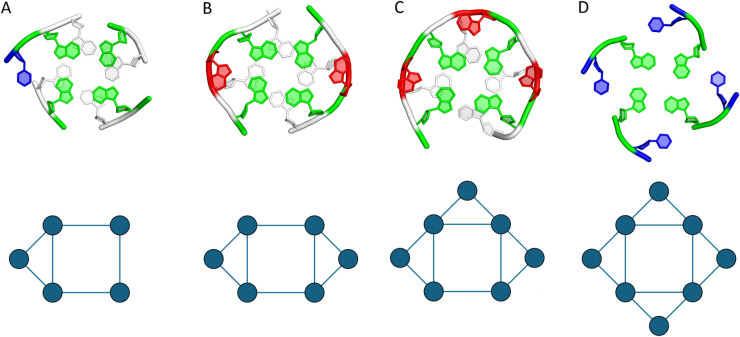 Figure 22
 Figure 23
 Figure 24
 Figure 25
 Figure 26
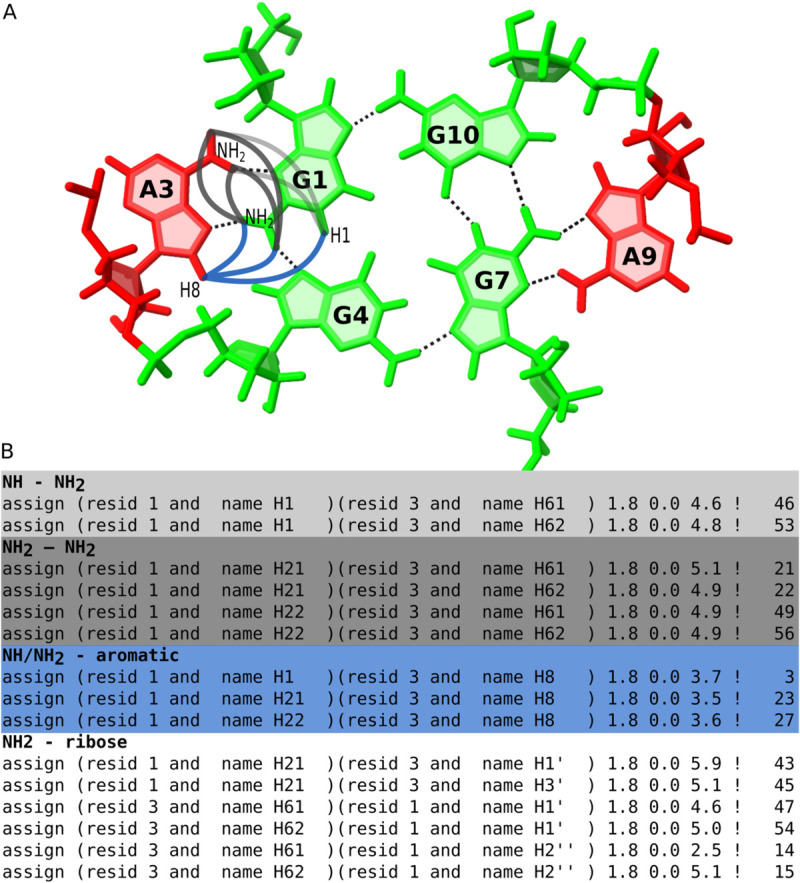 Figure 27
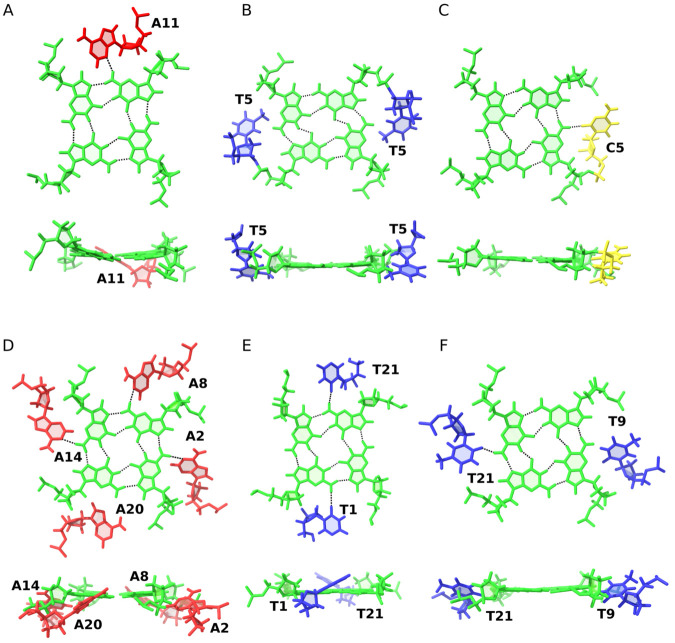 Figure 28
Peer Reviews
No public reviews on file for this paper yet. If you reviewed it on a platform where reviews are public (OpenReview, ICLR, NeurIPS, ICML), you can paste yours below so the community can read it here.
Videos
No videos yet. Explain this paper in a talk, walkthrough, or lecture? Add one.
Taxonomy
TopicsDNA and Nucleic Acid Chemistry · Origins and Evolution of Life · Advanced biosensing and bioanalysis techniques