Stability analysis of heterogeneous oligopoly games of increasing players: A computational approach
Ruirui Hou, Xiaoliang Li, Wenshuang Wan, Pu-yan Nie, Pu-yan Nie, Pu-yan Nie, Pu-yan Nie

TL;DR
This paper studies how market stability changes as more diverse companies join an industry, using mathematical models and simulations.
Contribution
The paper introduces a computational approach to analyze stability in heterogeneous oligopoly games with increasing players.
Findings
Stability regions grow larger as more heterogeneous firms are added.
Complex dynamics like chaos emerge when equilibrium is lost.
Dynamics are more complex with distinct cost parameters.
Abstract
In this paper, we study an oligopolistic market endowed with an isoelastic demand function and a quadratic cost function, where heterogeneous firms coexist and produce the same product. We create new games by adding additional heterogeneous firms one after the other, and we examine the relative size of the stability region as the number of heterogeneous firms increases. For each model studied, we use the cylindrical algebraic decomposition method to analytically investigate the conditions for the local stability of the Cournot–Nash equilibrium. We find that the stability regions become larger as the number of heterogeneous firms involved increases. We also perform numerical simulations to investigate complex dynamics, such as periodic orbits and chaos, when the equilibrium loses its stability. Furthermore, we investigate the case of distinct cost parameters through numerical simulations…
Genes, proteins, chemicals, diseases, species, mutations and cell lines named across the full text — each resolved to its canonical identifier and authoritative record.
Click any figure to enlarge with its caption.
 Figure 1
 Figure 2
 Figure 3
 Figure 4
 Figure 5
 Figure 6
 Figure 7
 Figure 8
 Figure 9
 Figure 10
 Figure 11
 Figure 12
 Figure 13
 Figure 14
 Figure 15
 Figure 16
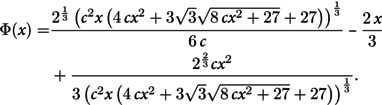 Figure 17
 Figure 18
 Figure 19
 Figure 20
 Figure 21
 Figure 22
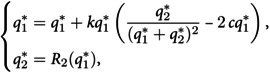 Figure 23
 Figure 24
 Figure 25
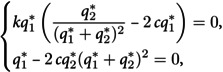 Figure 26
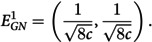 Figure 27
 Figure 28
 Figure 29
 Figure 30
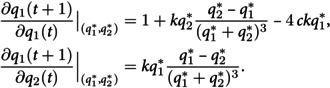 Figure 31
 Figure 32
 Figure 33
 Figure 34
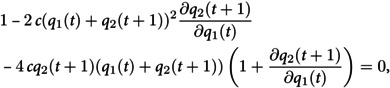 Figure 35
 Figure 36
 Figure 37
 Figure 38
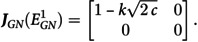 Figure 39
 Figure 40
 Figure 41
 Figure 42
 Figure 43
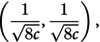 Figure 44
 Figure 45
 Figure 46
 Figure 47
 Figure 48
 Figure 49
 Figure 50
Peer Reviews
No public reviews on file for this paper yet. If you reviewed it on a platform where reviews are public (OpenReview, ICLR, NeurIPS, ICML), you can paste yours below so the community can read it here.
Videos
No videos yet. Explain this paper in a talk, walkthrough, or lecture? Add one.
Taxonomy
TopicsMerger and Competition Analysis · Economic theories and models · Game Theory and Applications