Evaluating effectiveness and comparative costs of hepatitis C virus self-testing service delivery models in Vietnam: A cross-sectional study
Bao Vu Ngoc, Minh Tran Hung, Huong Phan Thi Thu, Khoa Nguyen Trong, Huong Nguyen Mai, Kim Do Tuan, An Nguyen Le Thanh, Lien Tran Thi Huong, An Tran Khanh, Giang Le Thu, Chau Pham Van, Krista Granger, Karin Hatzold, Yasmin Dunkley, Cheryl Case Johnson, Niklas Luhmann

TL;DR
This study compares the effectiveness and costs of different hepatitis C self-testing models in Vietnam, finding that self-testing reaches more first-time testers but is currently more expensive than standard testing.
Contribution
The study evaluates HCV self-testing models in real-world settings and quantifies their cost-effectiveness in key populations in Vietnam.
Findings
HCV self-testing reached more first-time testers compared to standard testing, especially through community and secondary distribution models.
HCV self-testing at community organizations was more costly than standard testing, but costs could become comparable with reduced test kit prices.
HCV positivity rates were lower with self-testing at community organizations but similar at clinics compared to standard testing.
Abstract
Hepatitis C virus self-testing (HCVST) has been shown to reach people who may not otherwise test. We conducted a cross-sectional survey to assess the effectiveness and costs of different HCVST distribution models among key populations (KPs) and people living with HIV (PLHIV) in Hanoi and Ho Chi Minh City, Vietnam, between September 2023 and April 2024. We engaged eight community-based organizations (CBOs) and 10 public and private clinics in offering HCVST using oral fluid-based HCV rapid antibody tests along with standard or provider-led HCV testing (HCVT). HCVST effectiveness was assessed by the proportion of first-time testers, HCV positivity yield, and linkage to care. Outcomes were stratified by distribution model (community, facility, online, secondary distribution) and compared to standard HCVT. Cost per HCV diagnosis was calculated in US dollars. Among 2,882 participants tested…
Genes, proteins, chemicals, diseases, species, mutations and cell lines named across the full text — each resolved to its canonical identifier and authoritative record.
Click any figure to enlarge with its caption.
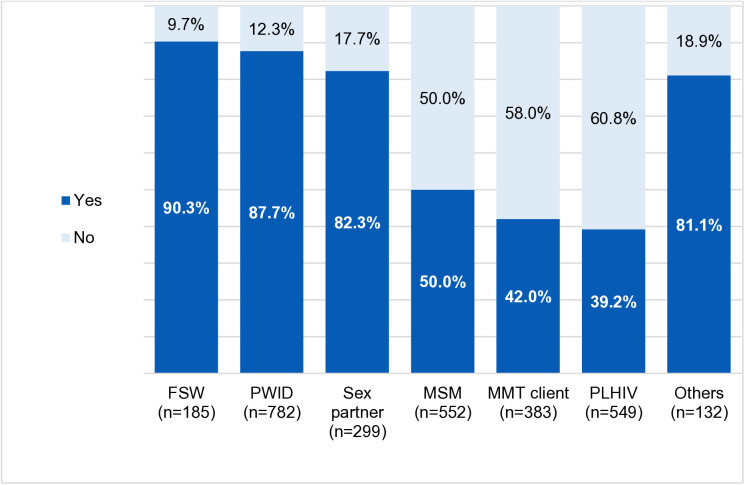 Figure 1
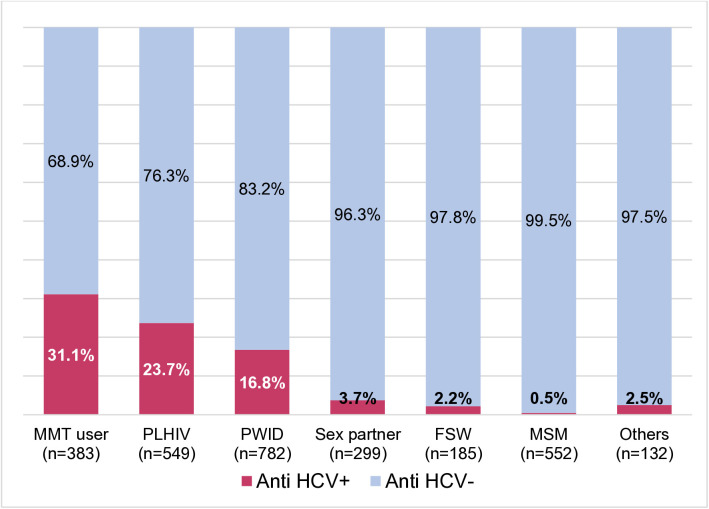 Figure 2
 Figure 3
 Figure 4
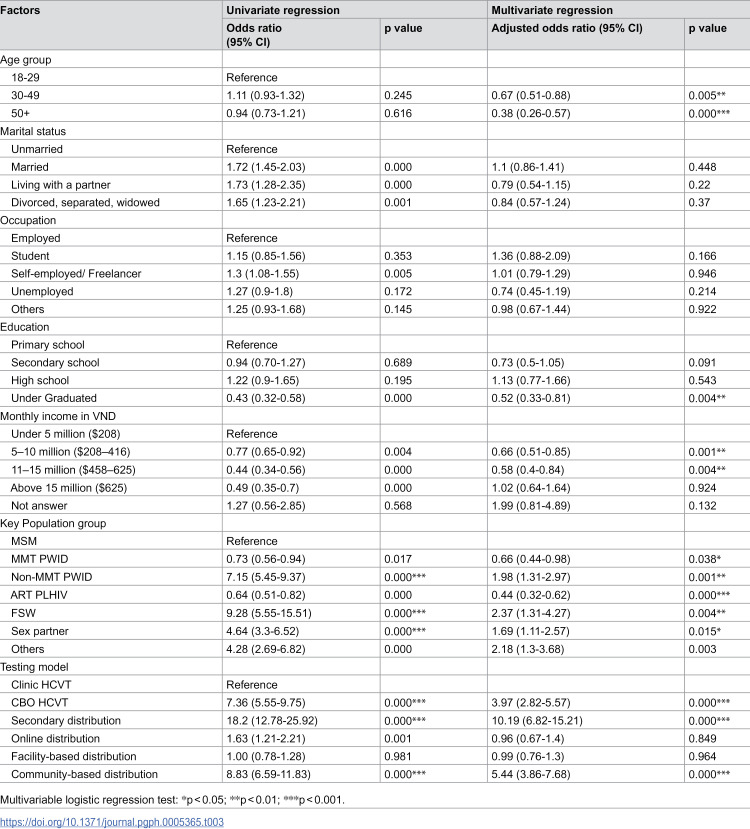 Figure 5
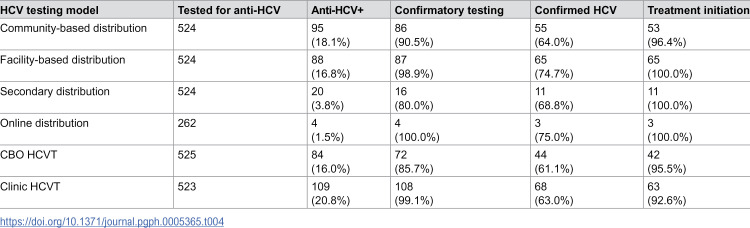 Figure 6
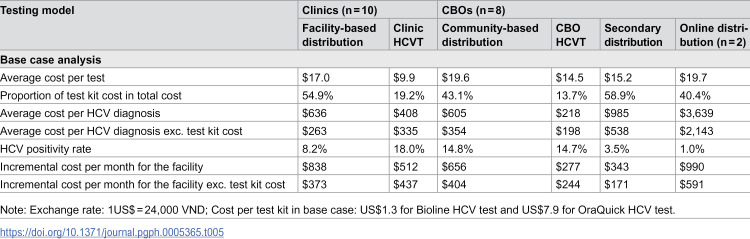 Figure 7
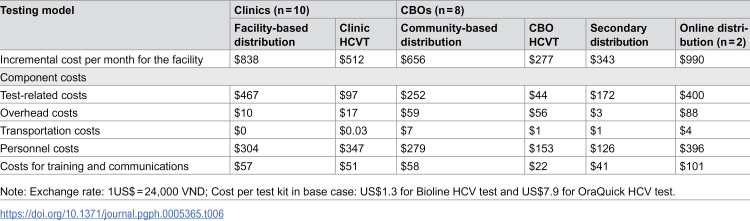 Figure 8
Peer Reviews
No public reviews on file for this paper yet. If you reviewed it on a platform where reviews are public (OpenReview, ICLR, NeurIPS, ICML), you can paste yours below so the community can read it here.
Videos
No videos yet. Explain this paper in a talk, walkthrough, or lecture? Add one.
Taxonomy
TopicsHepatitis C virus research · Diabetes Management and Education · Hepatitis B Virus Studies