A Fragmentation behavior-guided UHPLC-Q-Orbitrap HRMS method for the quantitative analysis of 26 perfluoroalkyl substances and their alternatives in water
Guojian Shao, Tao Liu, You Xia, Peng Zhang, Ye Wang

TL;DR
A new method was developed to accurately detect and measure 26 types of perfluoroalkyl substances in water, using advanced mass spectrometry techniques.
Contribution
The study introduces a fragmentation behavior-guided UHPLC-Q-Orbitrap HRMS method that improves detection and quantification of PFASs and their alternatives.
Findings
The method achieved sub-ng/L detection capability and excellent linearity across various water matrices.
PRM mode provided the best balance of sensitivity and selectivity for PFAS quantification.
Characteristic fragmentation patterns enabled reliable isomer differentiation and structural confirmation.
Abstract
Perfluoroalkyl substances (PFASs), including newly introduced alternatives, are of global concern due to their environmental persistence, bioaccumulation, and potential health risks. We developed and validated a sensitive, selective UHPLC–Q-Orbitrap HRMS method for the comprehensive analysis of 26 PFASs—including perfluorocarboxylic acids (PFCAs), perfluorosulfonic acids (PFSAs), and emerging substitutes—in diverse water matrices. Sample preparation used WAX solid-phase extraction with isotope-labeled internal standards and separation on a BEH C18 column; quantitative performance was assessed under Full MS, targeted SIM, and PRM. The method achieved excellent linearity, sub-ng/L detection capability, and robust recoveries and precision across matrices, with PRM offering the best balance of sensitivity and selectivity. Characteristic fragmentation patterns, like decarboxylation and…
Genes, proteins, chemicals, diseases, species, mutations and cell lines named across the full text — each resolved to its canonical identifier and authoritative record.
Click any figure to enlarge with its caption.
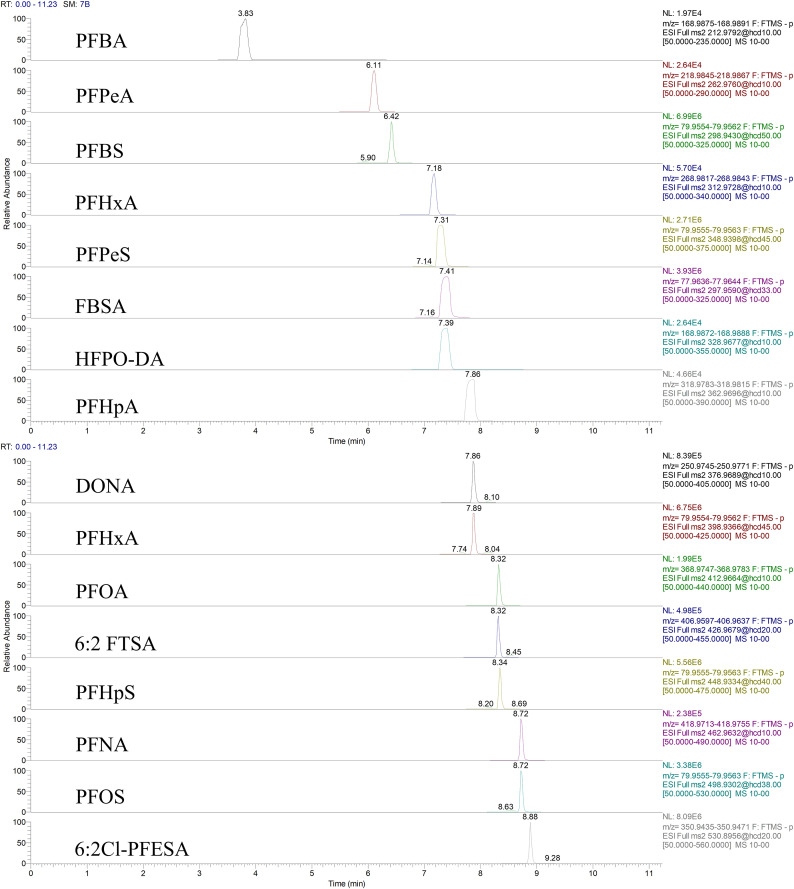 Figure 1
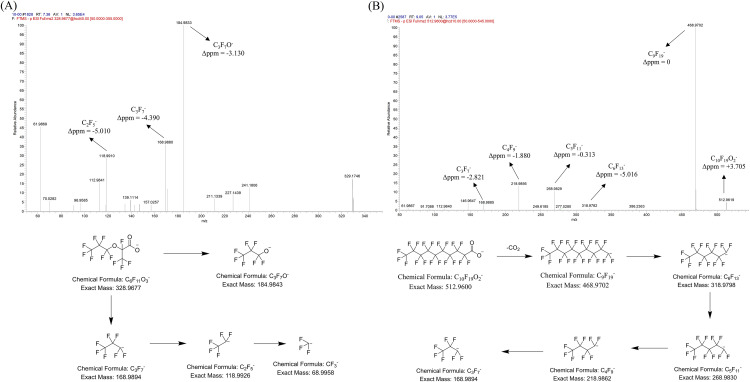 Figure 2
 Figure 3
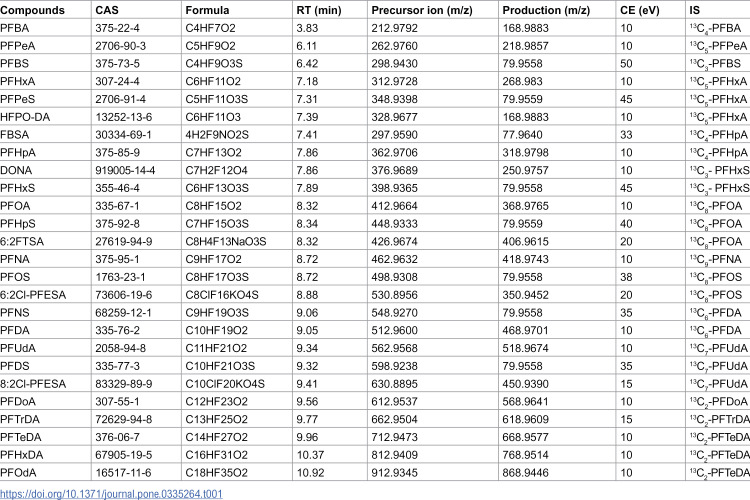 Figure 4
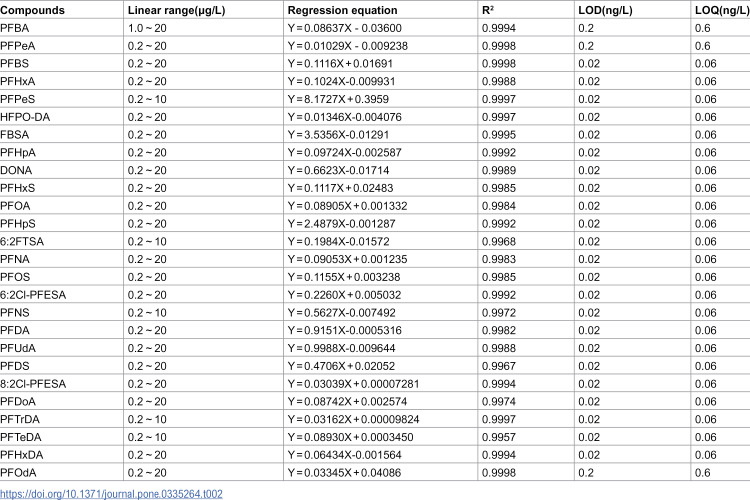 Figure 5
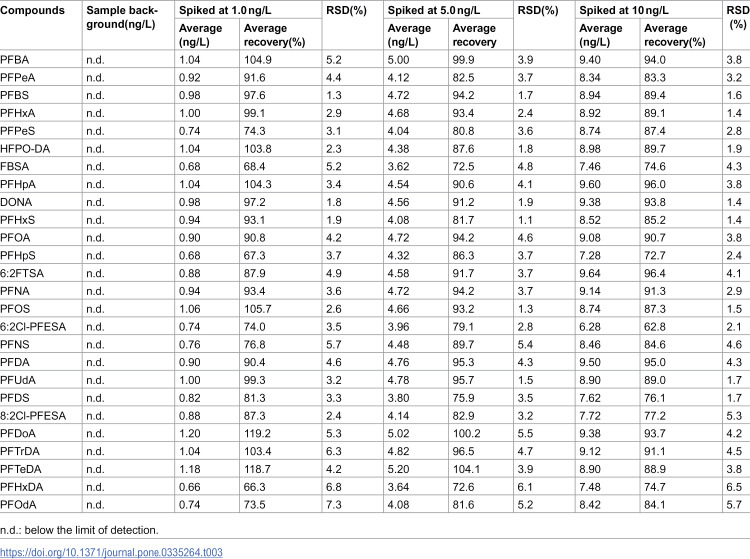 Figure 6
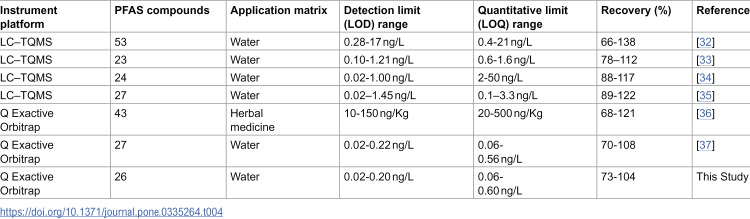 Figure 7
Peer Reviews
No public reviews on file for this paper yet. If you reviewed it on a platform where reviews are public (OpenReview, ICLR, NeurIPS, ICML), you can paste yours below so the community can read it here.
Videos
No videos yet. Explain this paper in a talk, walkthrough, or lecture? Add one.
Taxonomy
TopicsPer- and polyfluoroalkyl substances research · Toxic Organic Pollutants Impact · Fluorine in Organic Chemistry