Assessment of DNA damage of smooth muscle cells in tunica media of human arterial allografts using Comet assay method
Miroslava Jandová, Alexander Pilin, Ivan Mazura, Radka Lainková, Ivan Matia, Myroslav Salmay, Pavel Měřička, Ondřej Pecha, Libor Janoušek, Tomáš Grus, Rudolf Špunda, Jaroslav Lindner, Dana Čížková, Jiří Záhora, Miroslav Špaček, Geetika Verma, Geetika Verma, Geetika Verma

TL;DR
This study uses the comet assay to assess DNA damage in human arterial allograft smooth muscle cells during different preservation and thawing methods.
Contribution
The study introduces the use of the comet assay to evaluate DNA damage in arterial allografts under various preservation and thawing protocols.
Findings
Rapidly thawed grafts showed statistically significant DNA damage differences compared to fresh multiorgan harvested grafts.
Comet assay parameters correlated moderately with ischemia durations in specific graft groups.
Cryopreservation and thawing protocols did not reduce DNA content compared to fresh grafts.
Abstract
During the harvest and subsequent processing of blood vessels for allogeneic transplantation, DNA damage can occur. A suitable method for quantifying this damage may be the comet assay, also known as the single cell gel electrophoresis assay, which is used to measure DNA damage at the single-cell level. We evaluated the key indicators of muscle cell DNA damage in the tunica media of arteries by using the comet assay with four groups: (1) cryopreserved grafts thawed slowly, (2) cryopreserved grafts thawed rapidly, (3) cold-preserved “fresh” grafts harvested as part of a multiorgan procurement, and (4) cadaveric arterial graft harvested at autopsy. Kruskal-Wallis multiple-comparison testing identified a statistically significant difference between rapidly thawed grafts and multiorgan harvested fresh grafts. Evans’ correlation criterion indicated a moderately strong correlation between the…
Genes, proteins, chemicals, diseases, species, mutations and cell lines named across the full text — each resolved to its canonical identifier and authoritative record.
Click any figure to enlarge with its caption.
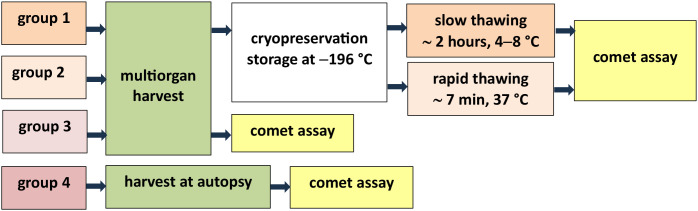 Figure 1
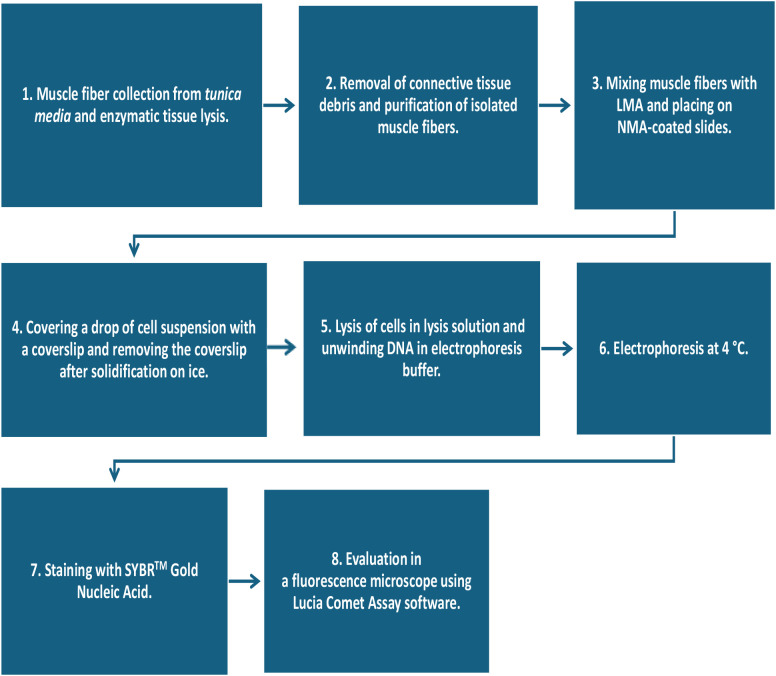 Figure 2
 Figure 3
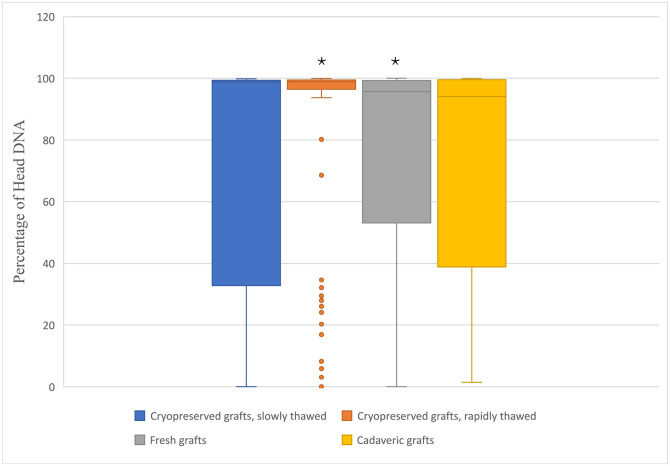 Figure 4
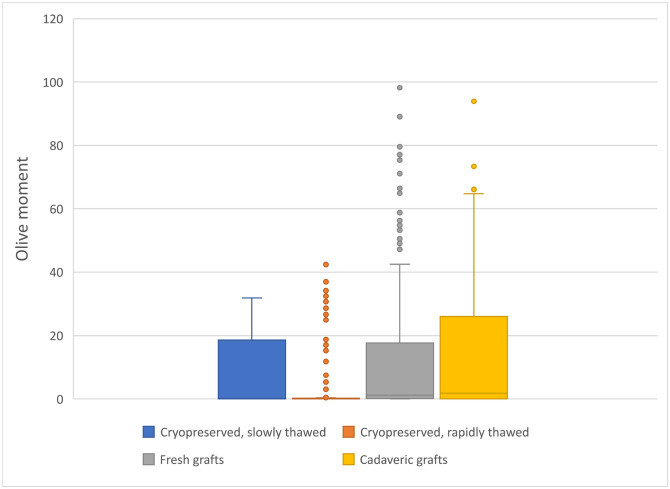 Figure 5
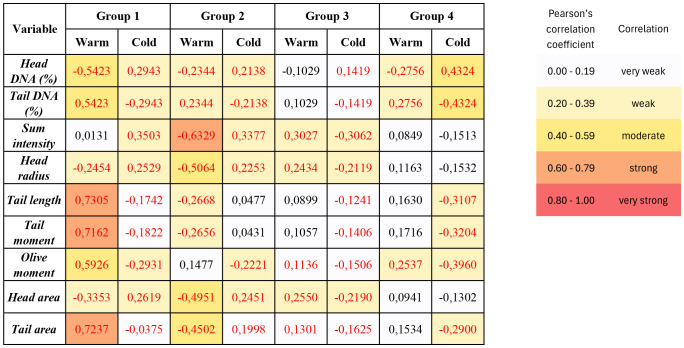 Figure 6
 Figure 7
 Figure 8
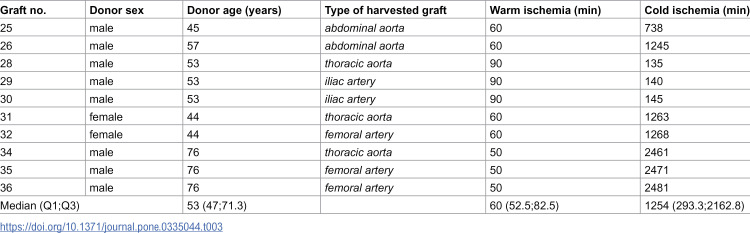 Figure 9
 Figure 10
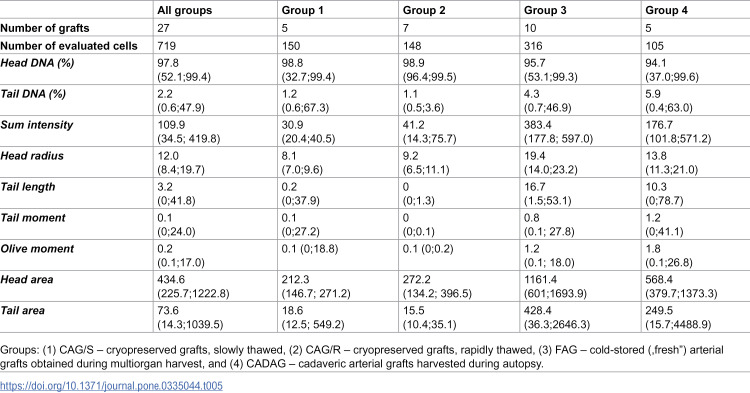 Figure 11
Peer Reviews
No public reviews on file for this paper yet. If you reviewed it on a platform where reviews are public (OpenReview, ICLR, NeurIPS, ICML), you can paste yours below so the community can read it here.
Videos
No videos yet. Explain this paper in a talk, walkthrough, or lecture? Add one.
Taxonomy
TopicsOrgan Transplantation Techniques and Outcomes · Infectious Aortic and Vascular Conditions · Aortic Disease and Treatment Approaches