Naturalistic sleep tracking in a longitudinal cohort: Uncertainty and bias in short duration sampling
Balaji Goparaju, Glen de Palma, Matt T. Bianchi

TL;DR
Short-term sleep tracking introduces significant uncertainty and bias in sleep duration estimates, which can be reduced by longer observation periods.
Contribution
The study quantifies the bias and uncertainty in sleep metrics when using short observation periods and shows how these depend on sample size, statistics, and distribution shape.
Findings
Short observation periods (e.g., 7 nights) lead to underestimation of sleep duration standard deviation and large uncertainty ranges.
Single-night observations are more likely to misclassify typical sleepers as short sleepers due to natural variability.
Longer tracking (up to 365 nights) reduces bias and uncertainty in sleep health metrics.
Abstract
Despite broad interest in the health implications of sleep duration, traditional measurements via polysomnography or actigraphy are often limited to one or a few nights per person. Inferential uncertainty remains an important issue for interpreting descriptive statistics in this common research setting. This retrospective analysis of observational data used a combined approach of simulated data and real-world data (30–365 nights) analysis from over 35,000 participants who provided informed consent to participate in the Apple Heart and Movement Study and elected to contribute sleep data. Simulations demonstrate that the degree of uncertainty and bias, compared to truth defined by 1000 simulated nights, depended on several factors: sub-sample size, the simulated distribution (normal versus skewed), and the computed metrics of central tendency (mean, median) and dispersion (standard…
Genes, proteins, chemicals, diseases, species, mutations and cell lines named across the full text — each resolved to its canonical identifier and authoritative record.
Click any figure to enlarge with its caption.
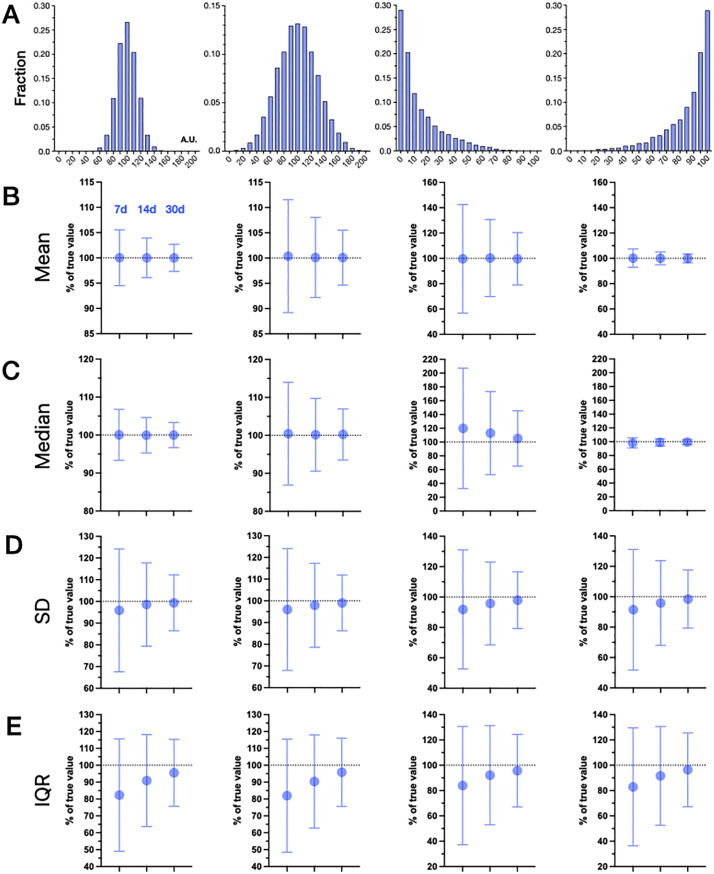 Figure 1
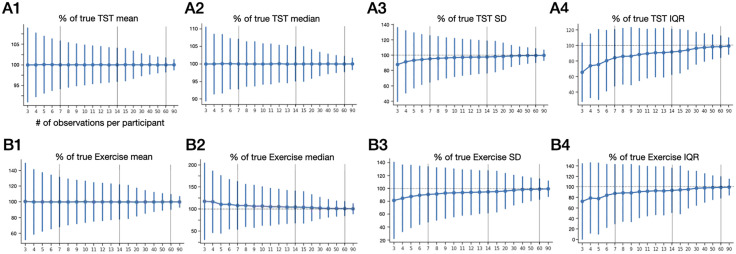 Figure 2
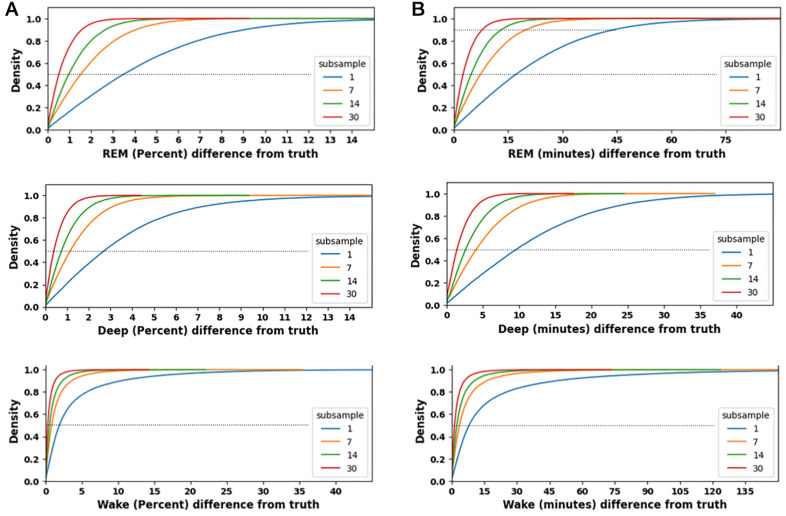 Figure 3
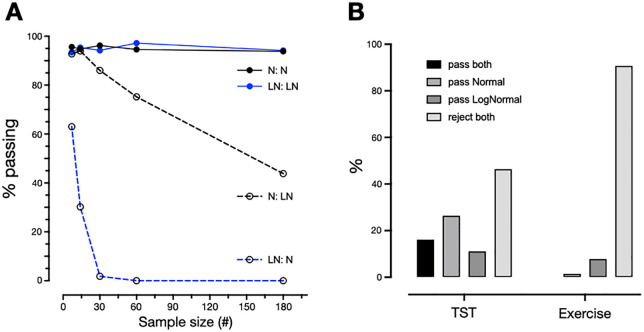 Figure 4
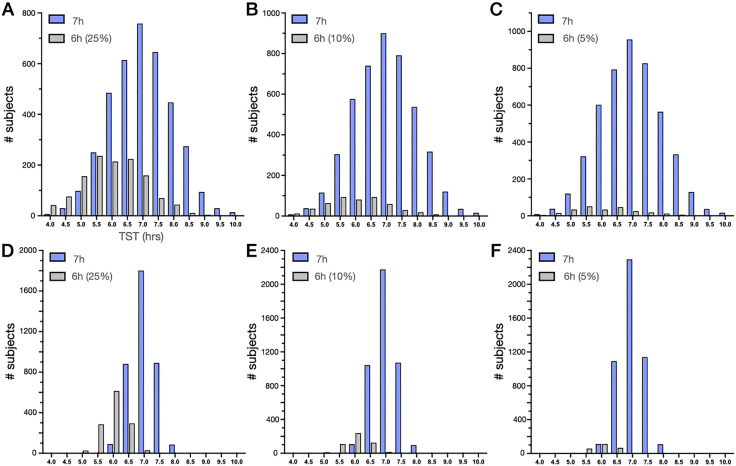 Figure 5
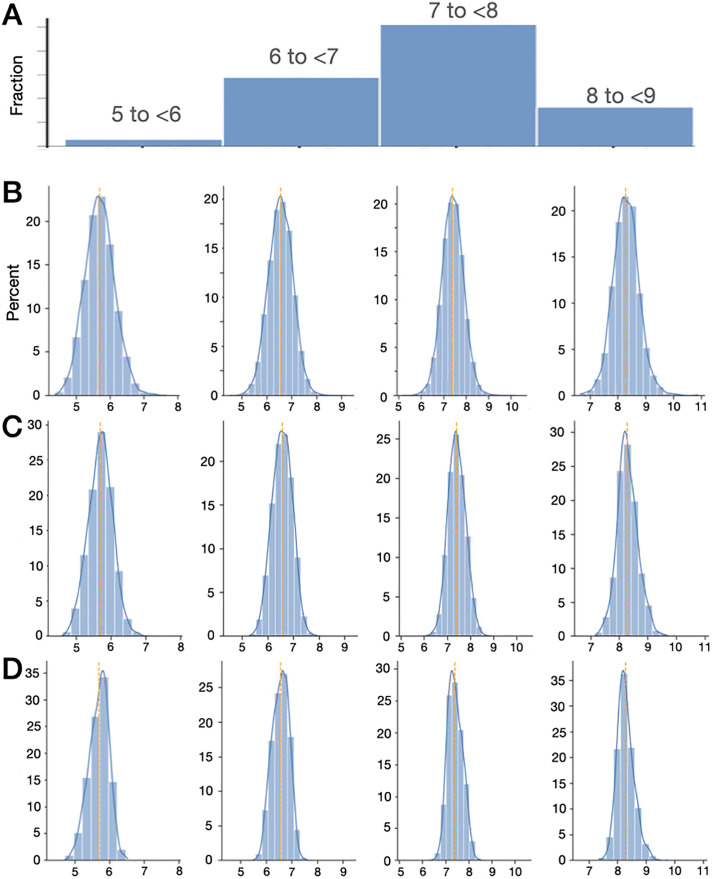 Figure 6
Peer Reviews
No public reviews on file for this paper yet. If you reviewed it on a platform where reviews are public (OpenReview, ICLR, NeurIPS, ICML), you can paste yours below so the community can read it here.
Videos
No videos yet. Explain this paper in a talk, walkthrough, or lecture? Add one.
Taxonomy
TopicsSleep and related disorders · Survey Methodology and Nonresponse · Obstructive Sleep Apnea Research