A neural network approach to sarcopenia prediction based on bioelectrical impedance in community-dwelling older adults
Kyohei Shibuya, Yujiro Asano, Koki Nagata, Taishi Tsuji, Kotaro Kawajiri, Tomohiro Okura

TL;DR
This study shows that a neural network can accurately predict sarcopenia using raw bioelectrical impedance data from older adults.
Contribution
A novel neural network model is proposed for sarcopenia prediction using raw bioelectrical impedance data.
Findings
A model using 5, 50, and 250 kHz frequencies achieved high accuracy (AUC: 0.96) in predicting sarcopenia.
A model using 50 kHz frequency showed strong performance (AUC: 0.88) in an alternative dataset.
High sensitivity and negative predictive value suggest the model's potential for sarcopenia screening.
Abstract
This study aimed to apply a neural network to raw bioelectrical impedance analysis data and to test whether sarcopenia could be predicted with high accuracy. The study population comprised 727 community-dwelling older adults aged 65–85 years who participated in the Kasama Study from 2015 to 2018. Sarcopenia was determined using the standard values set by the Asian Working Group for Sarcopenia 2019. Skeletal muscle mass index, grip strength, and five-times sit-to-stand test (Dataset 1) or skeletal muscle mass index, grip strength, and gait speed (Dataset 2) were used. The characteristic variables were sex, age, height, and body mass index, as well as parameters from bioelectrical impedance analysis, such as reactance, resistance, and impedance for six frequencies (1, 5, 50, 250, 500, and 1000 kHz) in six body parts measured using a multi-frequency body composition analyzer (MC-980A,…
Genes, proteins, chemicals, diseases, species, mutations and cell lines named across the full text — each resolved to its canonical identifier and authoritative record.
Click any figure to enlarge with its caption.
 Figure 1
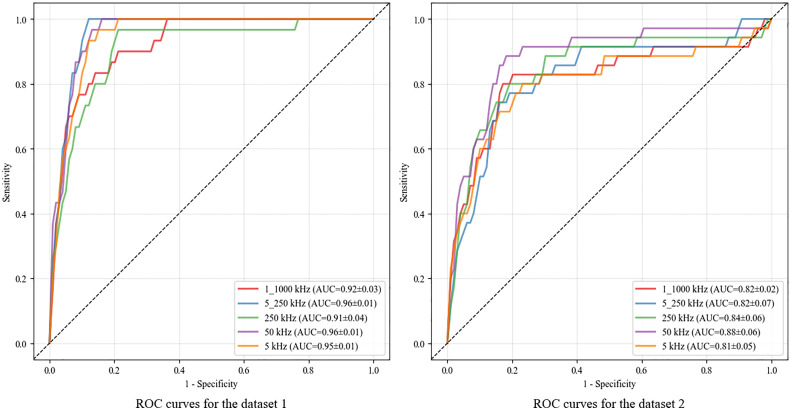 Figure 2
 Figure 3
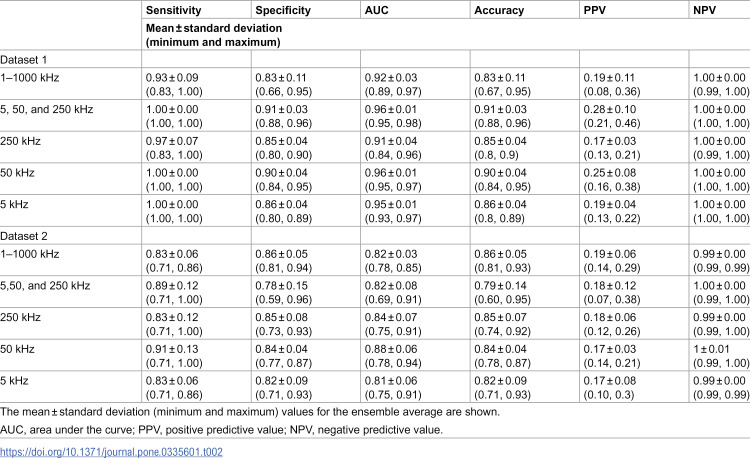 Figure 4
Peer Reviews
No public reviews on file for this paper yet. If you reviewed it on a platform where reviews are public (OpenReview, ICLR, NeurIPS, ICML), you can paste yours below so the community can read it here.
Videos
No videos yet. Explain this paper in a talk, walkthrough, or lecture? Add one.
Taxonomy
TopicsNutrition and Health in Aging · Body Composition Measurement Techniques · Cardiovascular and exercise physiology