A yeast mating platform for multiplex screening of fungal GPCR–ligand interactions
Giovanni Schiesaro, Melani Mariscal, Mathias Jönsson, Ricardo Tenente, Mathies Brinks Sørensen, Marcus Wäneskog, María Victoria Aguilar-Pontes, Agustina Undabarrena, Marcus Deichmann, Emma E. Hoch-Schneider, Viji Kandasamy, Thomas M. Frimurer, Antonio Di Pietro

TL;DR
This paper introduces a new platform to study fungal communication and identify peptides that can disrupt it, offering a potential strategy to control plant-infecting fungi.
Contribution
The novel Yeast Mating Platform (YeMaP) enables high-throughput screening of fungal GPCR–ligand interactions and identifies functional peptides.
Findings
Peptides identified using YeMaP can interfere with fungal cell–cell communication in Fusarium oxysporum.
YeMaP enables one-pot assays to study how abiotic factors affect multiple GPCR–pheromone interactions.
The platform accelerates the discovery of agonist and antagonist peptides for fungal GPCRs.
Abstract
Fungal pathogens rely on G protein–coupled receptors (GPCRs) to sense environmental cues and coordinate host infection. By establishing a yeast mating platform for multiplex GPCR–ligand screening, we identify agonist and antagonist peptides that can interfere with fungal cell–cell communication. This work not only accelerates the study of fungal GPCR–ligand interactions but also demonstrates, for the phytopathogen Fusarium oxysporum, that interfering with GPCR-mediated cell–cell communication is a promising target for antifungal strategies in agriculture. Fungi are essential members across ecosystems, yet phytopathogenic fungi pose an increasing risk to crop yields. Despite their ecologic importance, cell–cell communication in fungi is underexplored, partly due to the lack of high-throughput techniques. Here, we developed a Yeast Mating Platform (YeMaP) to investigate the interaction…
Genes, proteins, chemicals, diseases, species, mutations and cell lines named across the full text — each resolved to its canonical identifier and authoritative record.
Click any figure to enlarge with its caption.
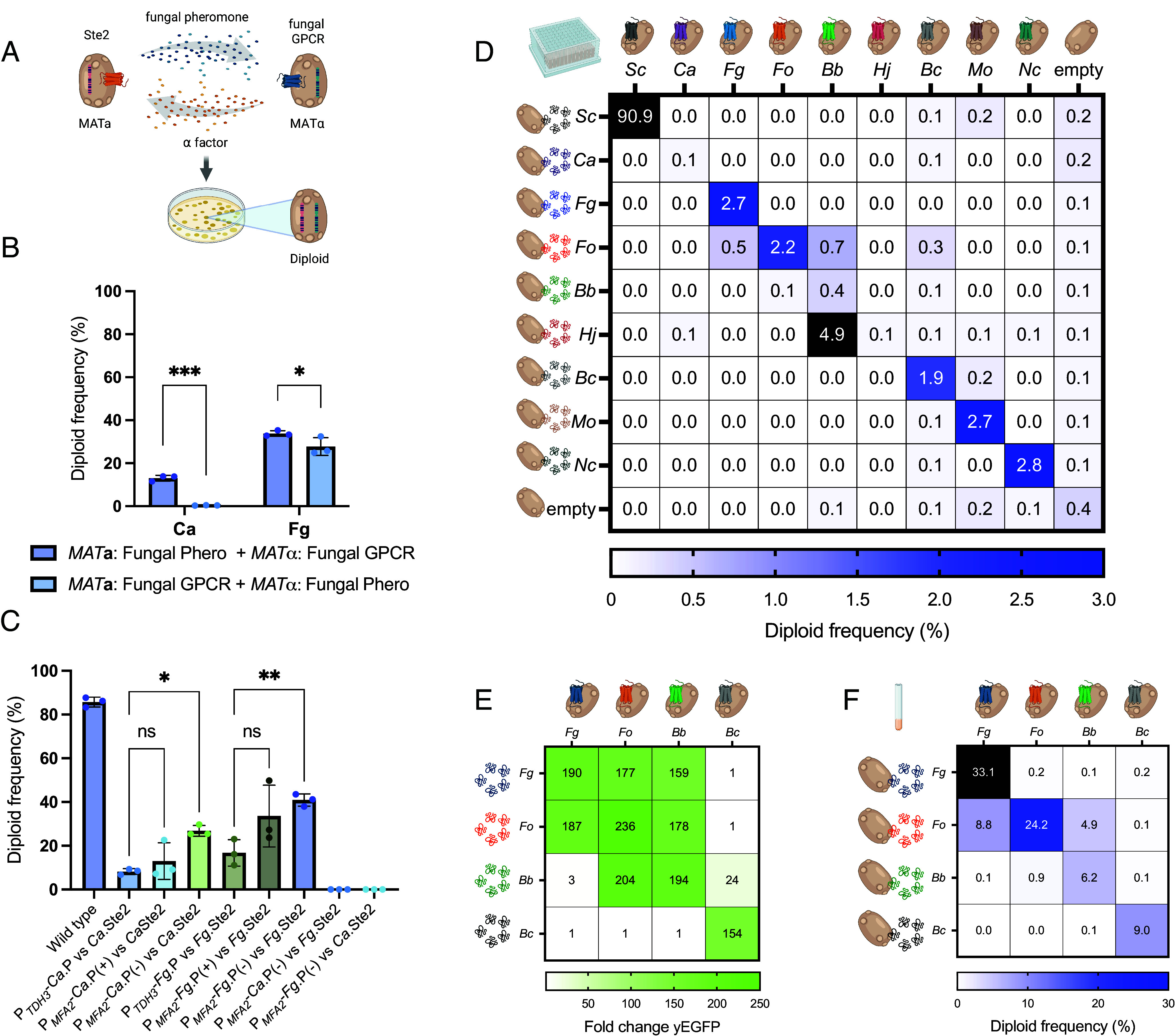 Figure 1
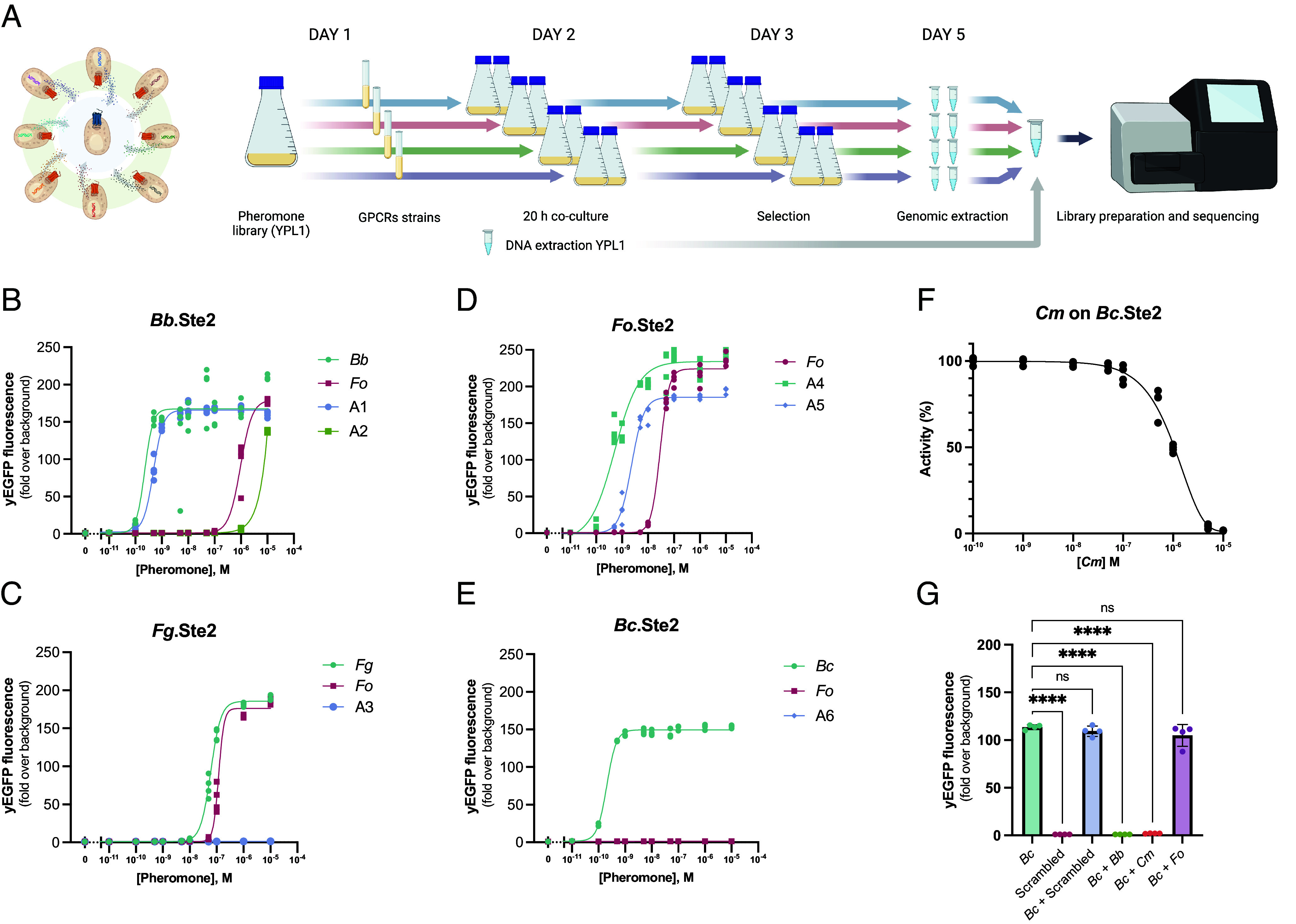 Figure 2
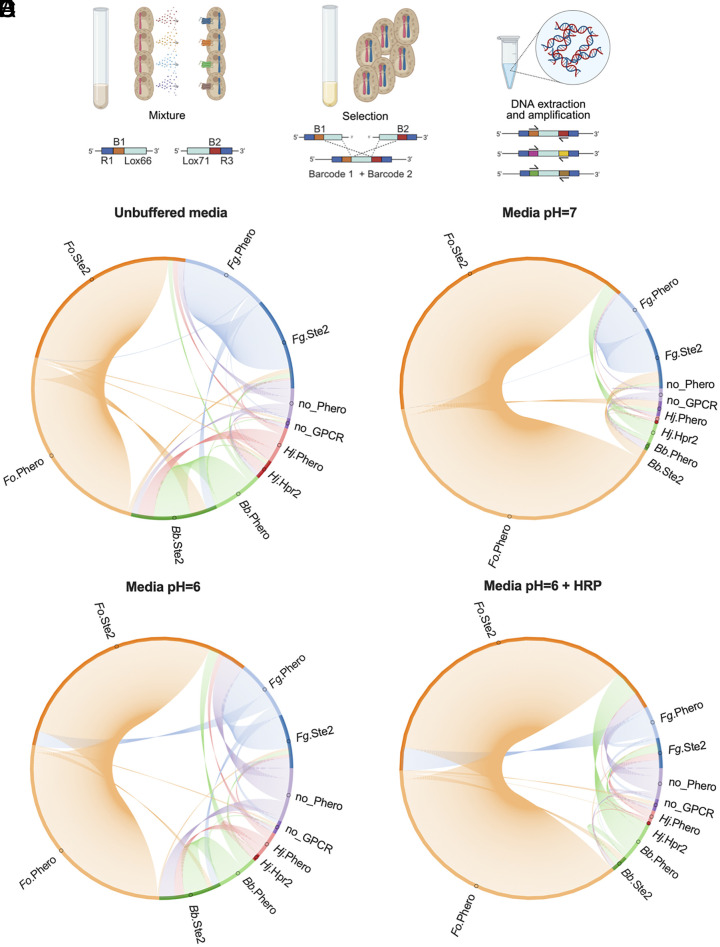 Figure 3
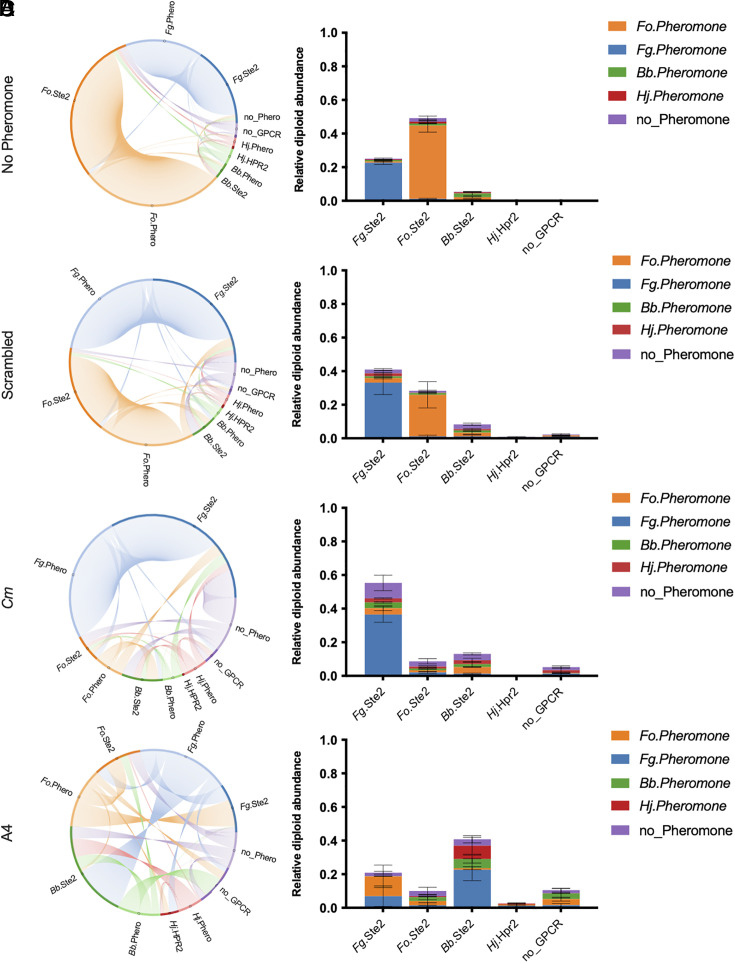 Figure 4
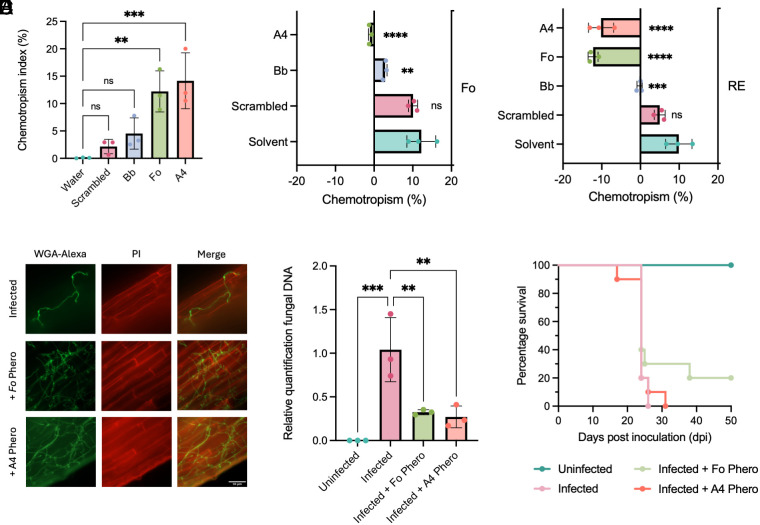 Figure 5
Peer Reviews
No public reviews on file for this paper yet. If you reviewed it on a platform where reviews are public (OpenReview, ICLR, NeurIPS, ICML), you can paste yours below so the community can read it here.
Videos
No videos yet. Explain this paper in a talk, walkthrough, or lecture? Add one.
Taxonomy
TopicsFungal Biology and Applications · Allergic Rhinitis and Sensitization · Plant Reproductive Biology