Oxygen isotopic evidence that Gale crater, Mars, was home to an Early Hesperian water reservoir that underwent significant evaporation
Amy E. Hofmann, P. Douglas Archer, Amy C. McAdam, Brad Sutter, Thomas F. Bristow, John M. Eiler, Christopher R. Webster, Gregory J. Flesch, Abigail A. Fraeman, Heather B. Franz, Christopher H. House, Elizabeth B. Rampe, Jennifer C. Stern, Paul R. Mahaffy, Charles A. Malespin

TL;DR
The study shows Gale crater on Mars once held a large water reservoir that evaporated significantly, based on oxygen isotope data from rocks analyzed by the Curiosity rover.
Contribution
The paper provides new evidence of a significant evaporative water cycle in Gale crater during Mars' Early Hesperian period using oxygen isotope measurements.
Findings
Mineral-bound water in Gale crater rocks shows extreme 18O enrichments, indicating evaporation in a low-humidity atmosphere.
Deuterium enrichments suggest hydrogen loss to space and chemical weathering in early Mars environments.
Oxygen isotopic data from smectite clays support a lacustrine setting with significant evaporative enrichment.
Abstract
We present isotopic measurements of mineral-bound water from rocks sampled by the Curiosity rover. These hydrous minerals’ strong 18O enrichments stand apart from prior observations of ancient martian water reservoirs. Extreme deuterium enrichments record atmospheric hydrogen loss and reveal chemical weathering in early martian near-surface environments. The amplitude of 18O enrichment and its correlation with deuterium in related samples indicate formation in an ancient lacustrine setting that underwent extensive evaporation into a low-humidity atmosphere—an insight into the early martian hydrologic cycle that complements previous sedimentological, mineralogical, and stratigraphic evidence. These data provide the clearest view to date of a martian lake’s hydrology during a period when climate change, chemical weathering, and prebiotic chemistry were active on Mars. Simultaneous…
Genes, proteins, chemicals, diseases, species, mutations and cell lines named across the full text — each resolved to its canonical identifier and authoritative record.
Click any figure to enlarge with its caption.
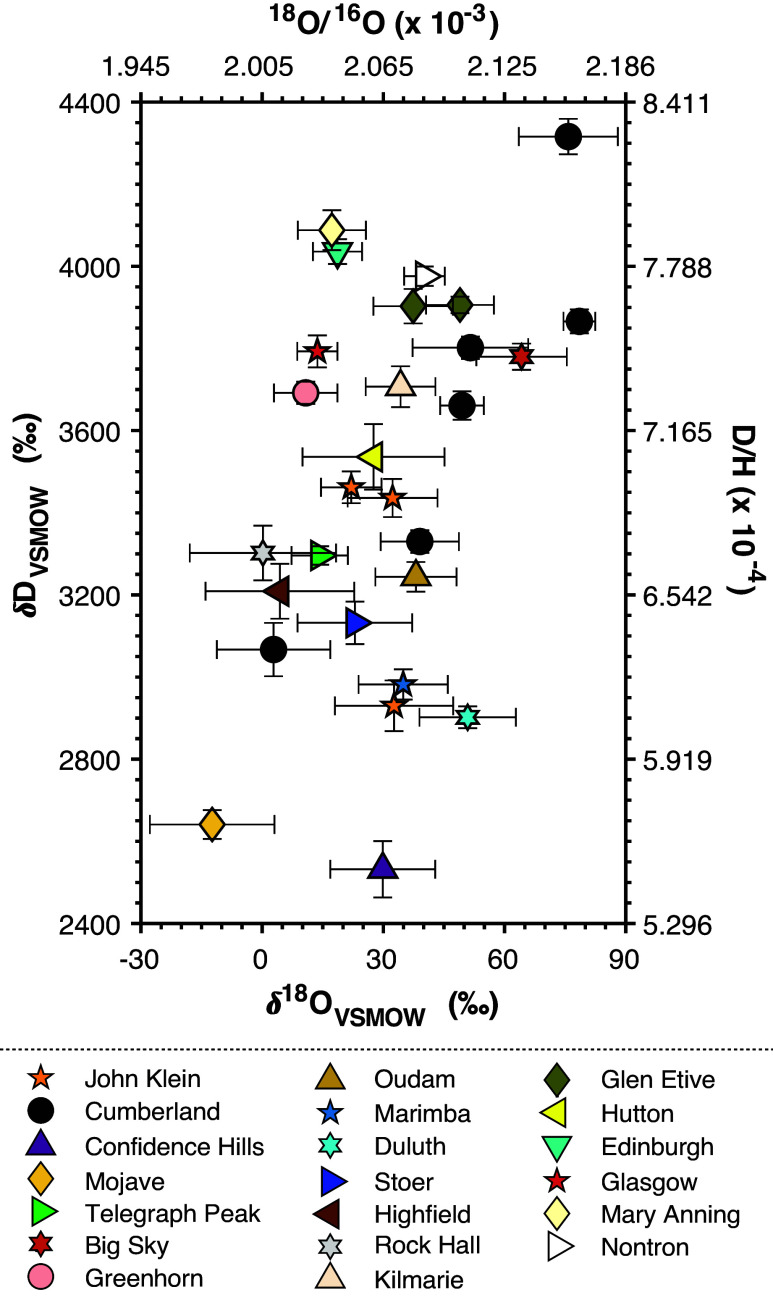 Figure 1
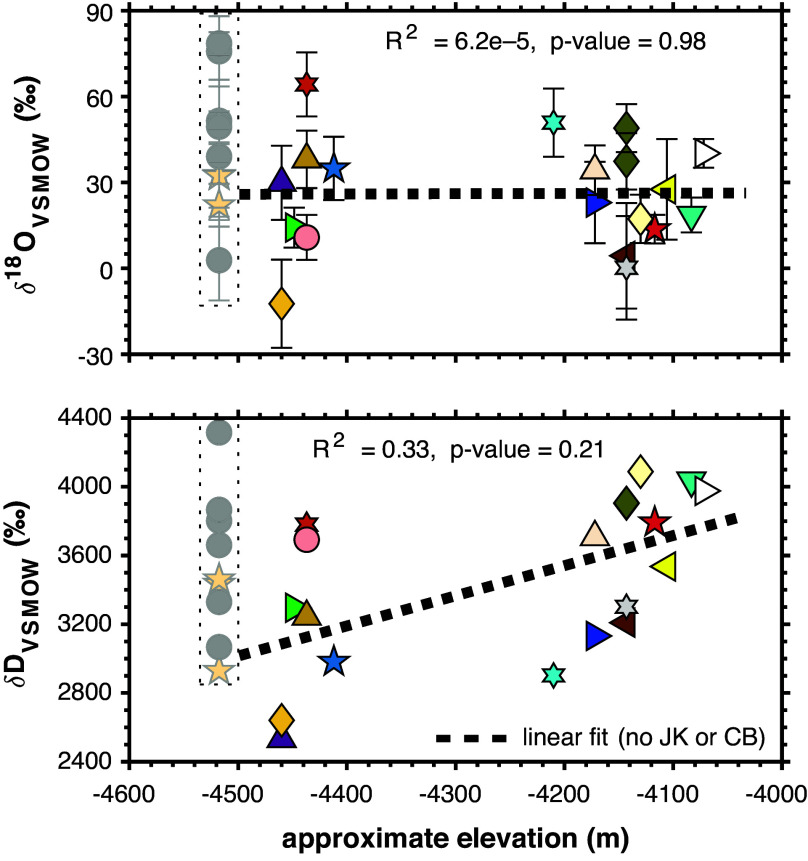 Figure 2
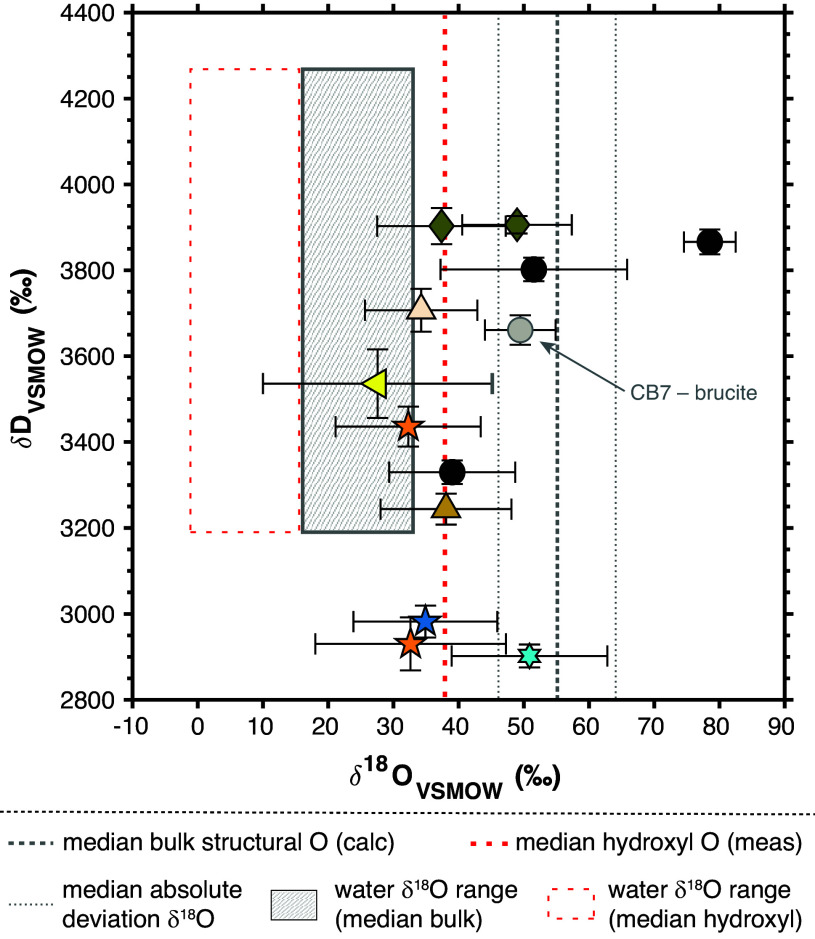 Figure 3
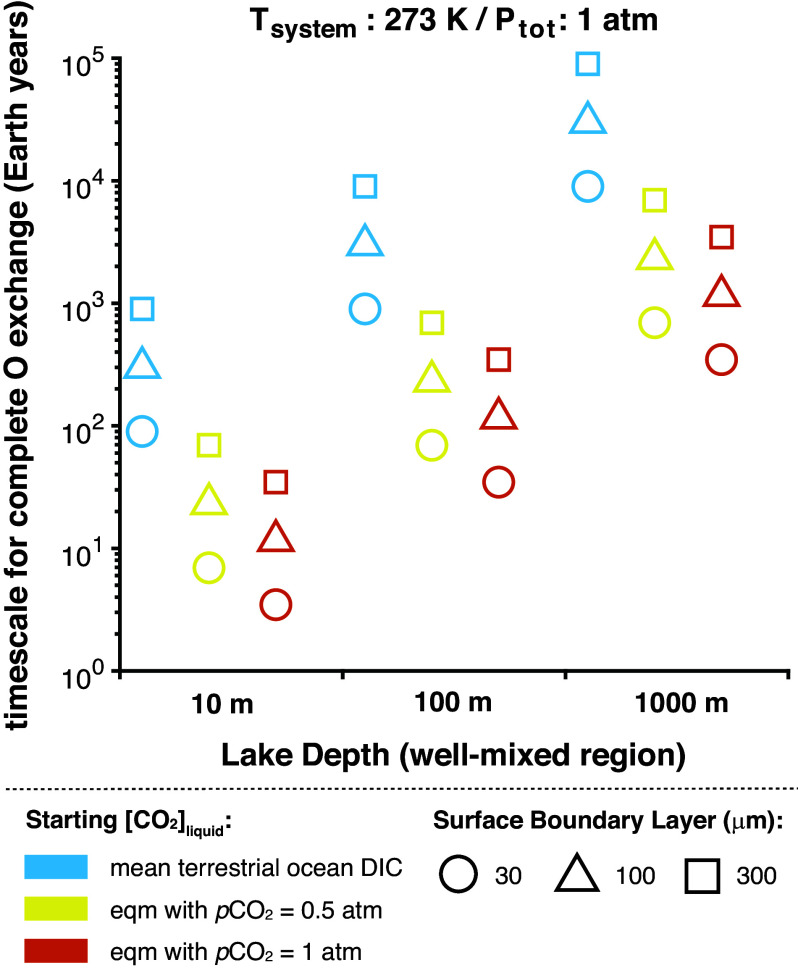 Figure 4
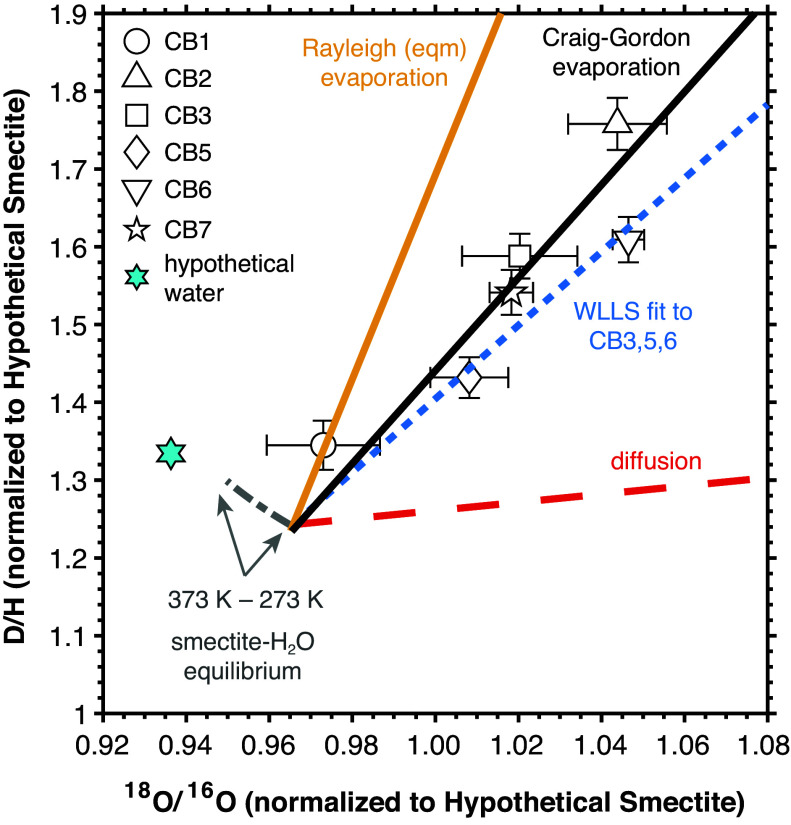 Figure 5
Peer Reviews
No public reviews on file for this paper yet. If you reviewed it on a platform where reviews are public (OpenReview, ICLR, NeurIPS, ICML), you can paste yours below so the community can read it here.
Videos
No videos yet. Explain this paper in a talk, walkthrough, or lecture? Add one.
Taxonomy
TopicsPlanetary Science and Exploration · Astro and Planetary Science · Geology and Paleoclimatology Research