Preclinical Evaluation of [212Pb]Pb-ADVC001: A Prostate-Specific Membrane Antigen–Targeted α-Therapy for Prostate Cancer
Feifei Liu, Melissa E. Monterosso, Didier Boucher, Stelle Shakti, Kwong Ching Li, Chanwoo Kim, Amber Prior, Abby Sydes, Amelia T. Soderholm, Nicholas Fletcher, Dewan Akhter, Kristofer Thurecht, William Tieu, Kevin Kuan, Aimee Horsfall, Saawan Kumar, Johannes Koehbach

TL;DR
This study evaluates a new prostate cancer treatment using a radioactive compound that targets a specific protein on cancer cells, showing promising results in preclinical tests.
Contribution
The paper introduces a novel PSMA-targeted alpha therapy, 212Pb-ADVC001, and demonstrates its efficacy and safety in preclinical prostate cancer models.
Findings
212Pb-ADVC001 showed high binding affinity to PSMA and specific cytotoxic activity against PSMA-expressing cells.
In vivo tests showed improved survival with 212Pb-ADVC001 compared to existing treatments like 177Lu-PSMA-I&T.
The treatment was well tolerated and showed enhanced survival benefits even after relapse from prior therapy.
Abstract
Prostate-specific membrane antigen (PSMA)–directed radiopharmaceutical therapies continue to improve treatment outcomes in patients with metastatic castration-resistant prostate cancer. Here, we report the in vitro and in vivo characterization of a PSMA-targeted therapy (ADVC001) specifically designed for targeted α-therapy with 212Pb. Methods: The binding affinity to PSMA was determined by PSMA enzymatic assays and by radioligand binding assays using PSMA-high prostate cancer (PC) cells. In vitro cytotoxicity against PC cell lines with high and medium PSMA expression was evaluated using clonogenic, metabolic, and imaging-based cytotoxic assays. Pharmacokinetics and biodistribution were assessed using PSMA-high subcutaneous tumor xenografts. In vivo single-dose and multidose efficacy was assessed in subcutaneous PC xenograft models expressing various levels of PSMA. Results: A high…
Genes, proteins, chemicals, diseases, species, mutations and cell lines named across the full text — each resolved to its canonical identifier and authoritative record.
Click any figure to enlarge with its caption.
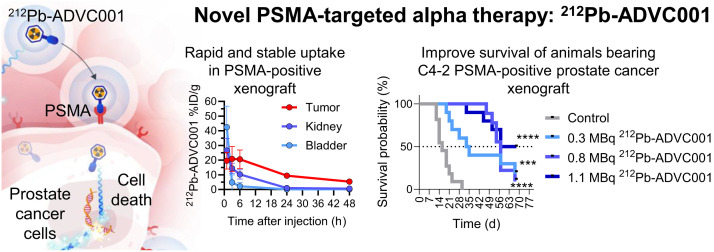 Figure 1
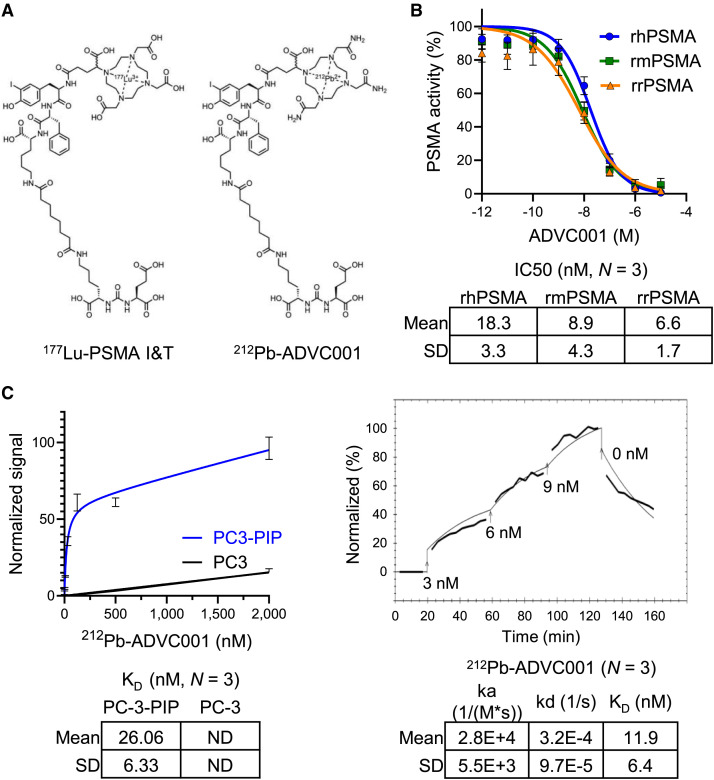 Figure 2
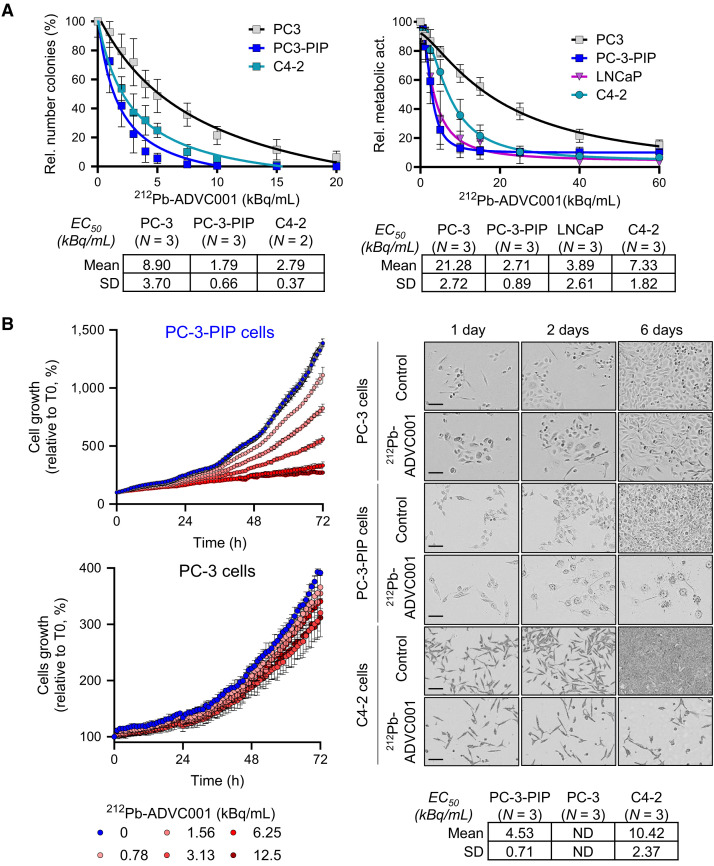 Figure 3
 Figure 4
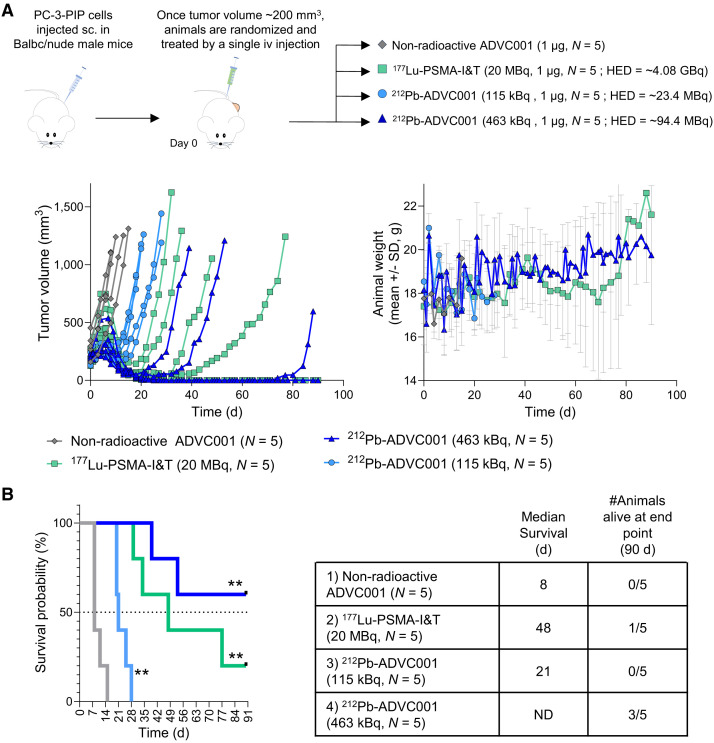 Figure 5
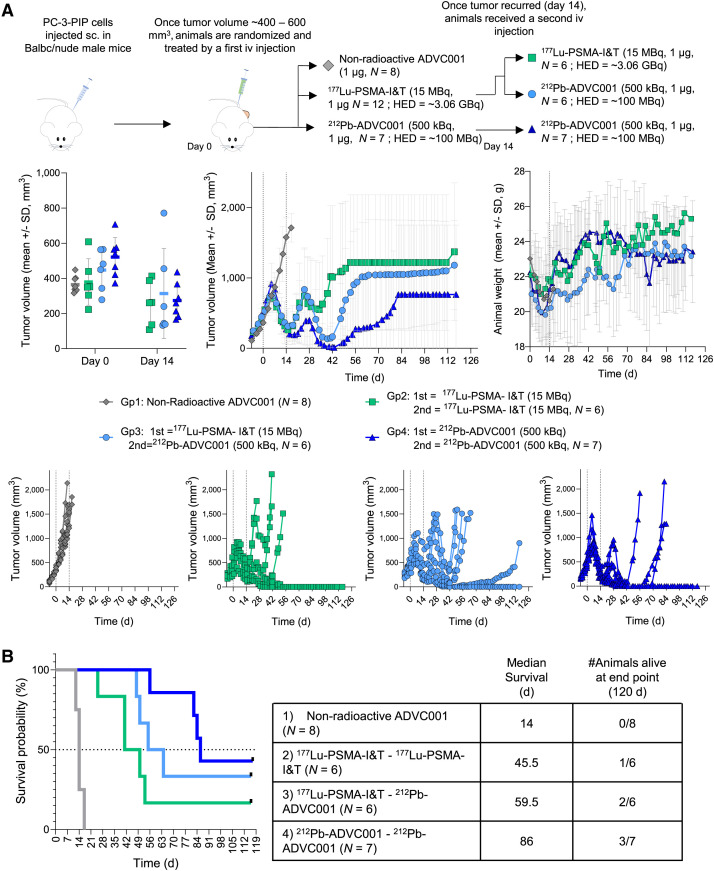 Figure 6
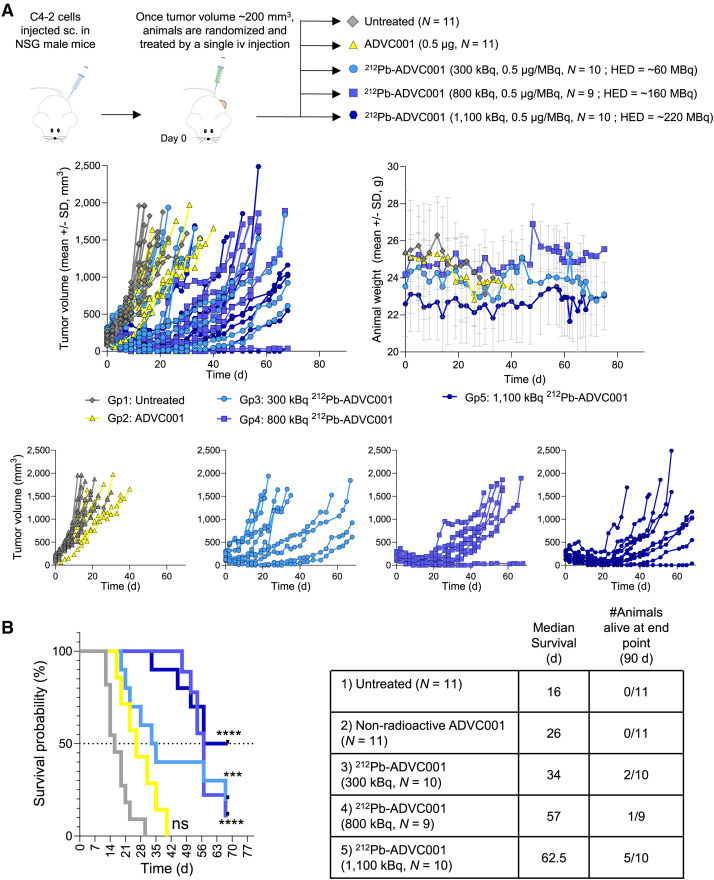 Figure 7
Peer Reviews
No public reviews on file for this paper yet. If you reviewed it on a platform where reviews are public (OpenReview, ICLR, NeurIPS, ICML), you can paste yours below so the community can read it here.
Videos
No videos yet. Explain this paper in a talk, walkthrough, or lecture? Add one.
Taxonomy
TopicsRadiopharmaceutical Chemistry and Applications · Prostate Cancer Treatment and Research · Monoclonal and Polyclonal Antibodies Research