Evaluation of a Sensitive Visual Read Algorithm for Assessing 3R/4R Tau PET Images
Ruben Smith, Valentina Garibotto, Douglas Hägerström, Jonas Jögi, Tomas Ohlsson, Olof Strandberg, Matteo Tonietto, Shorena Janelidze, Sebastian Palmqvist, Erik Stomrud, Gregory Klein, Oskar Hansson

TL;DR
The study compares two visual read algorithms for tau PET imaging and finds that the BioFINDER visual read method is more accurate for detecting tau in the entorhinal cortex.
Contribution
The study introduces and evaluates a new visual read algorithm (BF-VR) for tau PET imaging with improved accuracy and reliability.
Findings
The BF-VR algorithm showed higher accuracy in detecting tau in the entorhinal cortex compared to the FTP-VR method.
BF-VR demonstrated excellent interrater and intrarater reliability.
BF-VR performed similarly to FTP-VR in detecting plasma p-tau217 abnormalities.
Abstract
Developing and validating sensitive visual read algorithms for assessing Alzheimer disease–related tau in tau PET imaging is imperative, considering the implementation of the methodology in clinical practice and trials. Our aim was to compare 2 visual read algorithms for tau PET images to semiquantitative measurements and plasma phospho-tau 217 (p-tau217) status. Methods: In total, 1,654 participants were consecutively recruited from secondary memory clinics in southern Sweden as part of the prospective BioFINDER-2 cohort study (May 2017–September 2023). All participants underwent [18F]RO948 scans, and 37 participants underwent an additional [18F]flortaucipir scan. PET scans were read visually in accordance with the BioFINDER visual read (BF-VR) protocol and the established visual read method for [18F]flortaucipir (FTP-VR). Comparative analyses were conducted with semiquantitative SUV…
Genes, proteins, chemicals, diseases, species, mutations and cell lines named across the full text — each resolved to its canonical identifier and authoritative record.
Click any figure to enlarge with its caption.
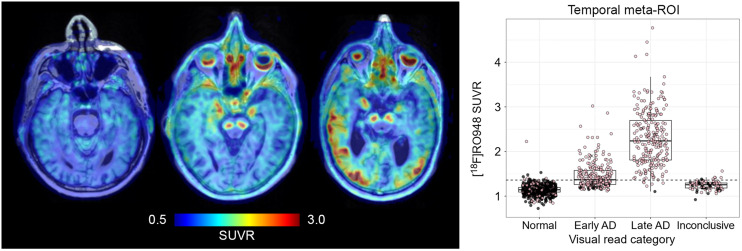 Figure 1
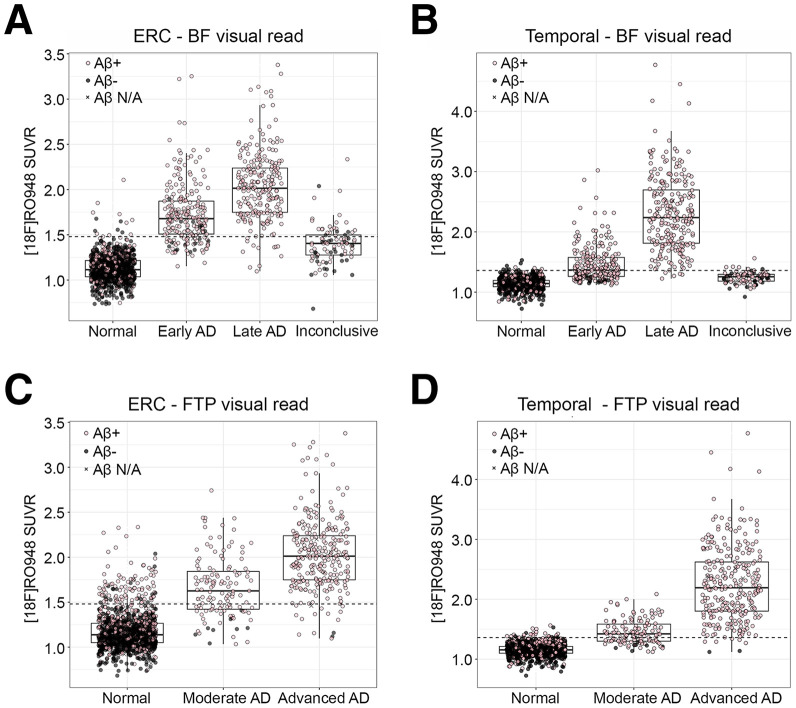 Figure 2
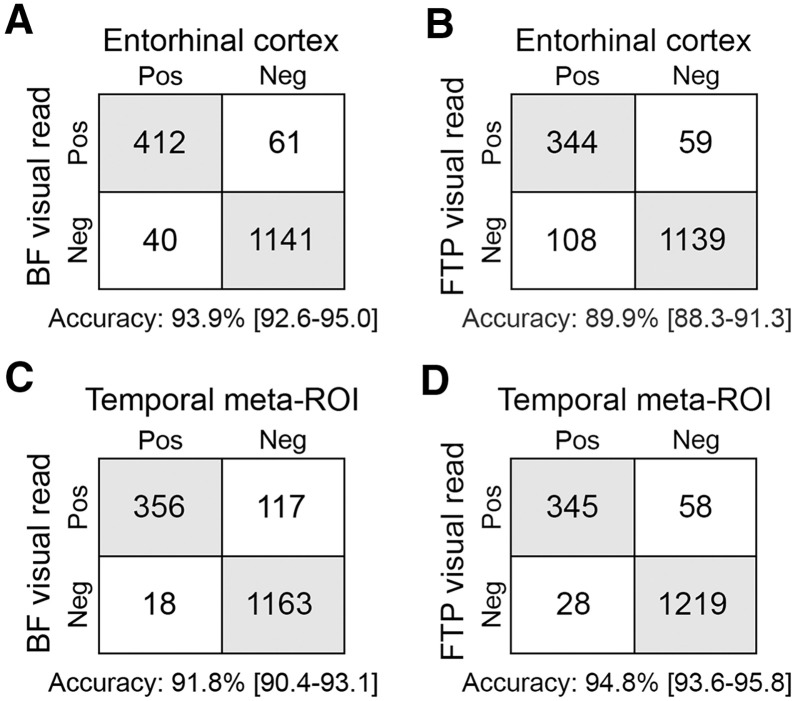 Figure 3
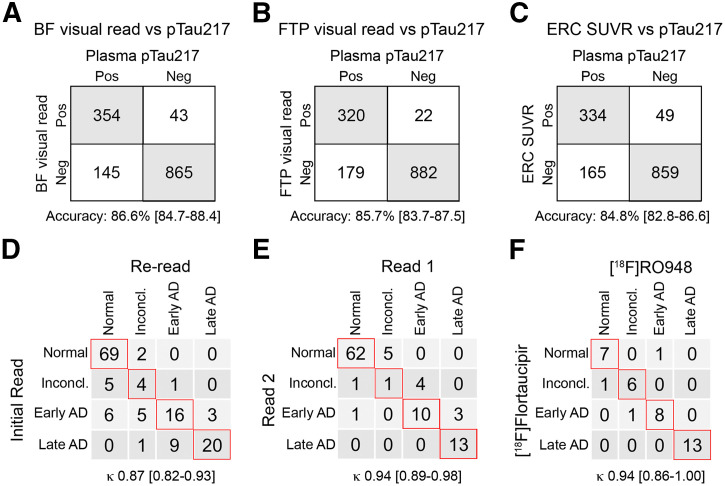 Figure 4
Peer Reviews
No public reviews on file for this paper yet. If you reviewed it on a platform where reviews are public (OpenReview, ICLR, NeurIPS, ICML), you can paste yours below so the community can read it here.
Videos
No videos yet. Explain this paper in a talk, walkthrough, or lecture? Add one.
Taxonomy
TopicsMedical Imaging Techniques and Applications · Medical Image Segmentation Techniques · Radiomics and Machine Learning in Medical Imaging