Endocrinology Clinical Skills Assessment Program: A Structured Clinical Assessment Program to Enhance Clinical Reasoning in Subspecialty Training
Hima Darapu, Chinenye O Usoh

TL;DR
A new program called ECSAP helps train endocrinology fellows by using case-based assessments and real-time feedback to improve their clinical reasoning and skills.
Contribution
ECSAP introduces a structured, case-based formative assessment model for endocrinology training with standardized evaluations and feedback.
Findings
ECSAP was implemented twice with consistent results, showing its reliability and perceived value.
100% of fellows agreed that ECSAP improved diagnostic reasoning and identified knowledge gaps.
Faculty reported high satisfaction, with 100% noting enhanced ability to assess clinical skills and provide feedback.
Abstract
Introduction: The Endocrinology Clinical Skills Assessment Program (ECSAP) was developed at Wake Forest University School of Medicine to enhance history-taking, diagnostic reasoning, and personalized feedback in endocrinology fellows. Recognizing a gap in formative clinical skill evaluation, ECSAP introduces standardized case-based assessments across key endocrine topics. Methods: ECSAP sessions occur twice yearly and include four 25-minute standardized clinical scenarios (e.g., adrenal incidentaloma, hypercalcemia). Each case is pre-assigned to faculty, who provide fellows with a one-line prompt and standardized responses. Fellows navigate history, physical exam, labs/imaging, and assessment/plan components in real time. Faculty provide structured feedback and score fellows using detailed rubrics. Evaluations from both fellows and faculty assess program effectiveness. Results: Over…
Genes, proteins, chemicals, diseases, species, mutations and cell lines named across the full text — each resolved to its canonical identifier and authoritative record.
Click any figure to enlarge with its caption.
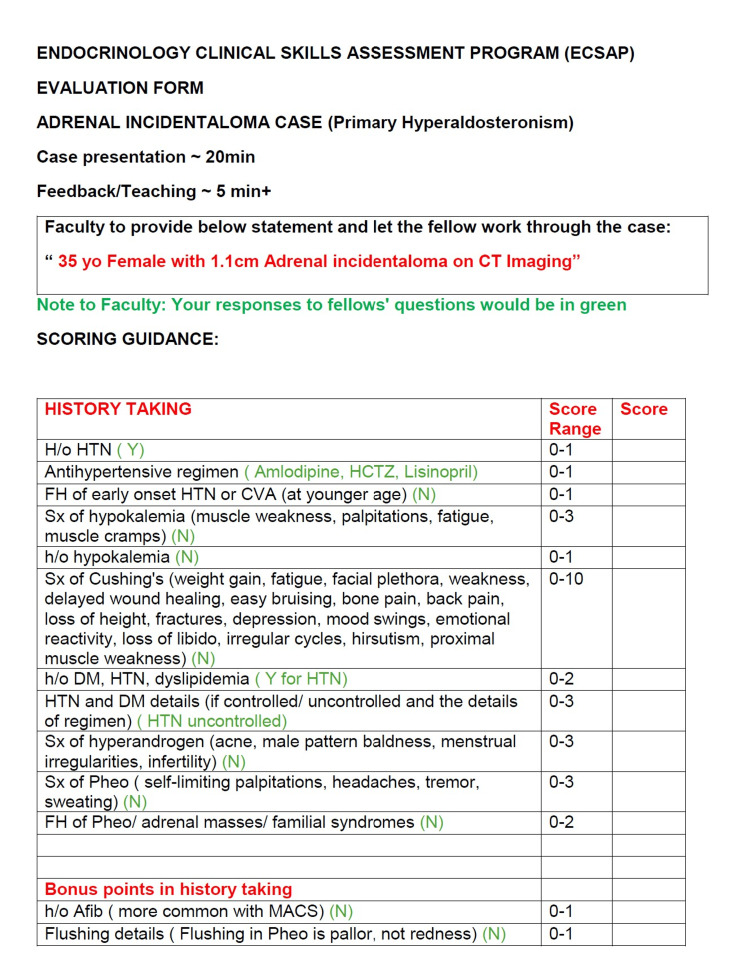 Figure 1
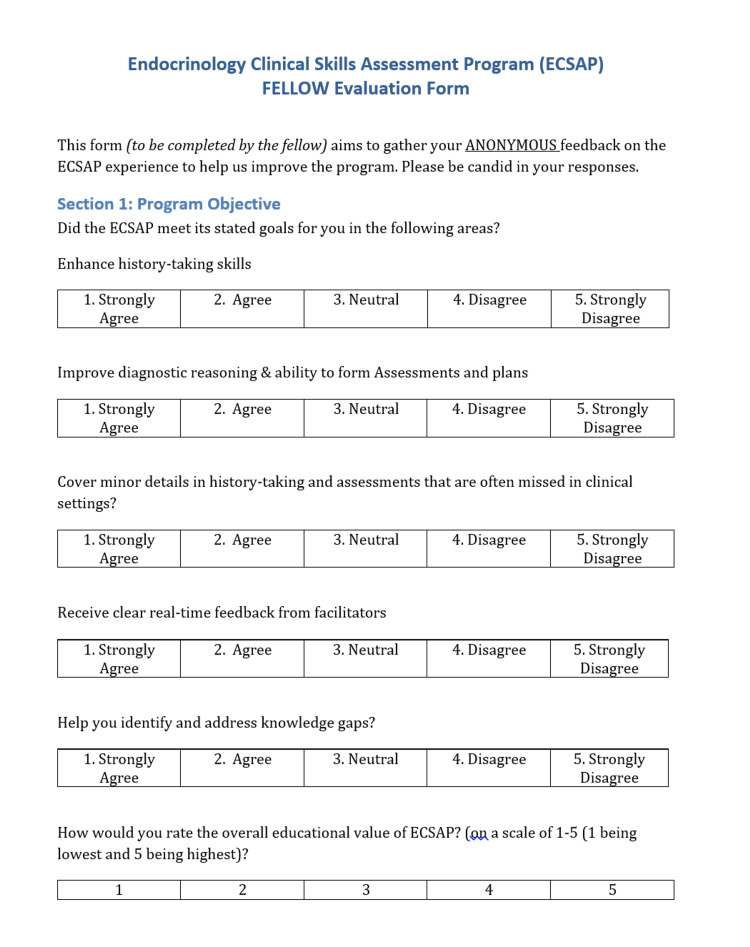 Figure 2
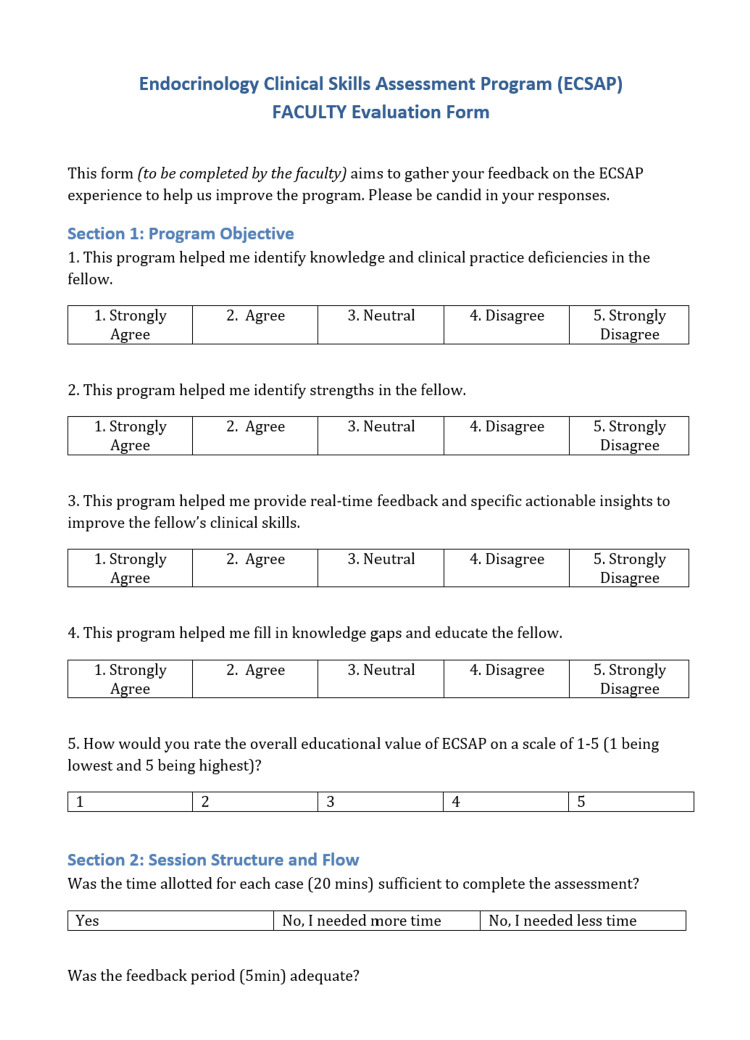 Figure 3
Peer Reviews
No public reviews on file for this paper yet. If you reviewed it on a platform where reviews are public (OpenReview, ICLR, NeurIPS, ICML), you can paste yours below so the community can read it here.
Videos
No videos yet. Explain this paper in a talk, walkthrough, or lecture? Add one.
Taxonomy
TopicsInnovations in Medical Education · Clinical Reasoning and Diagnostic Skills · Radiology practices and education