Ratiometric Detection of pH‐Induced i‐Motif Folding Based on a Dual Emissive Cytosine Analog
Nicolas P. F. Barthes, Hoang‐Ngoan Le, Benoît Y. Michel, Alain Burger

TL;DR
A new dual-emissive cytosine analog allows real-time tracking of pH-induced i-motif DNA folding using ratiometric fluorescence.
Contribution
A novel dual-emissive cytosine analog is introduced for ratiometric detection of i-motif folding states.
Findings
The TCC analog shows distinct emission bands that respond to microenvironmental changes like hydration and protonation.
The probe distinguishes i-motif folding from duplex DNA through fluorescence enhancement and emission redshift.
The method enables multiparametric monitoring of DNA structures with high sensitivity.
Abstract
A dual‐emissive cytosine analog (TCC), based on a 2‐thienyl‐3‐hydroxychromone scaffold, is incorporated into oligodeoxynucleotides to monitor the folding state of DNA i‐motif structures. This modified nucleobase exhibits two distinct emission bands (IN* and IT*), each responding differently to microenvironmental changes, enabling ratiometric detection. The photophysical properties of TCC are systematically characterized in various solvents and DNA contexts, including single‐stranded, double‐stranded, and i‐motif‐forming sequences. The IN*/IT* emission ratio and the wavelength of the IT* band act as robust and orthogonal reporters of hydration, base stacking, and protonation states. In fully paired duplexes, the T* band is quenched and blue‐shifted, while i‐motif folding results in both fluorescence enhancement and a redshift of the T* emission. Additionally, the probe distinguishes…
Genes, proteins, chemicals, diseases, species, mutations and cell lines named across the full text — each resolved to its canonical identifier and authoritative record.
Click any figure to enlarge with its caption.
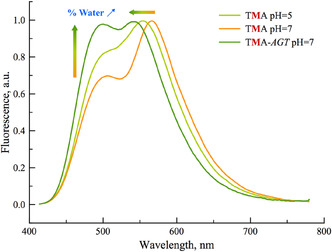 Figure 1
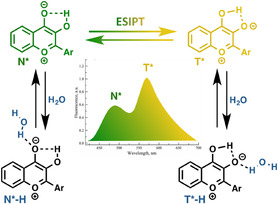 Figure 2
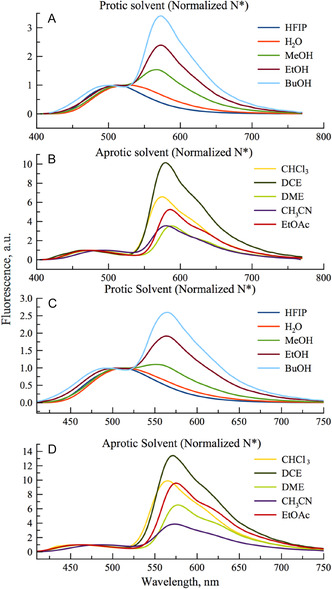 Figure 3
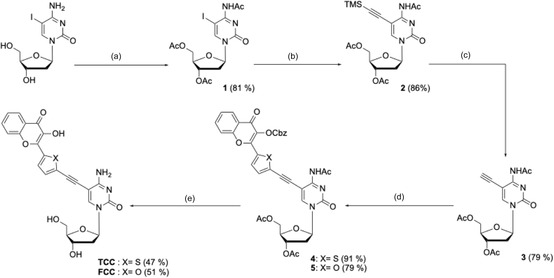 Figure 4
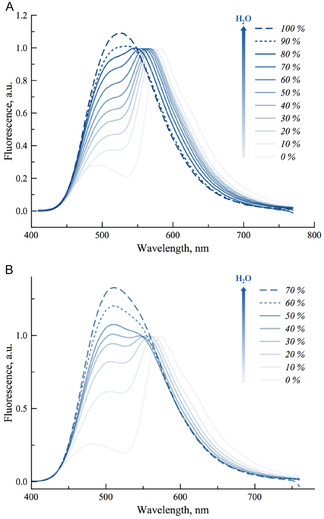 Figure 5
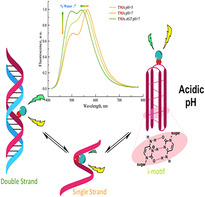 Figure 6
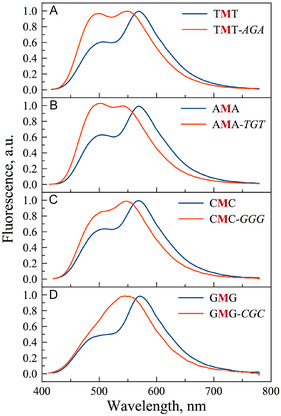 Figure 7
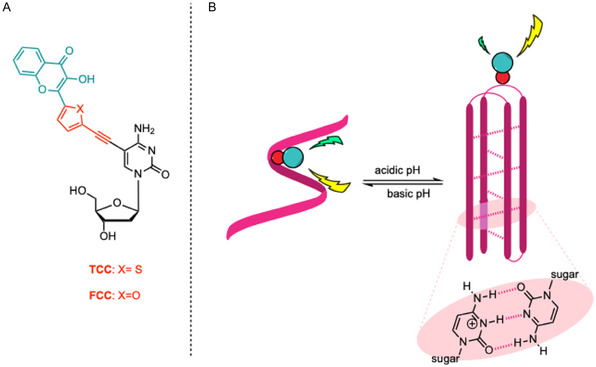 Figure 8
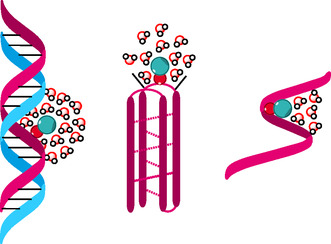 Figure 9
Peer Reviews
No public reviews on file for this paper yet. If you reviewed it on a platform where reviews are public (OpenReview, ICLR, NeurIPS, ICML), you can paste yours below so the community can read it here.
Videos
No videos yet. Explain this paper in a talk, walkthrough, or lecture? Add one.
Taxonomy
TopicsDNA and Nucleic Acid Chemistry · Advanced biosensing and bioanalysis techniques · Luminescence and Fluorescent Materials