The Zuo1 C-terminal domain stabilizes DNA guanosine quadruplex (G4) structures located on Chromosome IX in Saccharomyces cerevisiae
Ines Burkhart, Michaela Limmer, J Carlos Penedo, Li-Chia Sauer, Harald Schwalbe, Katrin Paeschke

TL;DR
This study shows how a yeast protein called Zuo1 interacts with and stabilizes DNA structures called G4s on chromosome IX.
Contribution
The study reveals that the C-terminal domain of Zuo1 stabilizes a specific G4 conformation on yeast chromosome IX.
Findings
The C-terminal domain of Zuo1 interacts with G4 structures on yeast chromosome IX.
Zuo1 stabilizes G4IX and induces conformational changes depending on cation environment.
Zuo1 targets a specific conformational state of G4IX, modulating its topology.
Abstract
Deoxyguanosine quadruplexes (G4s) form stable non-B-DNA structures that can affect transcription, replication, and genome stability. Depending on various factors including cation binding, G4s can fold into different topologies, which can be linked to distinct function. In cells, G4 folding, function, and unfolding is affected by proteins that specifically target G4s. Zuo1 is a G4-binding protein in yeast. To investigate Zuo1 binding and its consequences on G4 formation and topology, we characterized Zuo1’s interaction with G4s, both in vitro and in vivo. The C-terminus (Zuo1348-433) of Zuo1 interacts with the G4s. We characterized this interaction by combining nuclear magnetic resonance spectroscopy, single-molecule Förster Resonance Energy Transfer (smFRET), and in vivo experiments with G4IX that is located on yeast chromosome IX. The Zuo1–G4IX interaction stabilizes this G4 structure…
Genes, proteins, chemicals, diseases, species, mutations and cell lines named across the full text — each resolved to its canonical identifier and authoritative record.
Click any figure to enlarge with its caption.
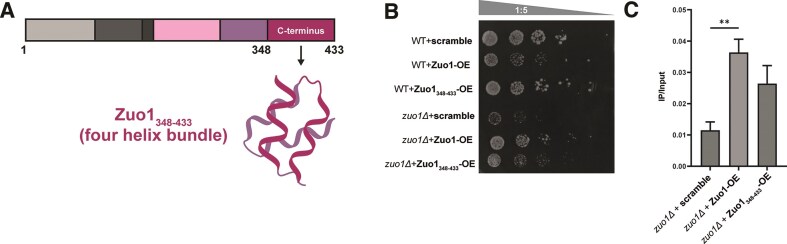 Figure 1
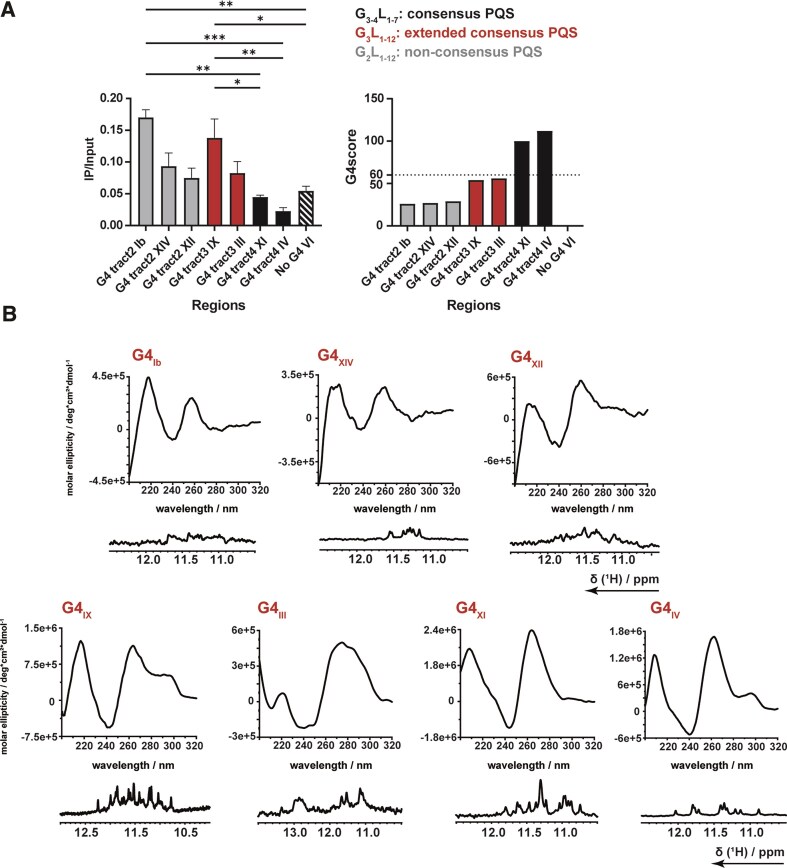 Figure 2
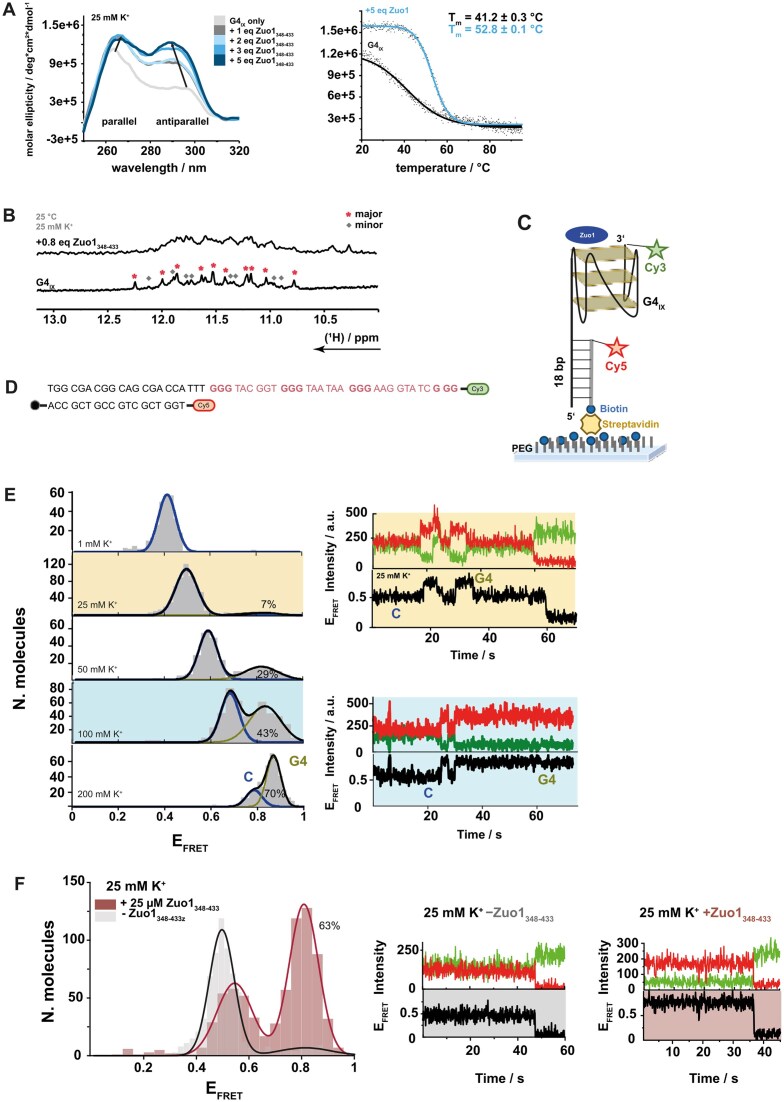 Figure 3
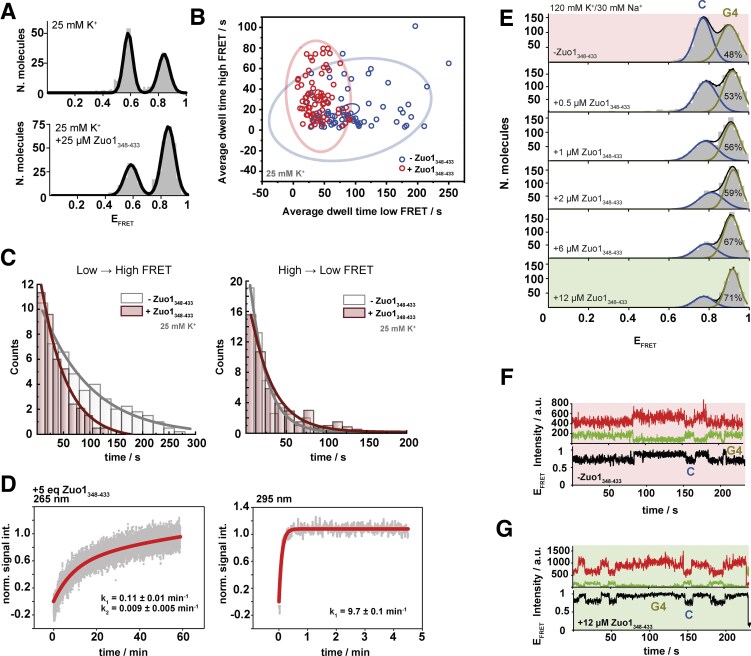 Figure 4
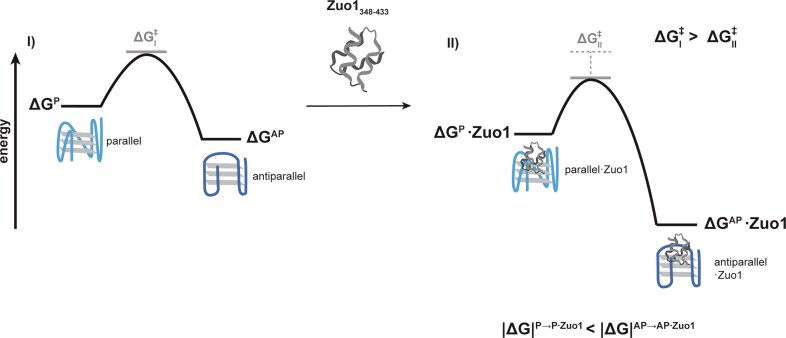 Figure 5
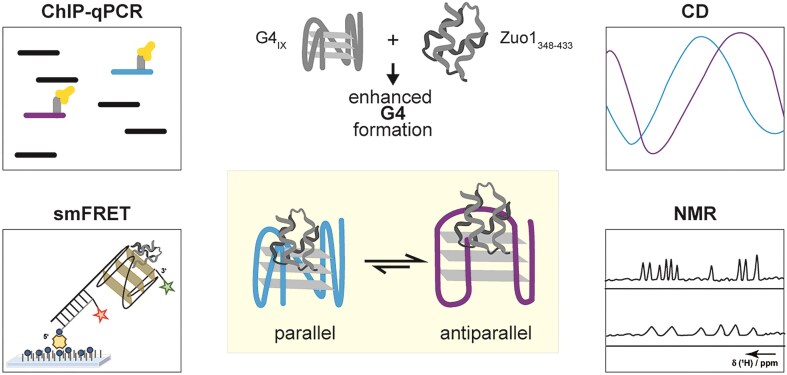 Figure 6
Peer Reviews
No public reviews on file for this paper yet. If you reviewed it on a platform where reviews are public (OpenReview, ICLR, NeurIPS, ICML), you can paste yours below so the community can read it here.
Videos
No videos yet. Explain this paper in a talk, walkthrough, or lecture? Add one.
Taxonomy
TopicsDNA and Nucleic Acid Chemistry · DNA Repair Mechanisms · Genomics and Chromatin Dynamics