Unraveling the Role of Triplet–Triplet Annihilation and Photodegradation in Difluoroboron‐Based Organic Laser Gain Materials
Suman Kuila, Hector Miranda‐Salinas, Chunyong Li, Natalie E. Pridmore, Martin R. Bryce, Christel M. Marian, Andrew P. Monkman

TL;DR
This study explores how light emission in certain organic laser materials is caused by specific energy transfer processes and how these materials degrade under light exposure.
Contribution
The study reveals that amplified spontaneous emission in difluoroboron-based materials originates from aggregated singlet states, not phosphorescence, and identifies triplet–triplet annihilation as the key mechanism.
Findings
Emission in difluoroboron-based materials is primarily from singlet states via triplet–triplet annihilation-driven delayed fluorescence.
Amplified spontaneous emission arises from aggregated singlet states rather than triplet states.
Photodegradation introduces new fluorescence and phosphorescence bands, complicating the material's photophysics.
Abstract
In this study, we investigate the triplet exciton dynamics of a series of difluoroboron‐based organic gain molecules. We synthesized three previously reported molecules from the difluoroboron family and examined their photophysical properties using time‐resolved emission spectroscopy and high‐level theoretical calculations. Our results reveal that emission from these materials arises predominantly from the singlet manifold via prompt and triplet–triplet annihilation (TTA)‐driven delayed fluorescence, rather than from phosphorescence, challenging the earlier assumptions of amplified spontaneous emission (ASE) originating from the triplet manifold. In highly concentrated solutions, the emission shows strong resemblance to that of the crystalline phase, confirming its origin from aggregate singlet states rather than monomeric pathways. Further, the materials are prone to photodegradation,…
Genes, proteins, chemicals, diseases, species, mutations and cell lines named across the full text — each resolved to its canonical identifier and authoritative record.
Click any figure to enlarge with its caption.
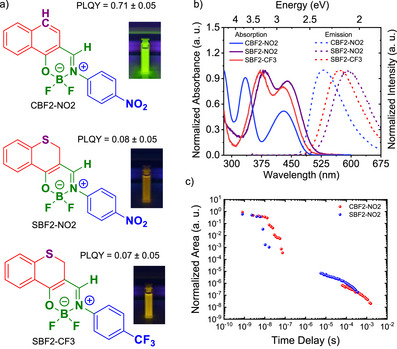 Figure 1
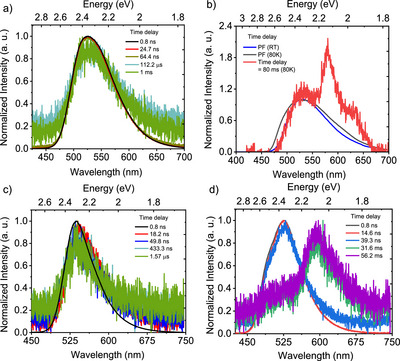 Figure 2
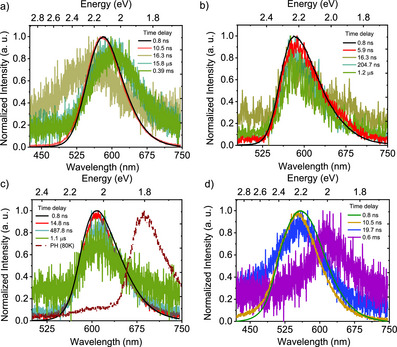 Figure 3
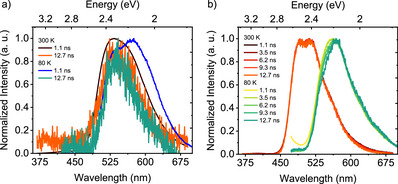 Figure 4
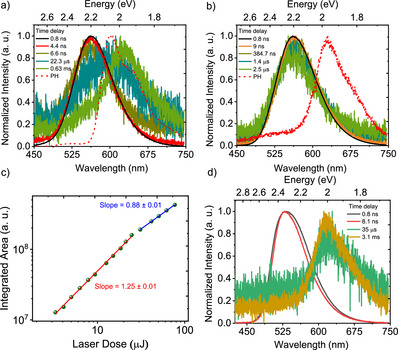 Figure 5
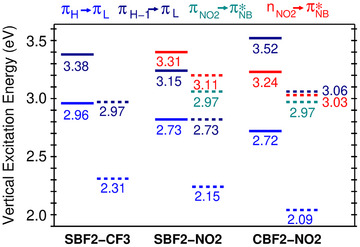 Figure 6
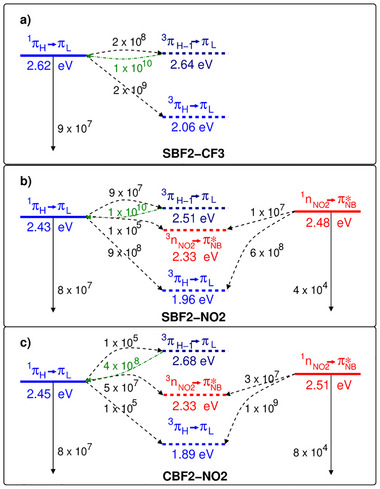 Figure 7
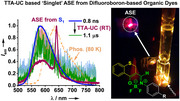 Figure 8
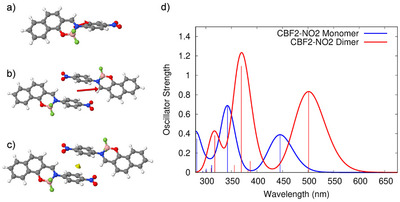 Figure 9
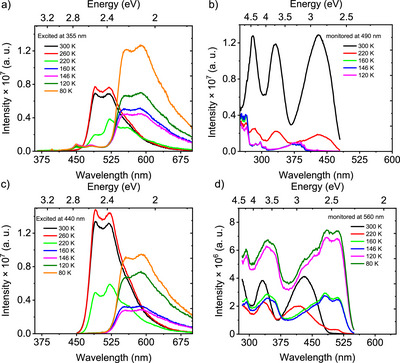 Figure 10
Peer Reviews
No public reviews on file for this paper yet. If you reviewed it on a platform where reviews are public (OpenReview, ICLR, NeurIPS, ICML), you can paste yours below so the community can read it here.
Videos
No videos yet. Explain this paper in a talk, walkthrough, or lecture? Add one.
Taxonomy
TopicsOrganic Light-Emitting Diodes Research · Photochemistry and Electron Transfer Studies · Luminescence and Fluorescent Materials