Transtibial repair of medial meniscus posterior root tears: Interference screw fixation improves primary stability in a porcine model
Timo Spannagel, Bastian Schäfer, Philip Anderson, Isabell Biermann, Stephan Reppenhagen

TL;DR
This study found that using an interference screw improves the stability of medial meniscus repairs in a pig model compared to another method.
Contribution
The study introduces new biomechanical evidence that interference screw fixation is more stable for medial meniscus root repairs in a porcine model.
Findings
Interference screw fixation showed significantly lower elongation and higher stiffness than Endobutton fixation.
Group 1 (IS + SutureTape) had the highest maximum load to failure, while Group 2 (IS + FiberWire) had the lowest.
Endobutton with FiberWire had the highest yield load, but interference screw with SutureTape performed best overall.
Abstract
This porcine study aimed to evaluate surgical refixation methods for medial meniscal root tears. We compared biomechanical characteristics of tibial fixation using an interference screw (IS) and fixation with an Endobutton (EB). Forty porcine knee joints were prepared with radial section for a complete detachment of the medial meniscus posterior root (MMPR), followed by transtibial pull‐out refixation. Specimens were randomly assigned to four groups based on fixation method and suture material: IS (STORZ PEEK Power Fix 7 × 25 mm, Storz, Tuttlingen, Germany) or EB (Smith & Nephew, London, UK), each combined with two single stitch sutures of either FiberWire size 2 (FW; Arthrex, Naples, USA) or SutureTape 1.3 mm (ST; Arthrex, Naples, USA). Constructs were subjected to cyclic loading (1000 cycles), followed by load‐to‐failure testing. Biomechanical parameters assessed included elongation,…
Genes, proteins, chemicals, diseases, species, mutations and cell lines named across the full text — each resolved to its canonical identifier and authoritative record.
Click any figure to enlarge with its caption.
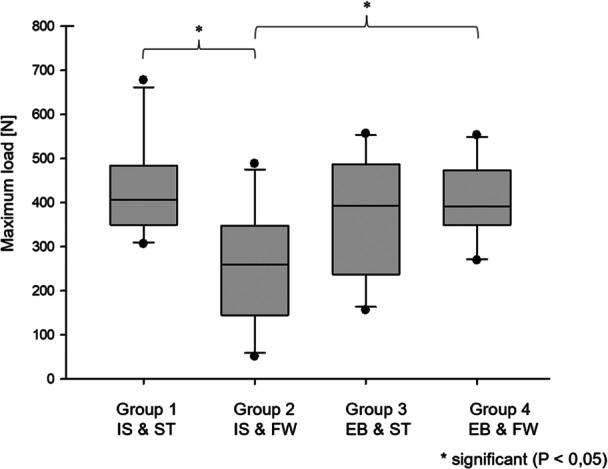 Figure 1
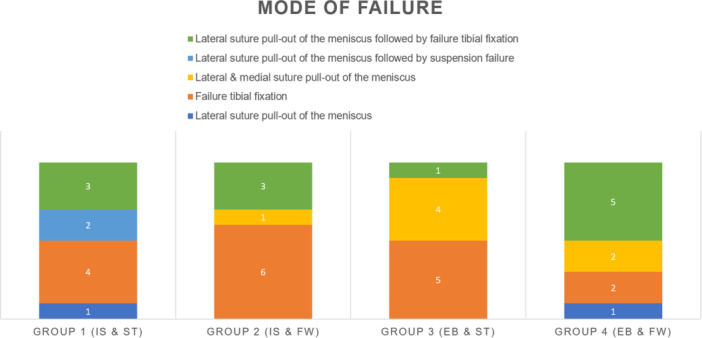 Figure 2
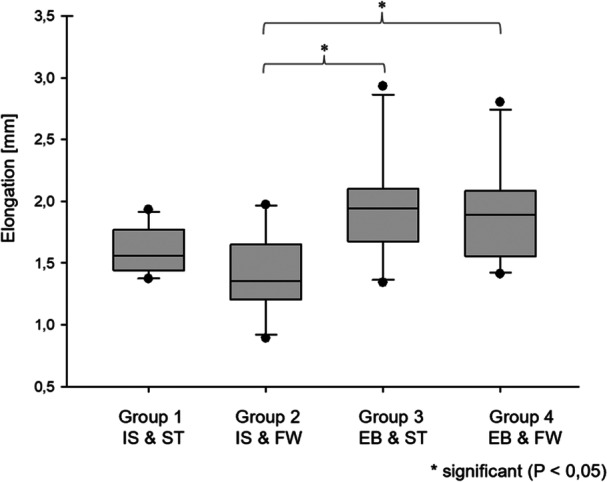 Figure 3
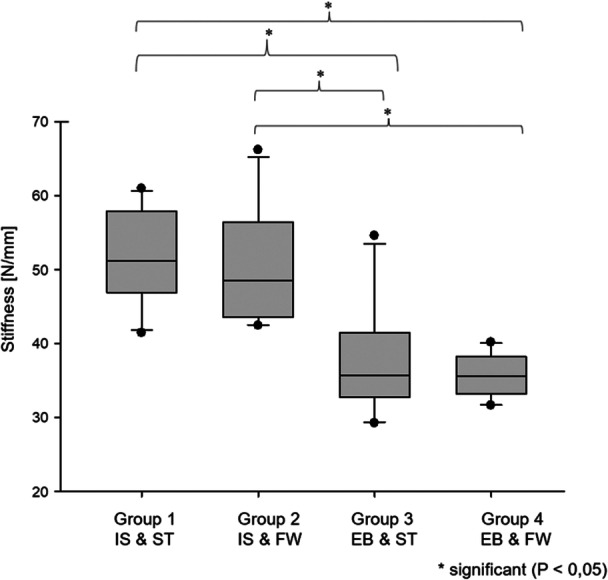 Figure 4
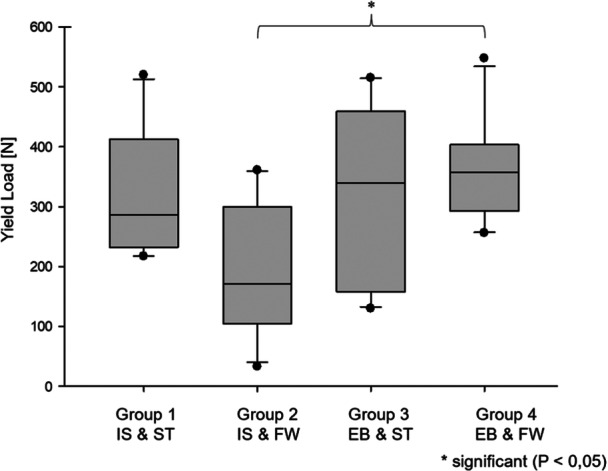 Figure 5
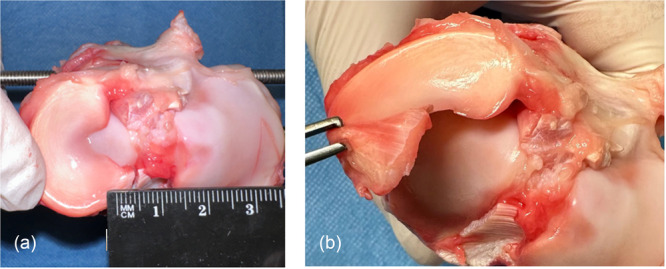 Figure 6
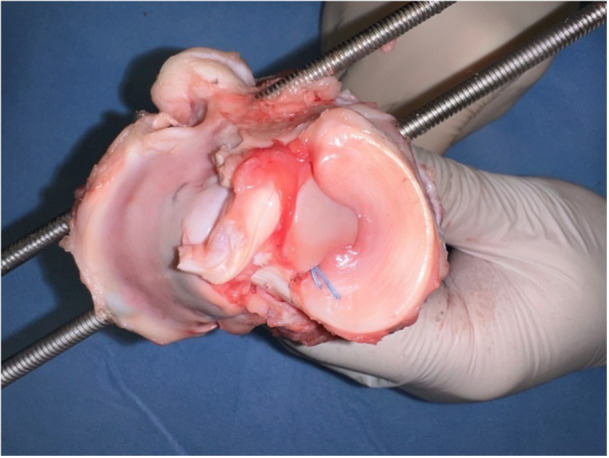 Figure 7
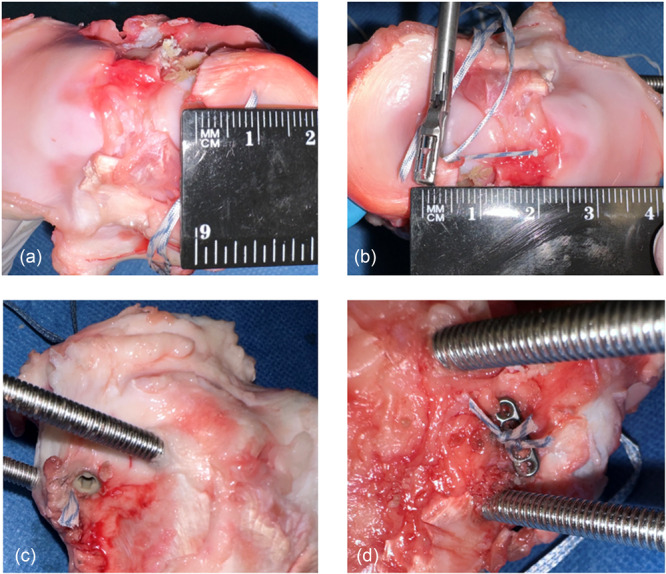 Figure 8
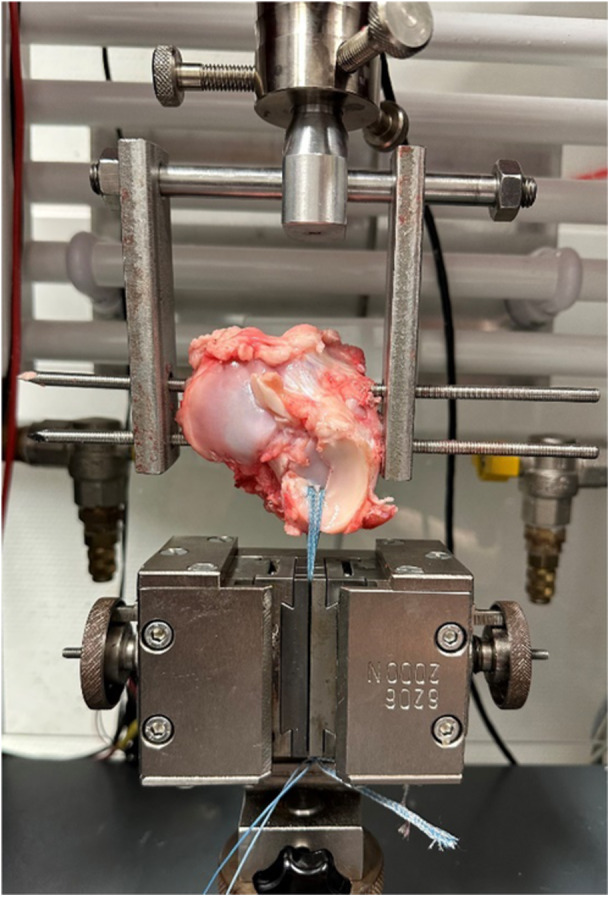 Figure 9
Peer Reviews
No public reviews on file for this paper yet. If you reviewed it on a platform where reviews are public (OpenReview, ICLR, NeurIPS, ICML), you can paste yours below so the community can read it here.
Videos
No videos yet. Explain this paper in a talk, walkthrough, or lecture? Add one.
Taxonomy
TopicsKnee injuries and reconstruction techniques · Total Knee Arthroplasty Outcomes · Lower Extremity Biomechanics and Pathologies