Gastrocnemius Myofiber Type and Mitochondrial Alterations Associated With Peripheral Artery Disease Severity
Kate Kosmac, Rena Dana Wang, Jada Stewart, Parminder Kaur, Ahmed Ismaeel, Haseeb Ahsan, Lisa Hartnell, Esther E Dupont-Versteegden, Mary M McDermott, Robert L Sufit, Luigi Ferrucci, Charlotte A Peterson

TL;DR
This study explores how muscle fiber types and mitochondrial changes in the gastrocnemius muscle relate to the severity of peripheral artery disease.
Contribution
The study identifies a potential compensatory mechanism involving type 1 myofibers in response to PAD severity.
Findings
Oxidative type 1 myofiber abundance negatively correlates with PAD severity as measured by ABI.
IMFM- regions in type 1 myofibers may indicate a transition from type 2 to type 1 myofibers.
Sarcomere disruption in IMFM- regions was confirmed via electron microscopy.
Abstract
The extent of walking impairment varies among individuals with peripheral artery disease (PAD), which may reflect differences in the adaptability of lower extremity muscles to ischemia-reperfusion injury characteristic of the disease. Analyses of gastrocnemius muscle biopsies from 113 individuals with PAD [mean ankle-brachial index (ABI) = 0.65 ± 0.13, 38 (33.6%) women, 76 (67.2%) Black] showed a wide range of myofiber type distributions (9.6%-82.6% type 1 myofibers). The abundance of oxidative type 1 myofibers negatively correlated with ABI (r = −0.22, P = 0.02), a measure of PAD severity. The abundance of type 1 myofibers also negatively correlated to 2a/x myofiber abundance (r = −0.76, P < 0.001). Eighty % of participants had NCAM+ myofibers, a potential indicator of myofiber denervation. Overall, 3.2% of total myofibers were NCAM+. Of 113 muscle biopsies, 86 (76.1%) contained type 1…
Genes, proteins, chemicals, diseases, species, mutations and cell lines named across the full text — each resolved to its canonical identifier and authoritative record.
Click any figure to enlarge with its caption.
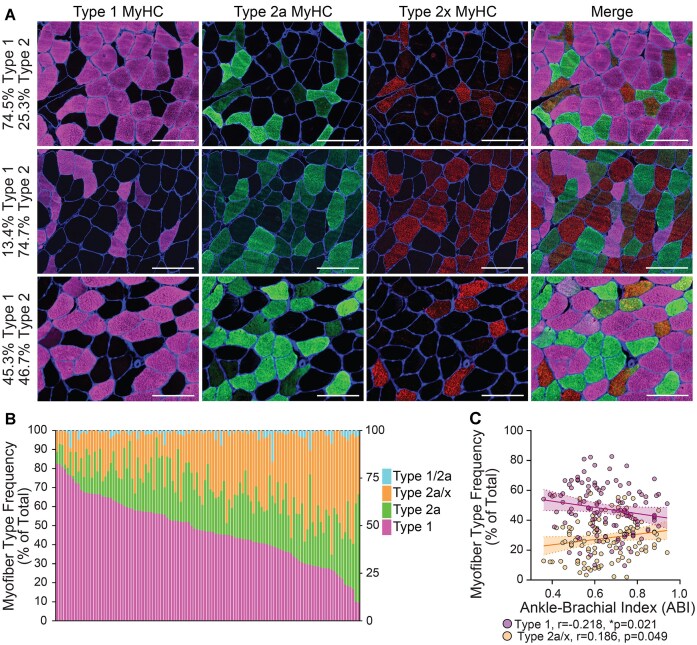 Figure 1
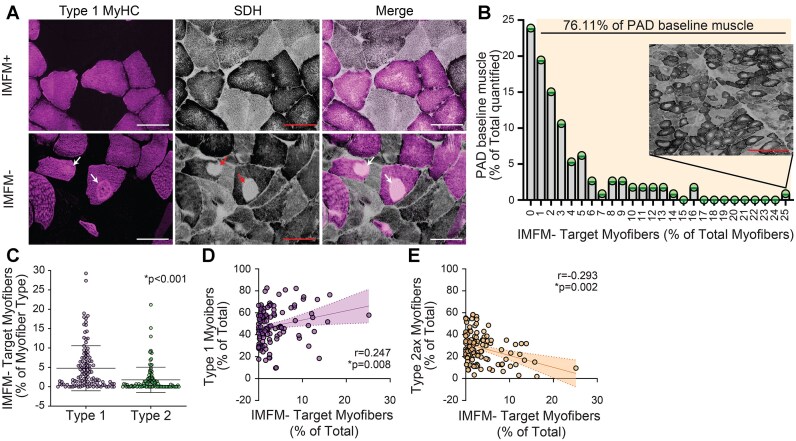 Figure 2
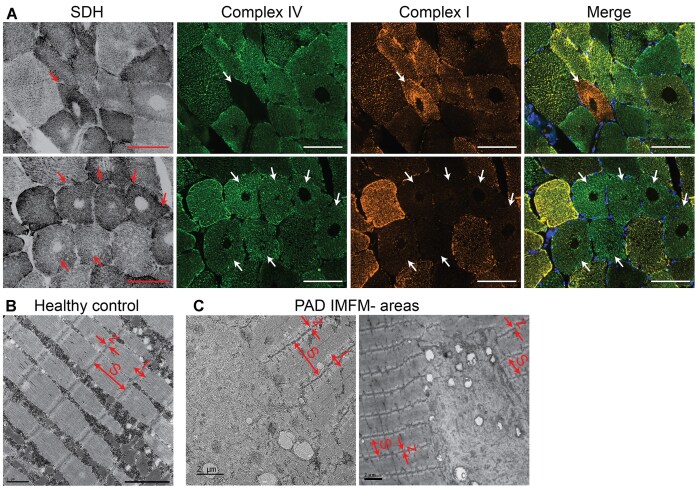 Figure 3
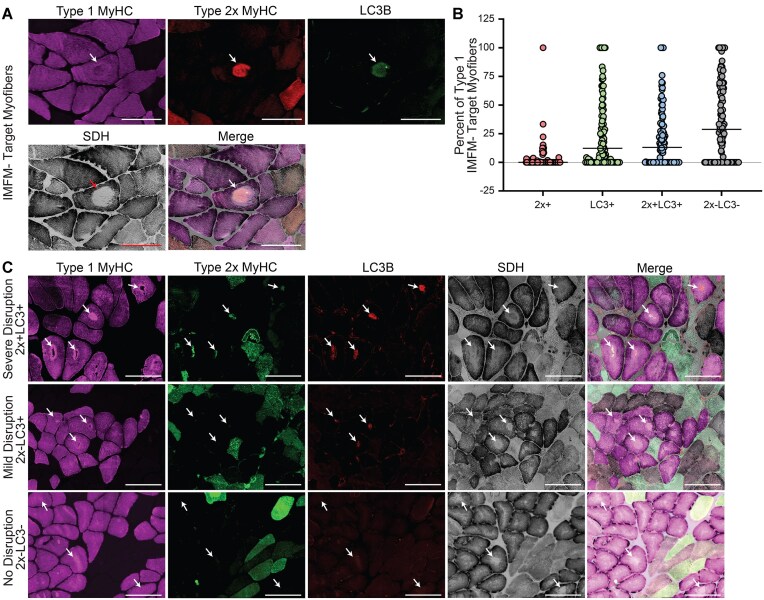 Figure 4
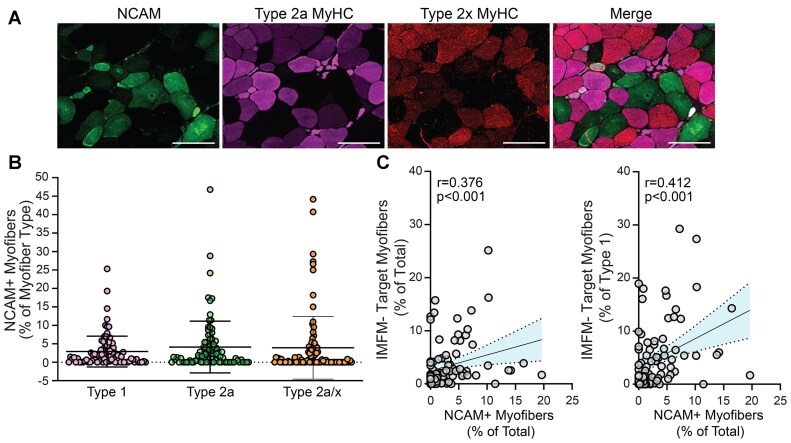 Figure 5
Peer Reviews
No public reviews on file for this paper yet. If you reviewed it on a platform where reviews are public (OpenReview, ICLR, NeurIPS, ICML), you can paste yours below so the community can read it here.
Videos
No videos yet. Explain this paper in a talk, walkthrough, or lecture? Add one.
Taxonomy
TopicsMuscle Physiology and Disorders · Peripheral Artery Disease Management · Protease and Inhibitor Mechanisms