Dupilumab Initiation for Surgically Refractory Chronic Rhinosinusitis With Nasal Polyps Is Associated With Differential Expression of CLC and Activation of Eicosanoid Pathways
Christina Dorismond, Rory J. Lubner, Daniel H. Lofgren, Chandler J. Rygalski, Ping Li, Katherine N. Cahill, Suman R. Das, Mason R. Krysinski, Rakesh K. Chandra, Justin H. Turner, Naweed I. Chowdhury

TL;DR
This study explores gene and pathway changes in patients with chronic sinusitis who received dupilumab, identifying potential markers for disease severity.
Contribution
The study identifies specific genes and pathways linked to dupilumab treatment in surgically refractory chronic rhinosinusitis with nasal polyps.
Findings
The CLC gene and eicosanoid pathways are differentially expressed in patients treated with dupilumab.
Periostin and osteopontin-associated pathways are associated with dupilumab use in CRSwNP.
These findings may help in early stratification of disease severity in CRSwNP patients.
Abstract
An untargeted transcriptomic analysis provided exploratory insight into key genes and pathways that can be used to help identify patients at risk for surgically refractory chronic rhinosinusitis with nasal polyps (CRSwNP). The Charcot–Leyden crystal gene, periostin and osteopontin‐associated pathways, eicosanoid synthesis pathway, and prostaglandin/leukotriene metabolism pathway, among others, are associated with dupilumab prescription for surgically refractory chronic rhinosinusitis and may support early stratification of disease severity in CRSwNP patients. An untargeted transcriptomic analysis provided exploratory insight into key genes and pathways that can be used to help identify patients at risk for surgically refractory chronic rhinosinusitis with nasal polyps (CRSwNP). The Charcot–Leyden crystal gene, periostin and osteopontin‐associated pathways, eicosanoid synthesis…
Genes, proteins, chemicals, diseases, species, mutations and cell lines named across the full text — each resolved to its canonical identifier and authoritative record.
Click any figure to enlarge with its caption.
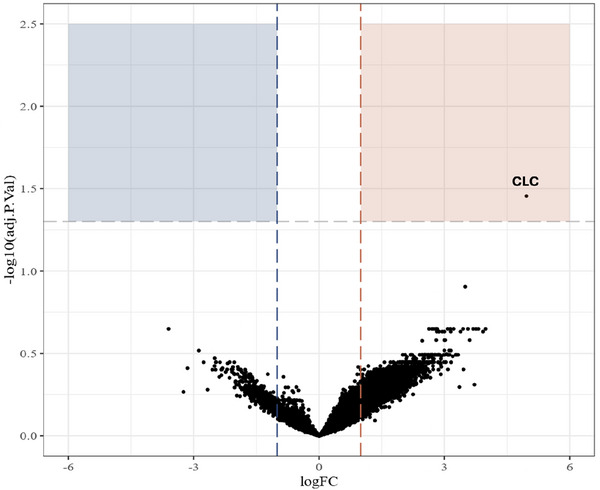 Figure 1
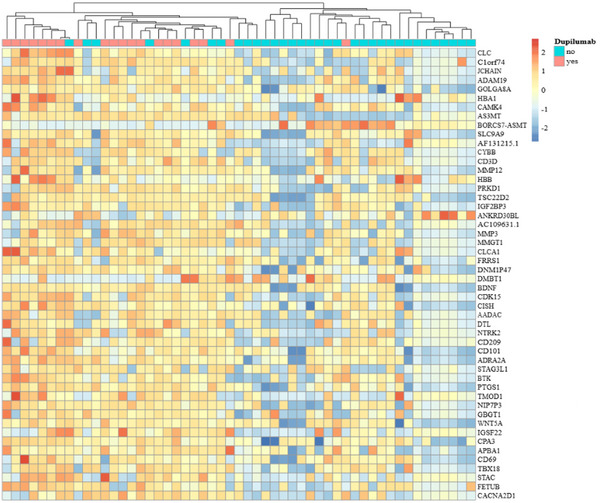 Figure 2
Peer Reviews
No public reviews on file for this paper yet. If you reviewed it on a platform where reviews are public (OpenReview, ICLR, NeurIPS, ICML), you can paste yours below so the community can read it here.
Videos
No videos yet. Explain this paper in a talk, walkthrough, or lecture? Add one.
Taxonomy
TopicsSinusitis and nasal conditions · Allergic Rhinitis and Sensitization · Asthma and respiratory diseases