A kinetic ruler controls mRNA poly(A) tail length
Emilie Gabs, Emil Aalto-Setälä, Aada Välisaari, Anssi M. Malinen, Torben Heick Jensen, Stephen H. McLaughlin, Lori A. Passmore, Matti Turtola

TL;DR
This paper explains how the length of mRNA poly(A) tails is controlled by a balance between elongation and termination processes in yeast.
Contribution
The study reveals a 'kinetic ruler' mechanism where Nab2 protein concentration regulates poly(A) tail length through competitive RNA binding.
Findings
Nab2 dimerization occurs only on poly(A) tails longer than 25 adenosines, preventing premature termination.
Poly(A) tail length is determined by kinetic competition between CPAC elongation and Nab2 binding.
Nab2 concentration is autoregulated to buffer variations in poly(A) tail length.
Abstract
In this study, Gabs et al. show that poly(A) tail length is dictated by kinetic competition between poly(A) tail elongation mediated by the cleavage and polyadenylation complex and polyadenylation termination directed by the zinc finger poly(A) binding protein NAB2 in Saccharomyces. NAB2 dimerization and multidomain RNA binding are counterbalanced by the autoregulation of NAB2 protein concentration, which together fine-tune mRNA poly(A) tail synthesis and thus mRNA stability. Poly(A) tails of newly synthesized mRNAs have uniform lengths, arising through cooperation between the cleavage and polyadenylation complex (CPAC) and poly(A) binding proteins (PABPs). In the budding yeast Saccharomyces cerevisiae, the responsible PABP is the evolutionarily conserved CCCH zinc finger protein Nab2 that facilitates the biogenesis of ∼60 adenosine mRNA poly(A) tails. Here, we address the molecular…
Genes, proteins, chemicals, diseases, species, mutations and cell lines named across the full text — each resolved to its canonical identifier and authoritative record.
Click any figure to enlarge with its caption.
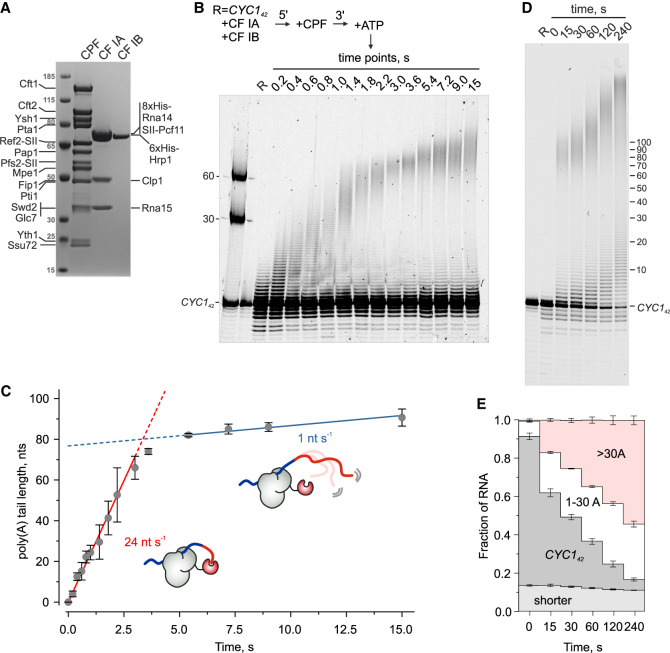 Figure 1
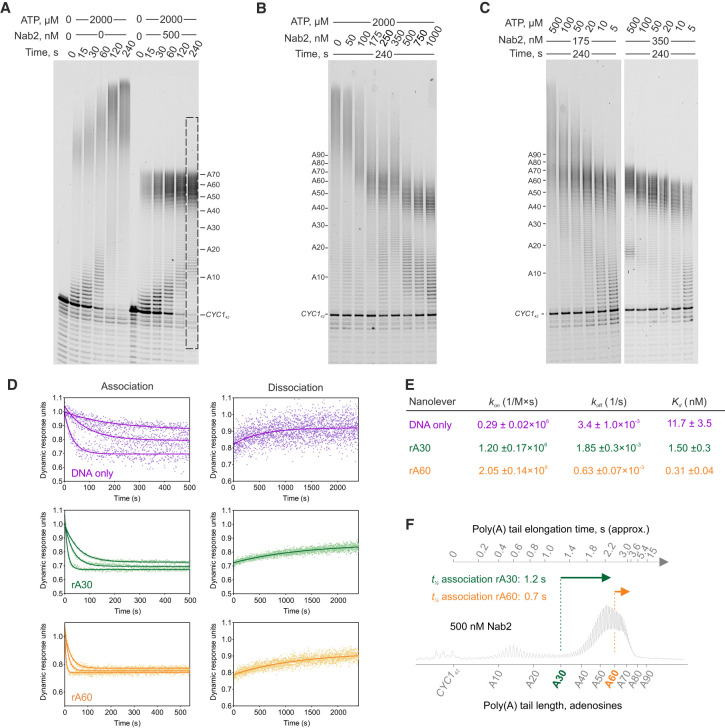 Figure 2
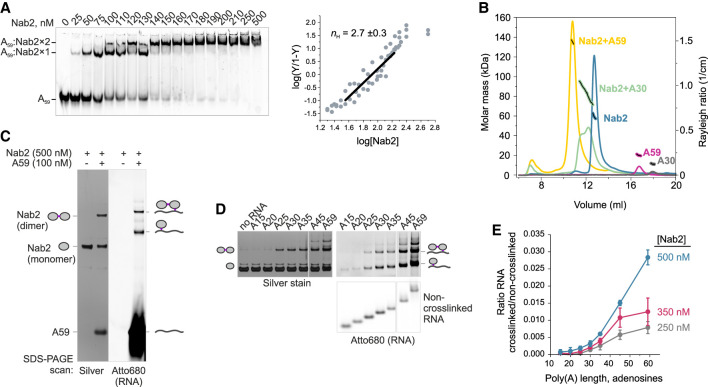 Figure 3
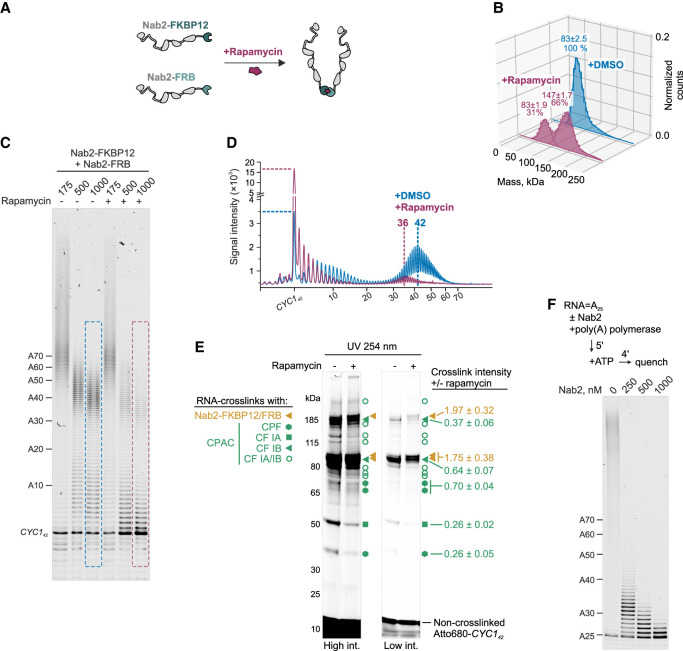 Figure 4
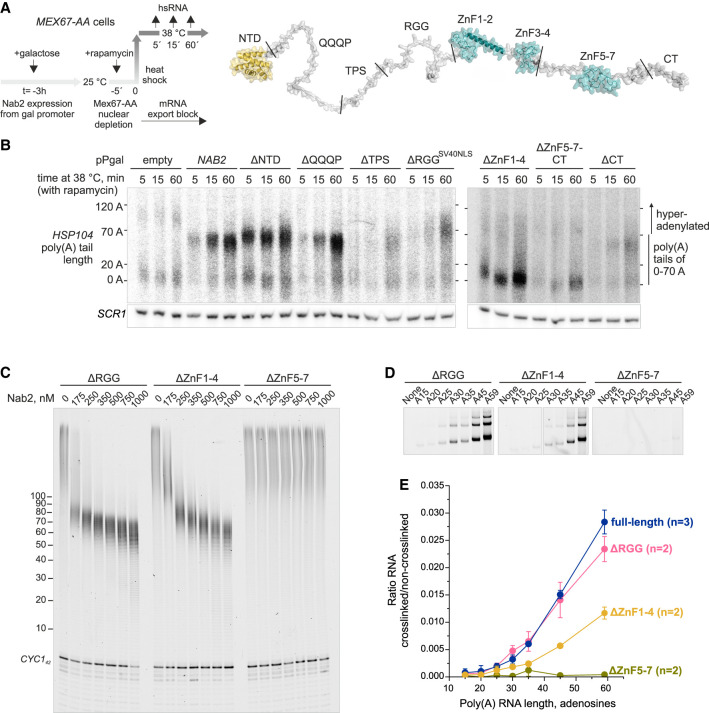 Figure 5
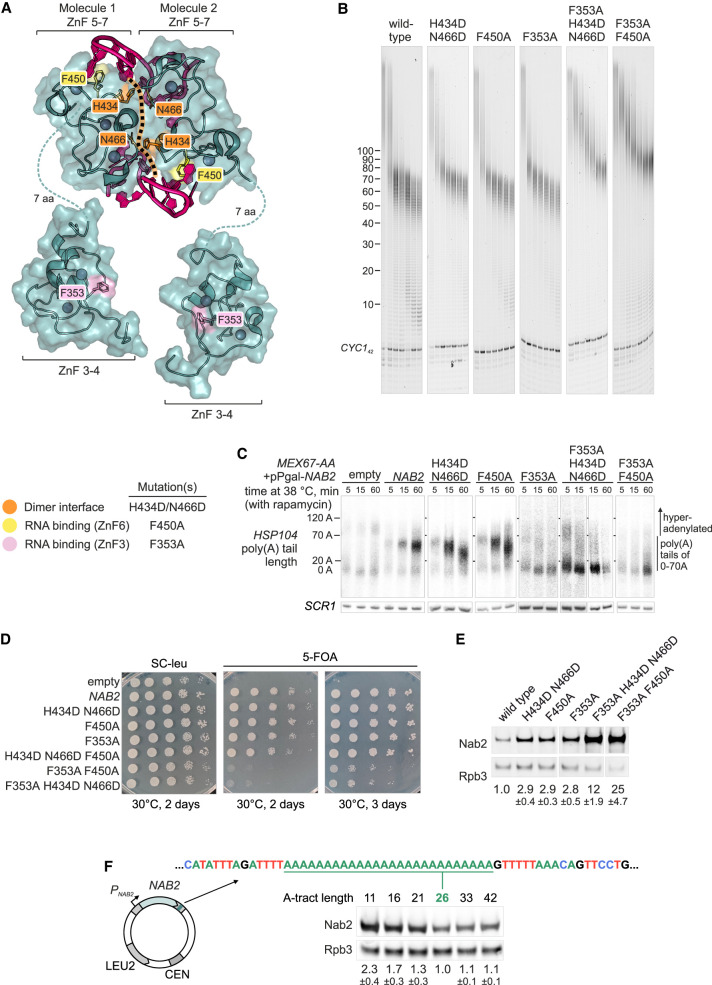 Figure 6
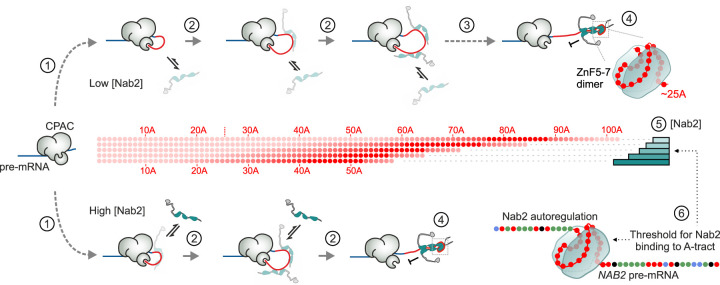 Figure 7
Peer Reviews
No public reviews on file for this paper yet. If you reviewed it on a platform where reviews are public (OpenReview, ICLR, NeurIPS, ICML), you can paste yours below so the community can read it here.
Videos
No videos yet. Explain this paper in a talk, walkthrough, or lecture? Add one.
Taxonomy
TopicsRNA Research and Splicing