Determining off-target effects of splice-switching antisense oligonucleotides using short read RNAseq in neuronally differentiated human induced pluripotent stem cells
Elsa C Kuijper, Linda van der Graaf, Barry A Pepers, Mariana Guimarães Ramos, Sylvia Korhorn, Lodewijk J A Toonen, Davy Cats, Ronald A M Buijsen, Eleni Mina, Hailiang Mei, Willeke M C van Roon-Mom

TL;DR
This study uses RNA sequencing to assess off-target effects of antisense oligonucleotides in human neurons, showing that short read RNAseq can help compare AON toxicity and identify unique off-target profiles.
Contribution
The study demonstrates the use of RNAseq to compare AON toxicity and identify AON-specific off-target profiles in human cells.
Findings
Only a minority of splicing events could be explained by hybridization, showing the difficulty of predicting off-target effects.
One AON induced significantly more changes in gene expression and splicing compared to the other two AONs.
Main splicing events were validated with RT-PCR, confirming RNAseq results.
Abstract
Antisense oligonucleotides (AONs) are small pieces of chemically modified DNA or RNA that bind to RNA in a sequence-specific manner based on Watson-Crick base-pairing. Splice-switching AONs are designed to modulate pre-mRNA splicing, thereby for instance restoring protein expression or modifying the eventual protein to restore its function or reduce its toxicity. Given the current lack of in silico methods that adequately predict off-target splicing events, assessment of off-target effects of AONs in human cells using RNAseq could be a promising approach. The identification and prioritization of potential off-target effects for validation and further investigation into the biological relevance would contribute to the development of safe and effective AONs. In this study, we used three different splice-switching AONs targeting three different human transcripts to study their…
Genes, proteins, chemicals, diseases, species, mutations and cell lines named across the full text — each resolved to its canonical identifier and authoritative record.
Click any figure to enlarge with its caption.
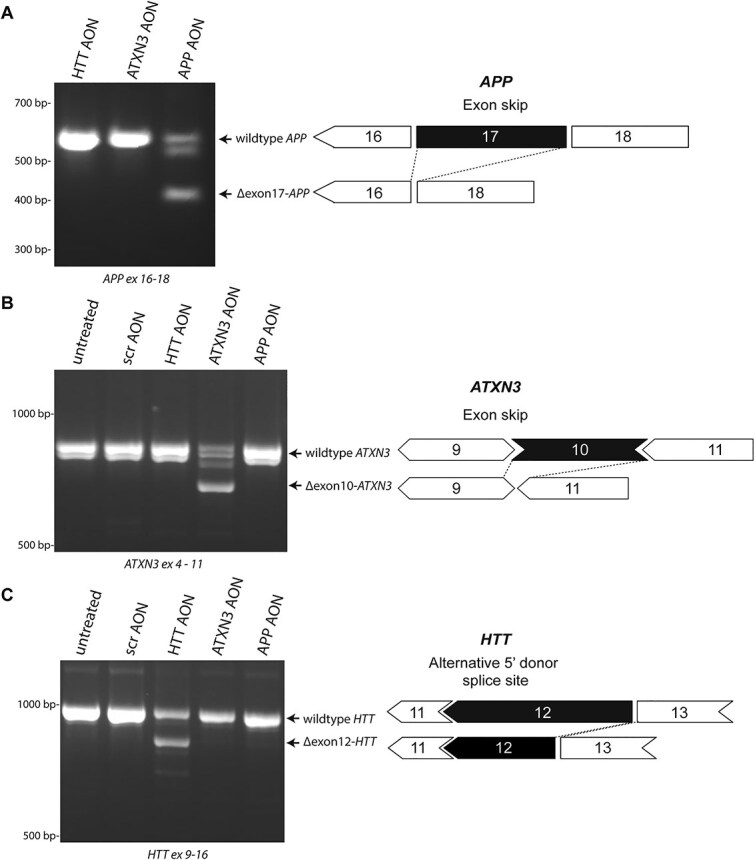 Figure 1
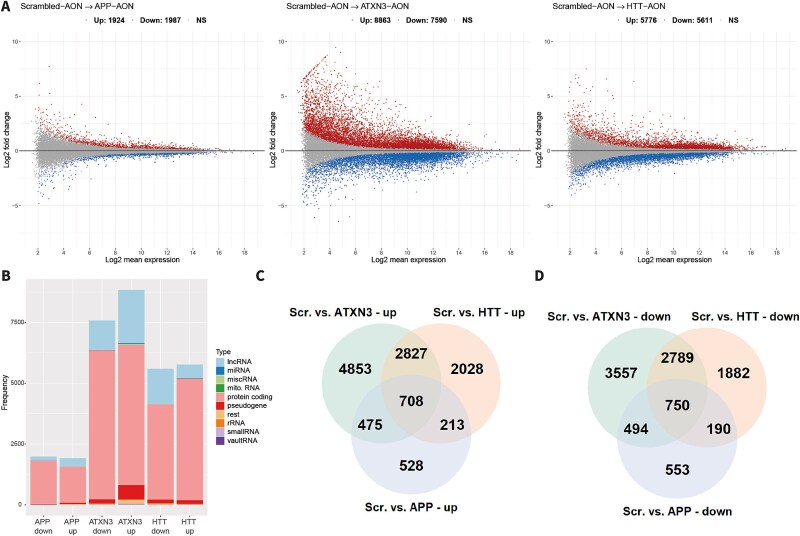 Figure 2
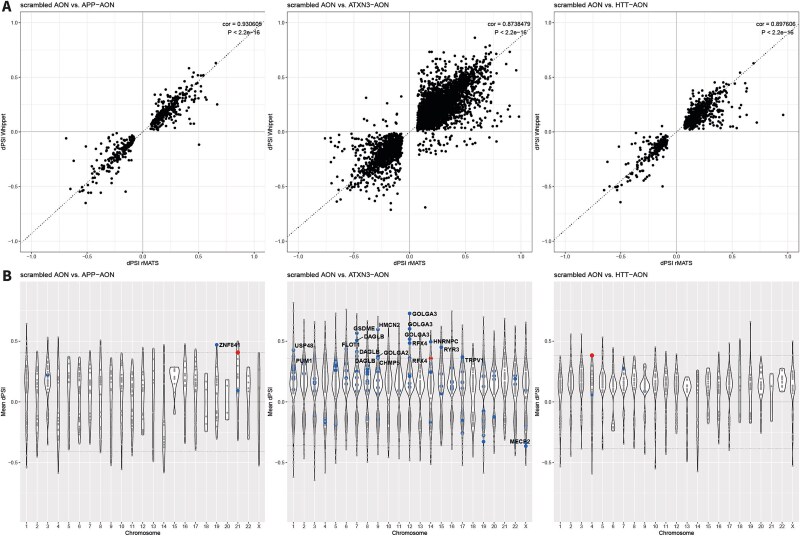 Figure 3
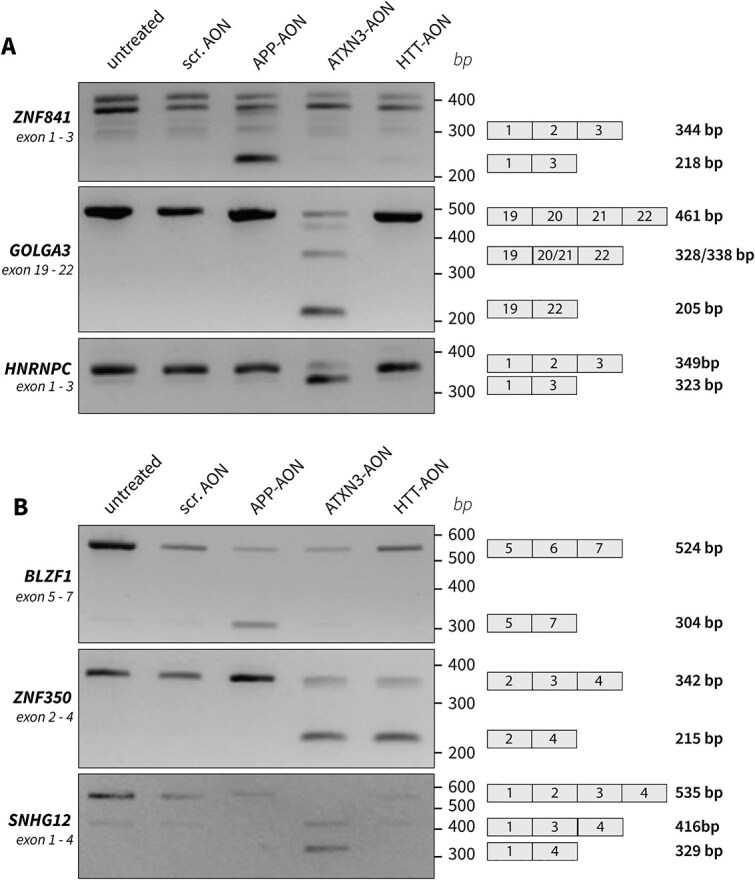 Figure 4
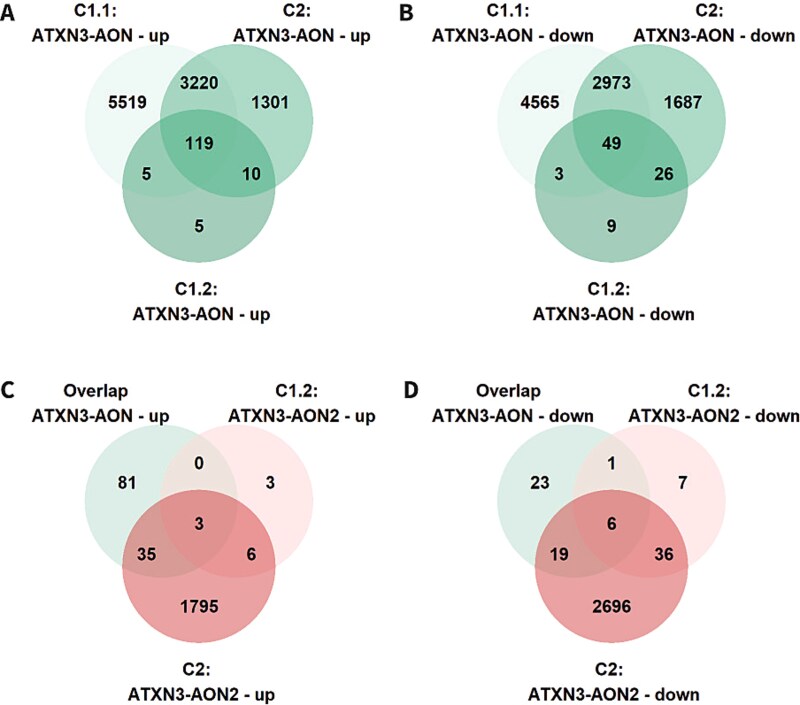 Figure 5
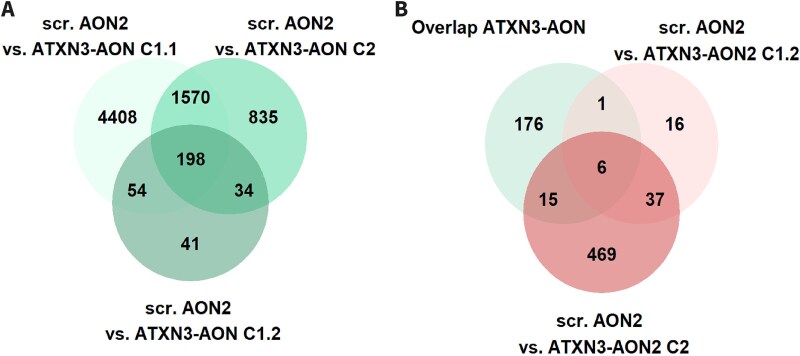 Figure 6
Peer Reviews
No public reviews on file for this paper yet. If you reviewed it on a platform where reviews are public (OpenReview, ICLR, NeurIPS, ICML), you can paste yours below so the community can read it here.
Videos
No videos yet. Explain this paper in a talk, walkthrough, or lecture? Add one.
Taxonomy
TopicsRNA Research and Splicing · RNA and protein synthesis mechanisms · RNA Interference and Gene Delivery