The complete mitochondrial genome of Ischiodon scutellaris (Diptera: Syrphidae: Syrphinae)
Jingqiang Zhou, Yi Li, Xuefei Cai, Feng Li, Hong-Peng Xiao, Guo-Hua Huang

TL;DR
This paper presents the first complete mitochondrial genome of the syrphid fly Ischiodon scutellaris and explores its evolutionary relationships with other species.
Contribution
The study provides the first complete mitochondrial genome sequence for Ischiodon scutellaris and contributes to syrphid mitochondrial genomics.
Findings
The mitochondrial genome is 15,815 bp long with an A + T content of 80.7%.
Phylogenetic analysis shows I. scutellaris is closely related to Scaeva affinis and Eupeodes species.
Three protein-coding genes use an incomplete T stop codon.
Abstract
This study reports the first complete mitochondrial genome of Ischiodon scutellaris. The mitochondrial genome is 15,815 bp in length, with an A + T content of 80.7%. The genome contains 13 protein-coding genes (PCGs), 22 tRNAs, 2 rRNAs, and a control region. All PCGs initiate with ATN (G/C/T), except COX1and ND1(TTG). Three PCGs (COX1, ATP6, ND5) terminate with an incomplete T stop codon. Phylogenetic analysis based on 13 PCG sequences using maximum likelihood revealed that I. scutellaris forms a sister clade with Scaeva affinis and clusters closely with multiple Eupeodes species. This study advances understanding of syrphid mitochondrial genomics and evolutionary relationships.
Genes, proteins, chemicals, diseases, species, mutations and cell lines named across the full text — each resolved to its canonical identifier and authoritative record.
Click any figure to enlarge with its caption.
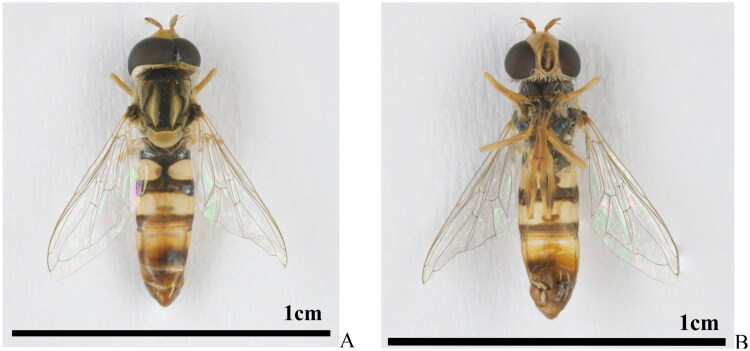 Figure 1
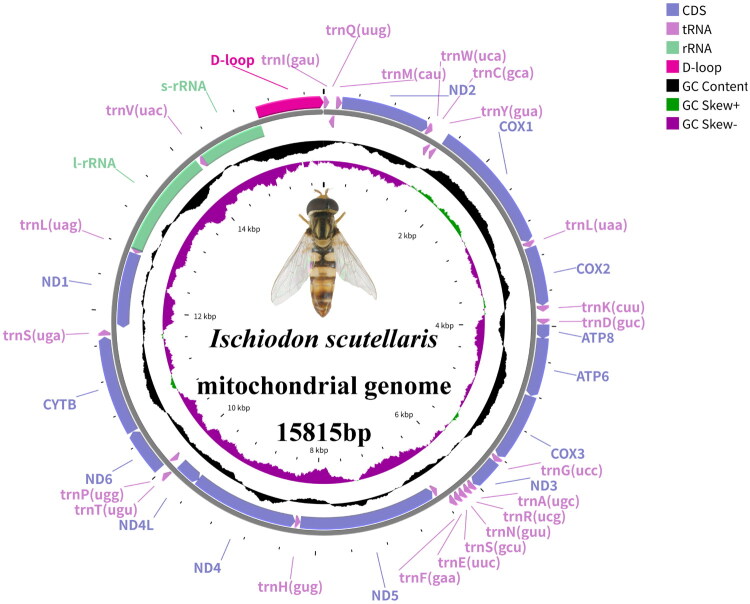 Figure 2
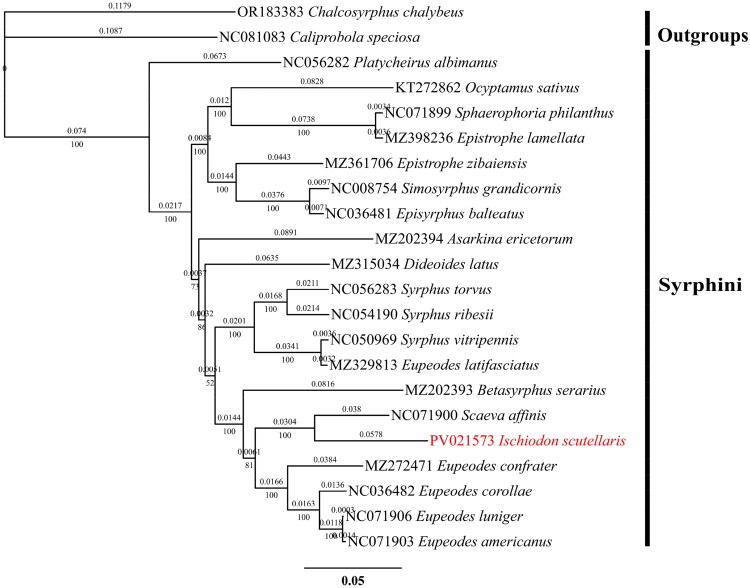 Figure 3
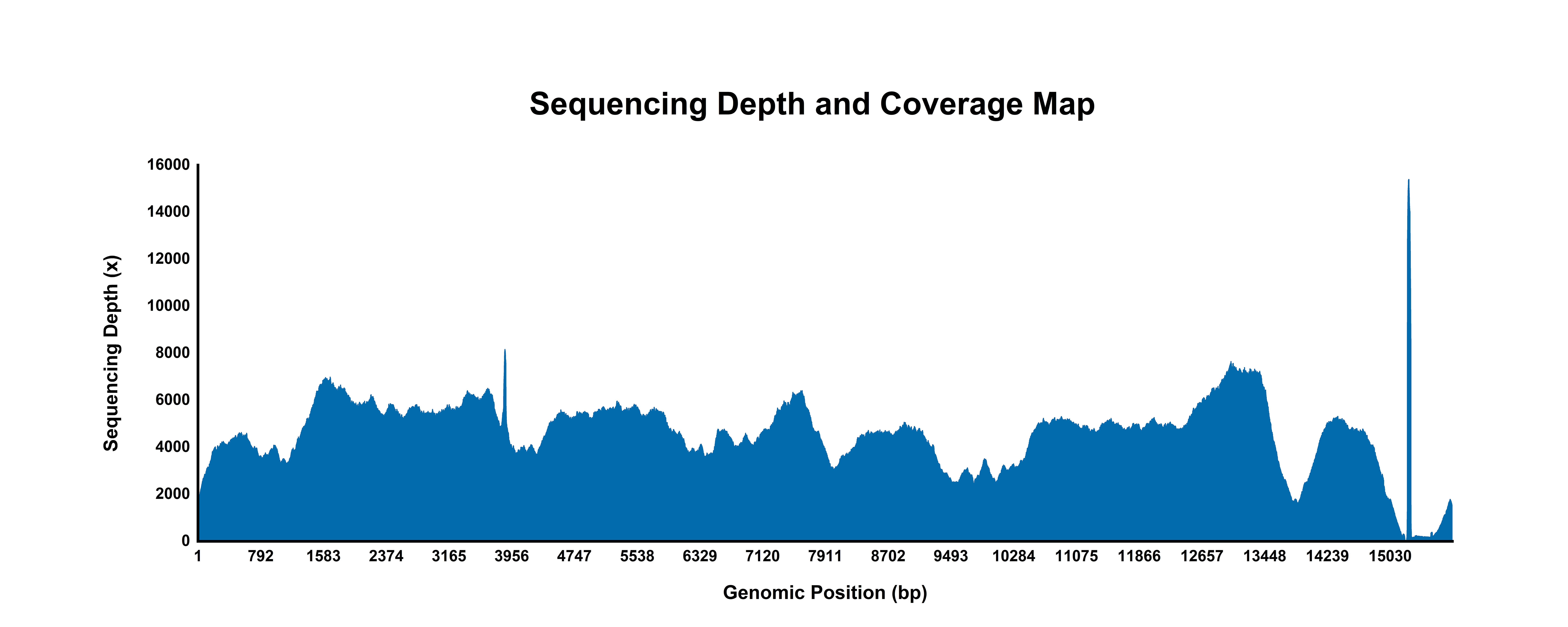 Figure 4
Peer Reviews
No public reviews on file for this paper yet. If you reviewed it on a platform where reviews are public (OpenReview, ICLR, NeurIPS, ICML), you can paste yours below so the community can read it here.
Videos
No videos yet. Explain this paper in a talk, walkthrough, or lecture? Add one.
Taxonomy
TopicsDiptera species taxonomy and behavior · Genomics and Phylogenetic Studies · Genetic diversity and population structure