Microbial Transglutaminase Increases Uptake and Translocation of Gliadin Peptides in the Human Intestinal Epithelium
Sebastian Stricker, Jan De Laffolie, Klaus‐Peter Zimmer, Silvia Rudloff

TL;DR
This study shows that microbial transglutaminase increases the absorption of harmful gliadin peptides in the human intestine, potentially contributing to celiac disease.
Contribution
The study demonstrates that microbial transglutaminase significantly enhances gliadin peptide uptake in intestinal cells and human tissue.
Findings
Microbial transglutaminase has a higher affinity for gliadin peptides than human transglutaminase 2.
Microbial transglutaminase increases the uptake of gliadin peptides P56-88 and P31-49 by nearly 10 times in Caco-2 cells.
Microbial transglutaminase colocalizes with gliadin peptides in human duodenal mucosa.
Abstract
Transglutaminase 2 (TG2) plays an essential role in the pathogenesis of celiac disease (CD) by modifying gliadin peptides. Additionally, microbial transglutaminase (mTG) was implicated in CD pathogenesis since it modifies gliadin peptides in the same way. mTG is used as a technical aid in the production of food items and might also be released by the intestinal microbiota. We aimed to characterize the interaction of mTG with different gliadin peptides and its effect on the epithelial and mucosal transport.We compared mTG‐ and TG2‐mediated crosslinking of gliadin peptides using indirect enzyme‐linked immunosorbent assay (ELISA) and immunoblot. Epithelial uptake of gliadin peptides P56‐88 and P31‐49 by Caco‐2 cells and human duodenal biopsies was quantified by fluorometry and immunofluorescence microscopy. mTG had a much higher affinity towards different gliadin peptides than TG2. mTG…
Genes, proteins, chemicals, diseases, species, mutations and cell lines named across the full text — each resolved to its canonical identifier and authoritative record.
Click any figure to enlarge with its caption.
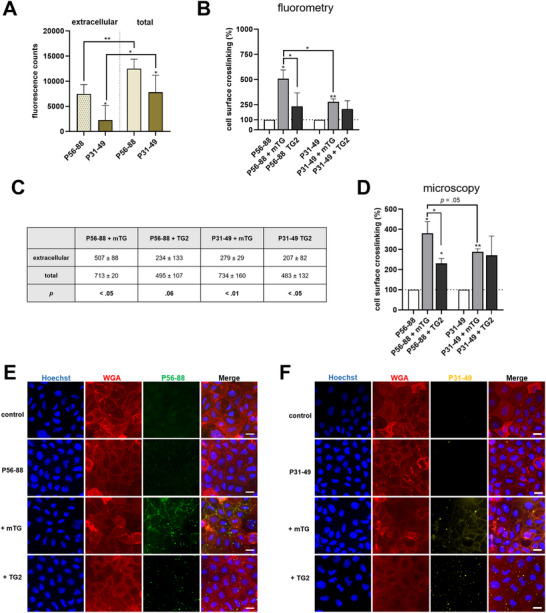 Figure 1
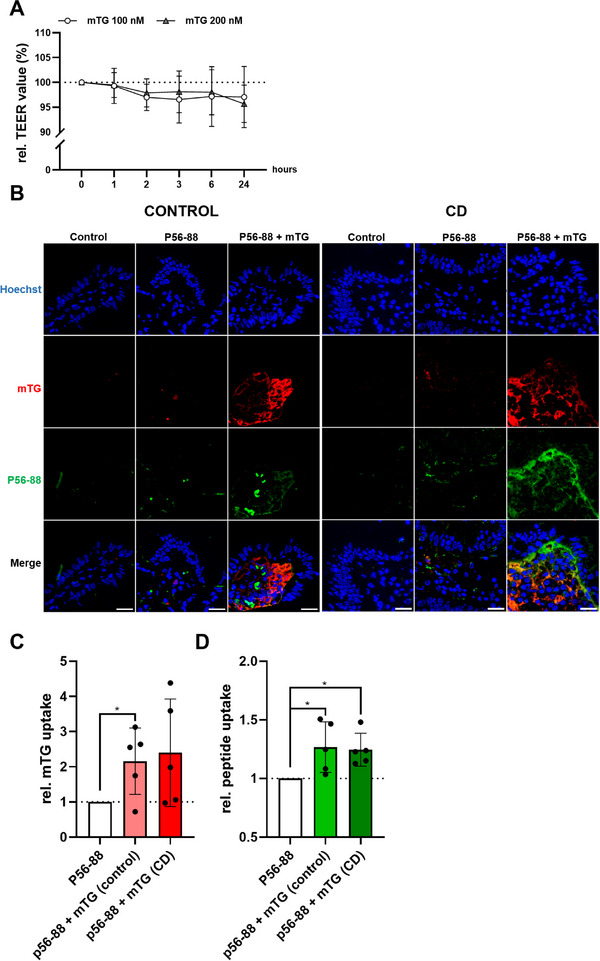 Figure 2
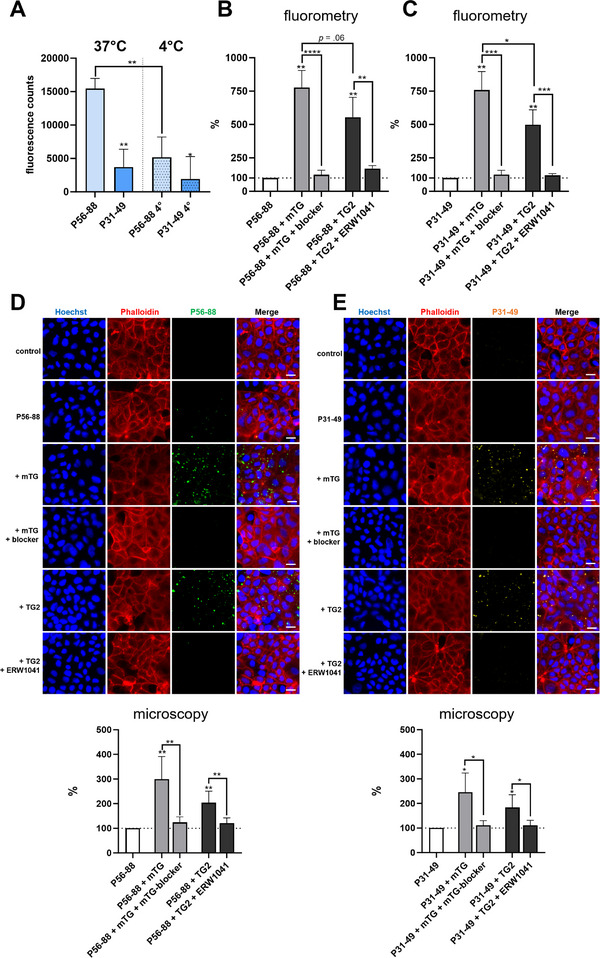 Figure 3
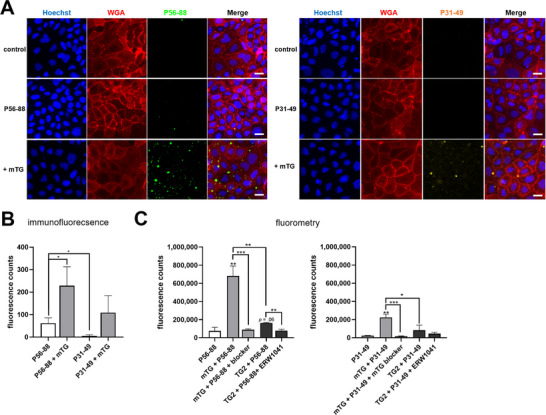 Figure 4
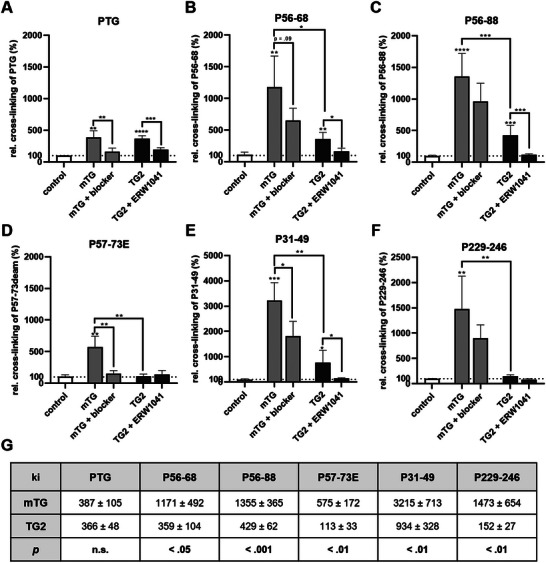 Figure 5
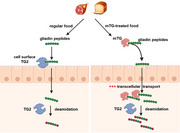 Figure 6
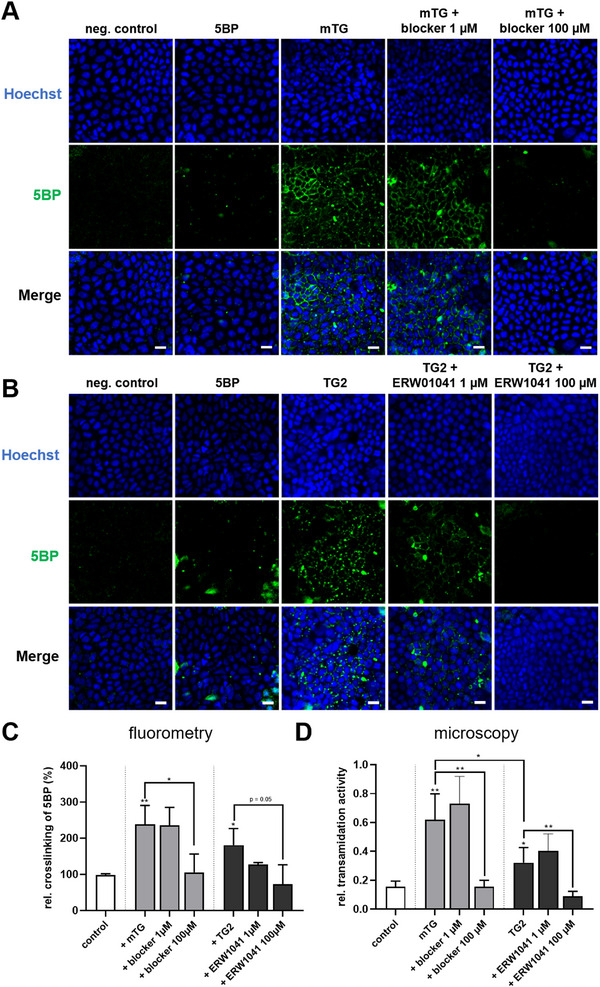 Figure 7
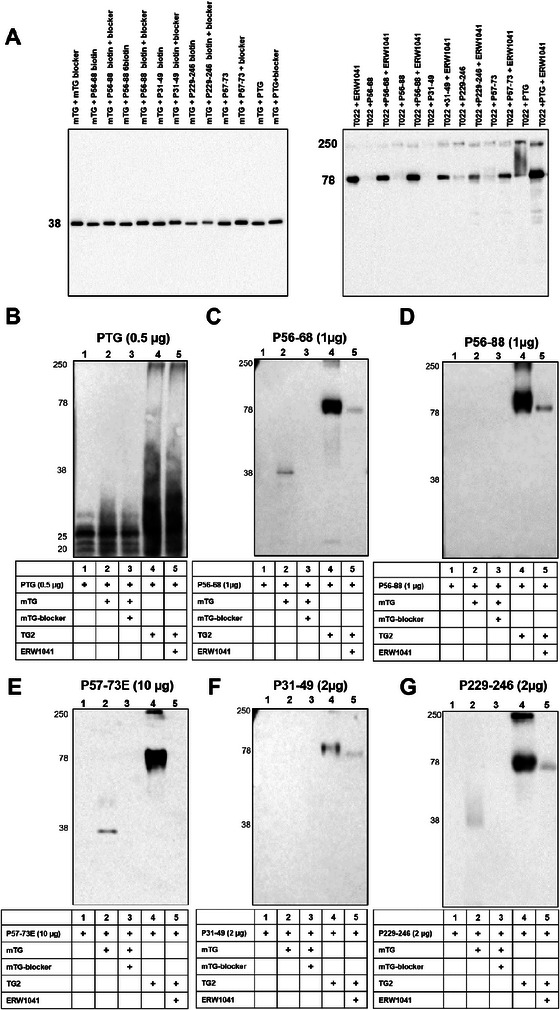 Figure 8
Peer Reviews
No public reviews on file for this paper yet. If you reviewed it on a platform where reviews are public (OpenReview, ICLR, NeurIPS, ICML), you can paste yours below so the community can read it here.
Videos
No videos yet. Explain this paper in a talk, walkthrough, or lecture? Add one.
Taxonomy
TopicsCeliac Disease Research and Management · Clostridium difficile and Clostridium perfringens research · Microscopic Colitis