Disabled people faced greater challenges accessing sexual and reproductive health services in the first year of the COVID-19 pandemic in Britain: evidence from the Natsal-COVID survey
Beattie R. H. Sturrock, Emily Dema, Raquel Bosó Pérez, Lorraine Stanley, Jo Gibbs, Pam Sonnenberg, Kirstin R. Mitchell, Catherine H. Mercer, Nigel Field

TL;DR
Disabled people in Britain faced more challenges accessing sexual and reproductive health services during the early stages of the COVID-19 pandemic compared to non-disabled individuals.
Contribution
This study is the first to show that disabled individuals experienced greater difficulty accessing SRH services during the pandemic, particularly due to functional limitations.
Findings
Disabled individuals were more likely to want but be unable to access at least one SRH service.
Higher functional limitations were strongly linked to greater difficulty accessing SRH services.
Disabled participants reported more transport issues and less satisfaction with how they eventually accessed services.
Abstract
Disabled people face barriers to accessing sexual and reproductive health (SRH) services. There is evidence that the general population had difficulty accessing SRH services during COVID-19 but it remains unclear whether disabled people were differentially affected. This study sought to investigate whether people in Britain who reported a disability were more likely to report inability to access SRH services and whether this was associated with functional limitation. We analysed data from the National Survey of Sexual Attitudes and Lifestyles (Natsal)-COVID 2 study. This was a cross-sectional, web panel survey of 6,658 18–59-year-old British residents in March–April 2021. Quota-based sampling and weighting were used to achieve quasi-representative population estimates. We defined disability as a long-term physical or mental health condition which affected ones’ ability to carry out…
Genes, proteins, chemicals, diseases, species, mutations and cell lines named across the full text — each resolved to its canonical identifier and authoritative record.
Click any figure to enlarge with its caption.
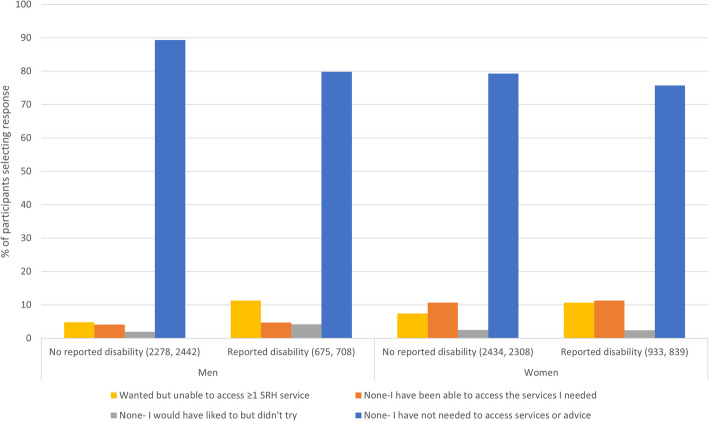 Figure 1
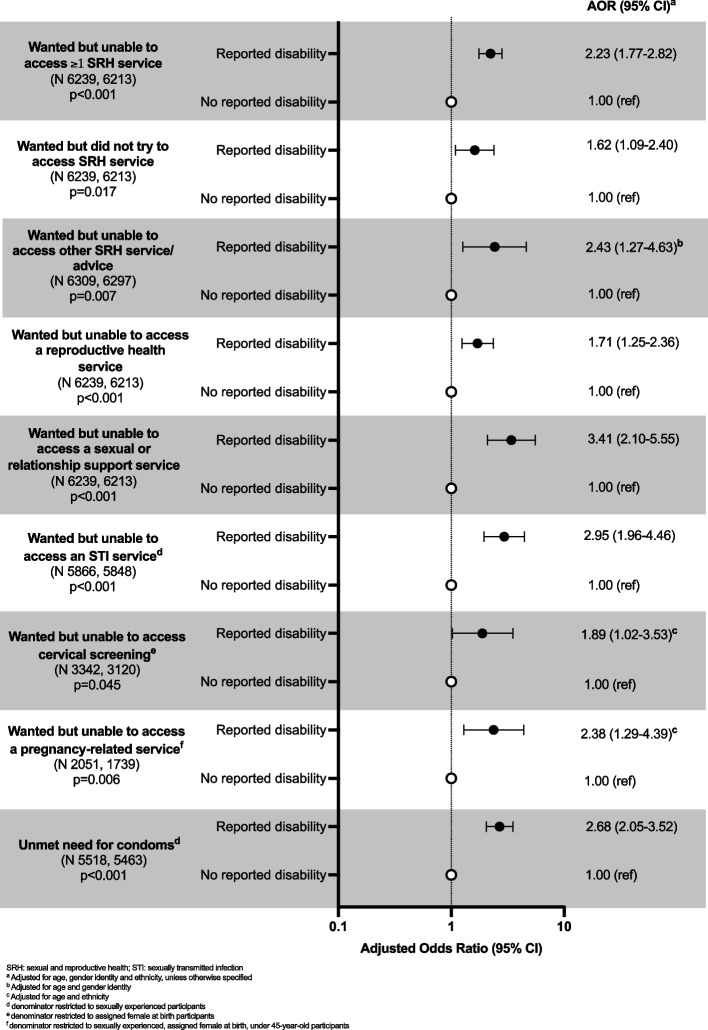 Figure 2
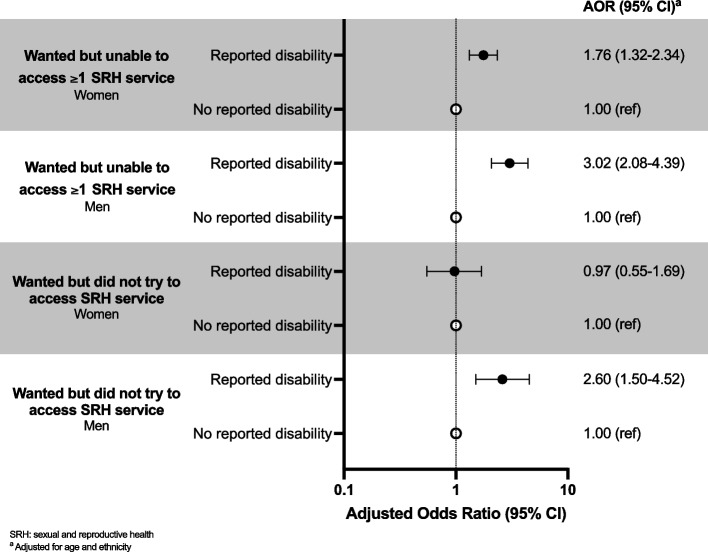 Figure 3
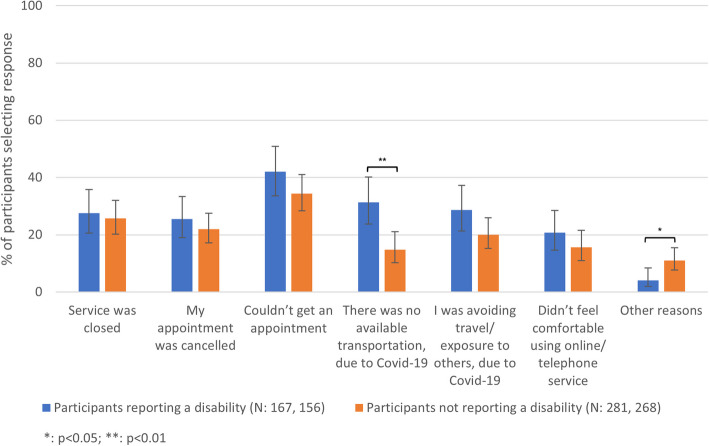 Figure 4
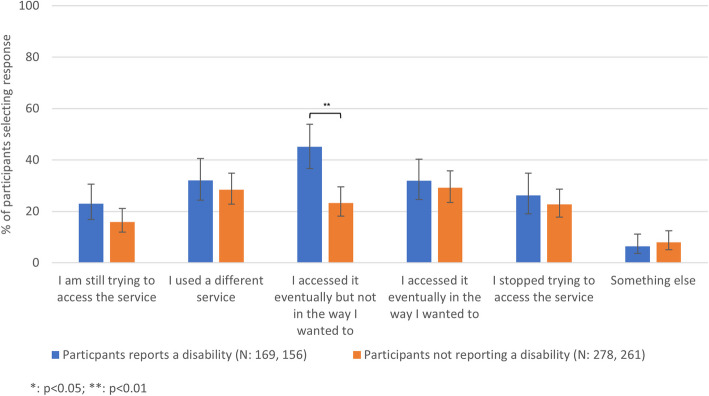 Figure 5
Peer Reviews
No public reviews on file for this paper yet. If you reviewed it on a platform where reviews are public (OpenReview, ICLR, NeurIPS, ICML), you can paste yours below so the community can read it here.
Videos
No videos yet. Explain this paper in a talk, walkthrough, or lecture? Add one.
Taxonomy
TopicsDisability Rights and Representation · Down syndrome and intellectual disability research · COVID-19 Impact on Reproduction