Tumor budding predicts lymph node metastasis in squamous cell carcinoma of the lip
S. Leypold, J. Riese, C. Cacchi, K. Wermker, O. Vladu, D. Jonigk, F. Hölzle, M. Klein

TL;DR
This study finds that tumor budding near the tumor edge is a strong predictor of lymph node metastasis in lip squamous cell carcinoma, which could help guide neck dissection decisions.
Contribution
The study identifies peritumoral tumor budding as a novel and strong predictor of lymph node metastasis in lip squamous cell carcinoma.
Findings
Peritumoral tumor budding was a significant independent predictor of lymph node metastasis (OR 1.43, p = 0.059).
Patients with lymph node metastasis had significantly more tumor buds than those without (p < 0.01).
Tumor budding outperformed other classification systems with an AUC of 0.86 in predicting lymph node metastasis.
Abstract
Squamous cell carcinoma of the lip (LSCC) is a relatively rare malignancy. The criteria for performing a neck dissection remain unclear, as reliable predictors for lymph node metastasis (LNM) have not been fully established. This study aimed to identify risk factors for LNM to guide the indication for elective neck dissection. A total of 57 patients with LSCC were evaluated based on 81 clinical and pathological parameters, including three previously published pathological grading systems. Statistical analyses focused on identifying the most relevant and independent predictors of LNM using univariate and multivariate logistic regression, supplemented by the LASSO algorithm for feature selection. Tumor size (OR 1.008, p = 0.85) and peritumoral tumor budding (OR 1.43, p = 0.059) emerged as the most relevant independent predictors of LNM. Notably, the number of peritumoral tumor buds was…
Genes, proteins, chemicals, diseases, species, mutations and cell lines named across the full text — each resolved to its canonical identifier and authoritative record.
Click any figure to enlarge with its caption.
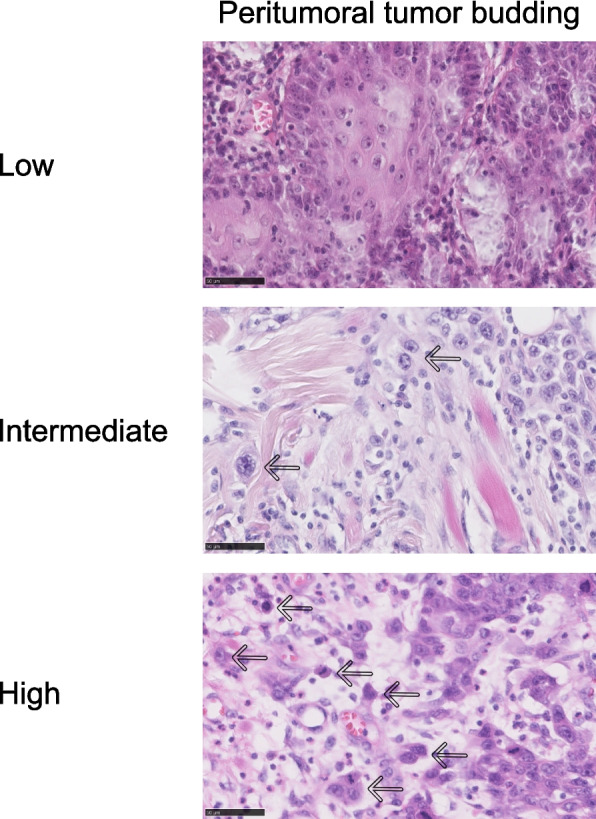 Figure 1
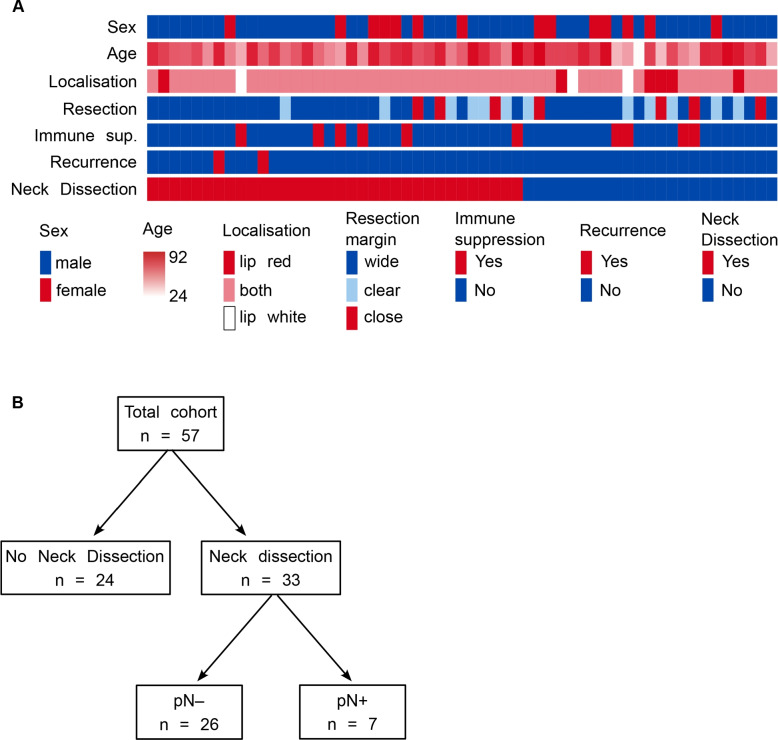 Figure 2
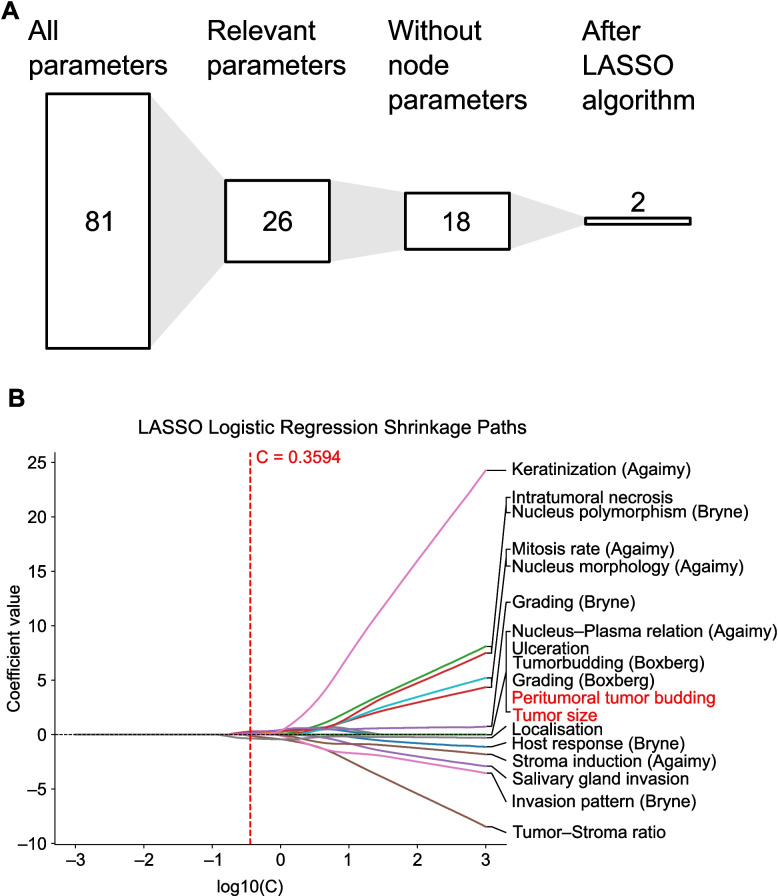 Figure 3
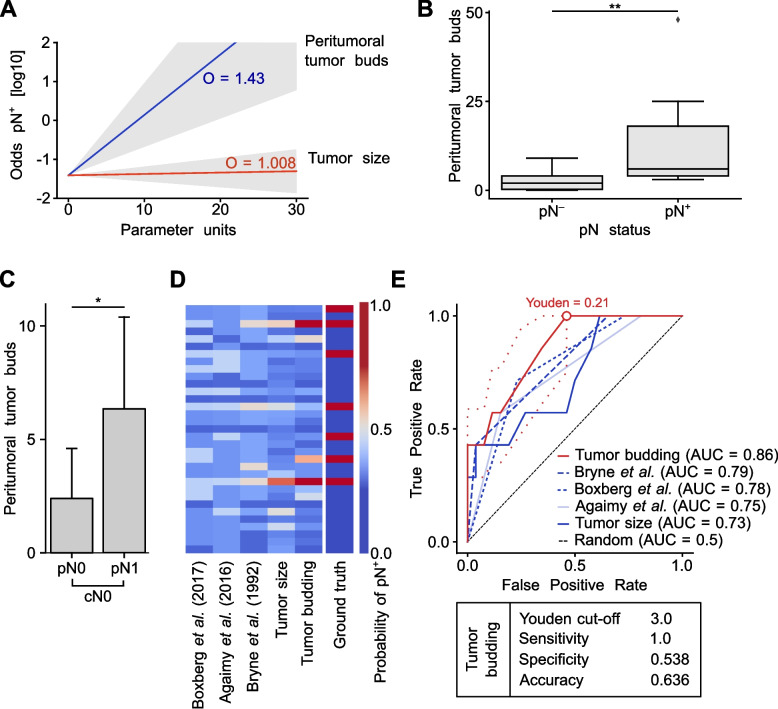 Figure 4
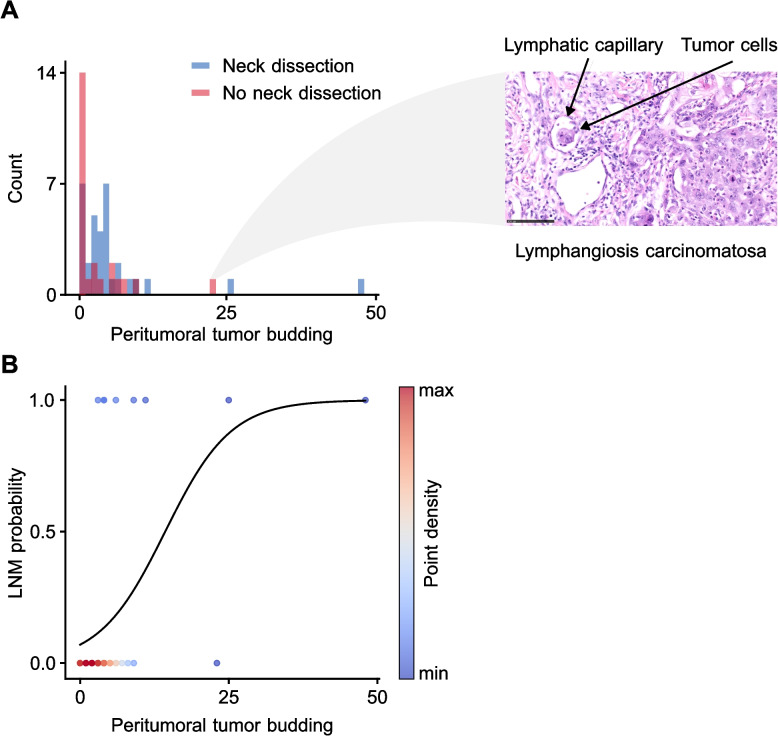 Figure 5
Peer Reviews
No public reviews on file for this paper yet. If you reviewed it on a platform where reviews are public (OpenReview, ICLR, NeurIPS, ICML), you can paste yours below so the community can read it here.
Videos
No videos yet. Explain this paper in a talk, walkthrough, or lecture? Add one.
Taxonomy
TopicsReconstructive Facial Surgery Techniques · Head and Neck Cancer Studies · Ear and Head Tumors