Association between critical care occupancy and code status decisions during resource scarcity: a retrospective cohort study
Stijn Bex, Lorna Guinness, Christophe Gaudet-Blavignac, Jeremy H. Martin, Jérôme Stirnemann, Thomas Agoritsas, Anne Rossel, Antonio Leidi, Olivier Grosgurin, Jean-Luc Reny, Christophe A. Fehlmann, Samia Hurst-Majno, Christophe Marti

TL;DR
This study found that higher critical care occupancy during the pandemic was linked to more patients being assigned non-ICU code statuses, suggesting ethical concerns about resource-based triage.
Contribution
The study empirically links critical care occupancy levels to code status decisions during the pandemic, revealing potential implicit triage practices.
Findings
Higher critical care occupancy was associated with increased odds of being assigned an ICU-ineligible code status.
Older age and higher comorbidity index were strongly linked to ICU-ineligible code status decisions.
Complementary hospitalization insurance was associated with lower odds of being assigned an ICU-ineligible code status.
Abstract
Code status determination typically relies on the expected benefits and harms of treatment intensification and patient values and preferences. Resource availability may also influence code status decisions. During the COVID-19 pandemic, the demand for critical care often exceeded the available resources. This study investigated the association between critical care occupancy and code status decisions during the COVID-19 pandemic. We conducted a retrospective cohort study of adult patients hospitalized at Geneva University Hospital for acute COVID-19-related illness during two successive pandemic waves, in spring and autumn 2020. Multivariable logistic regression was used to analyze the association between critical care occupancy at admission and code status attribution while accounting for clinical and demographic characteristics, including age, sex, ROX index (pulse oximetry/fraction…
Genes, proteins, chemicals, diseases, species, mutations and cell lines named across the full text — each resolved to its canonical identifier and authoritative record.
Click any figure to enlarge with its caption.
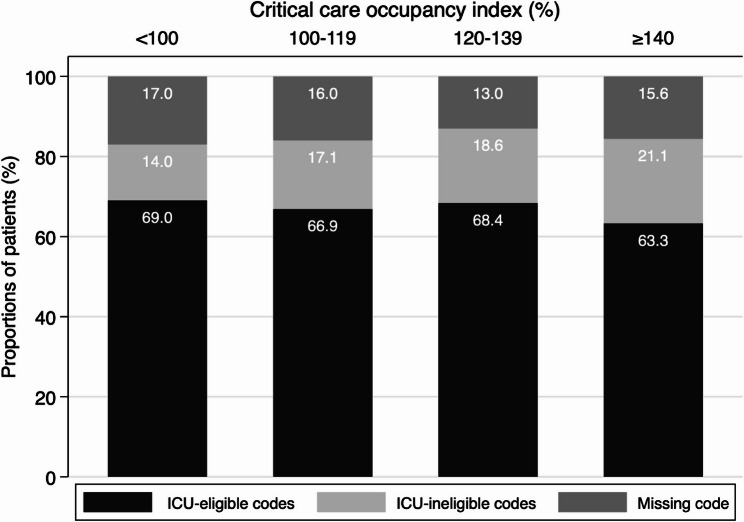 Figure 1
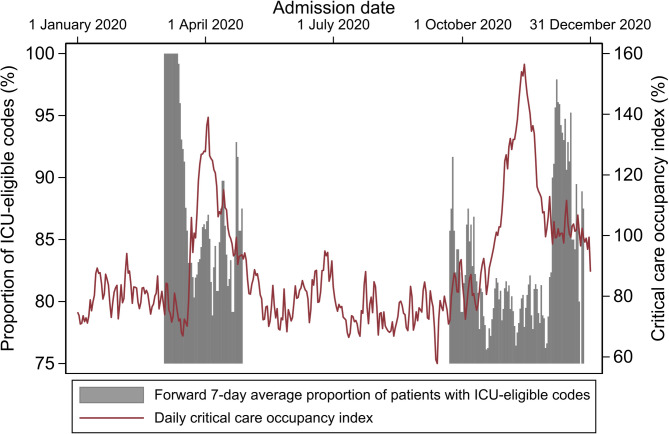 Figure 2
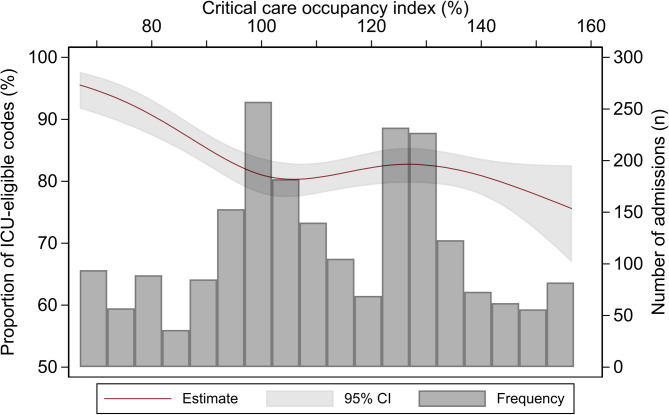 Figure 3
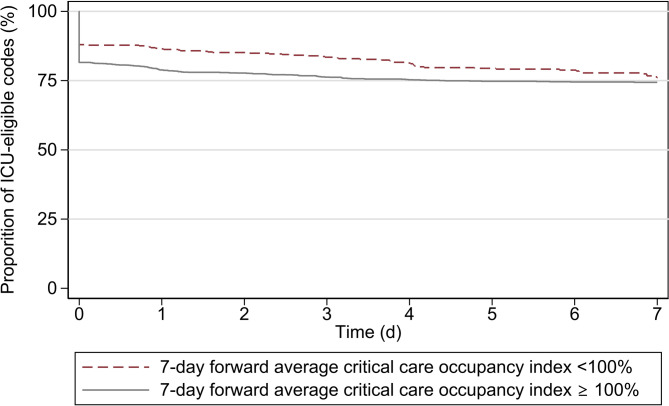 Figure 4
Peer Reviews
No public reviews on file for this paper yet. If you reviewed it on a platform where reviews are public (OpenReview, ICLR, NeurIPS, ICML), you can paste yours below so the community can read it here.
Videos
No videos yet. Explain this paper in a talk, walkthrough, or lecture? Add one.
Taxonomy
TopicsSepsis Diagnosis and Treatment · Emergency and Acute Care Studies · Intensive Care Unit Cognitive Disorders