A multi-national cross-sectional exploration of rehabilitation services for children and young people following brain injury in low and middle income countries
Mark A. Linden, Leigh Schrieff-Brown, Linda Ewing-Cobbs, R. A. Leonard, Rajendra Prasad, Juan Carlos Arango-Lasprilla, Sandra Strazzer, Lucia Braga, Consuelo Reyes Payeras, Kim C. Davis, Lisa Kalungwana-Mambwe, Flavia Dorrego, Mathilde Chevignard

TL;DR
This study explores the availability of rehabilitation services for children with brain injuries in low and middle income countries, finding significant disparities and a need for better funding and prevention.
Contribution
The study provides the first multi-national assessment of rehabilitation services for children with brain injuries in low and middle income countries.
Findings
Healthcare professionals in least developed countries rely on charities for rehabilitation funding, while upper middle income countries are government-funded.
Hypoxia is identified as the greatest cause of brain injury in low and middle income countries.
There are significant differences in access to various rehabilitation services based on a country's development status.
Abstract
Brain injury (BI) is the largest cause of mortality and morbidity among children and can lead to significant cognitive, social, emotional and behavioural deficits. There has been an absence of research examining the availability of rehabilitation services for affected children and young people in low and middle income countries (LMICs). This study therefore investigated current rehabilitation provision in LMICs for children and young people with BI. An online survey was developed which collected data on funding support for rehabilitation, causes of BI and access to services. The survey was distributed to healthcare professionals known to members of the research team. Participants were asked to forward the survey to other professionals in their networks. Representation was sought from as many LMICs as possible. Data were analysed using descriptive statistics (e.g. percentages) and the…
Genes, proteins, chemicals, diseases, species, mutations and cell lines named across the full text — each resolved to its canonical identifier and authoritative record.
Click any figure to enlarge with its caption.
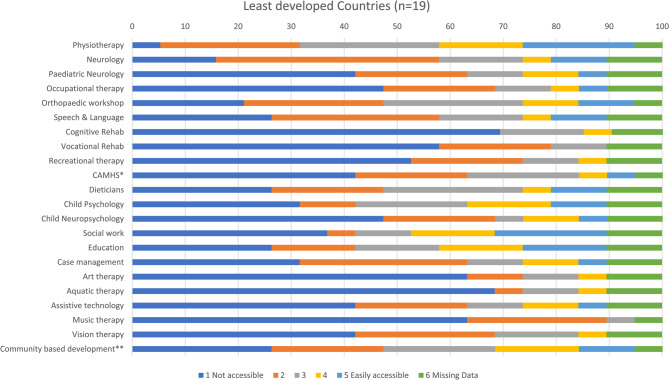 Figure 1
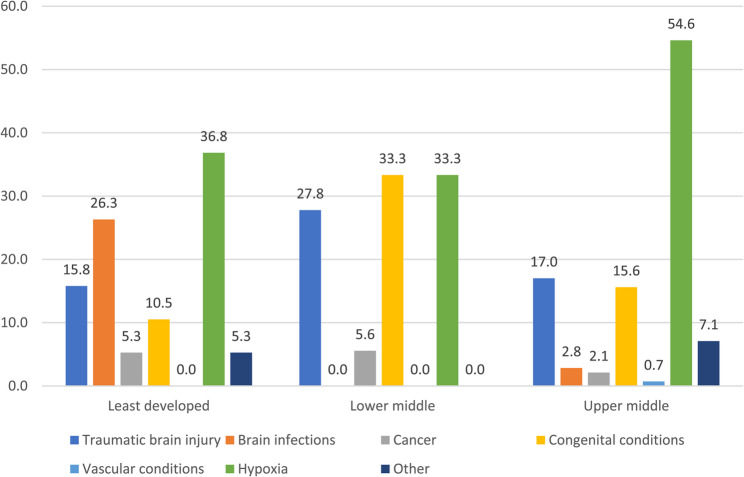 Figure 2
 Figure 3
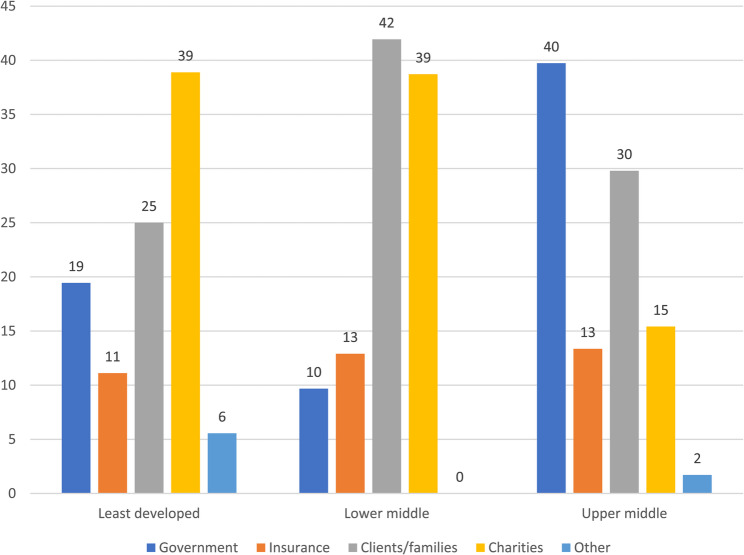 Figure 4
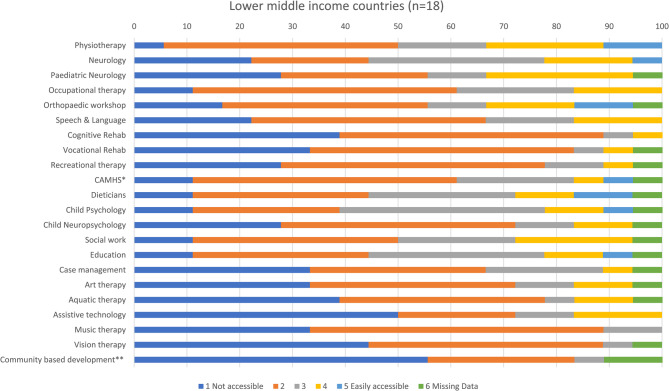 Figure 5
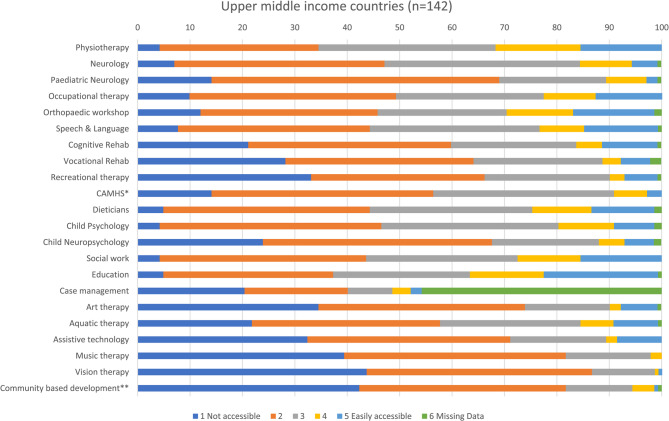 Figure 6
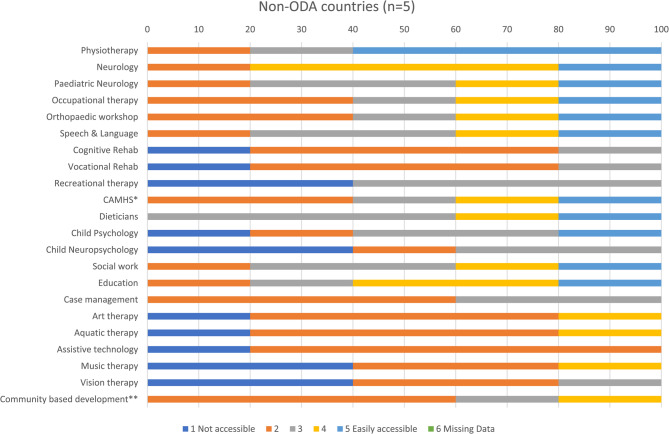 Figure 7
Peer Reviews
No public reviews on file for this paper yet. If you reviewed it on a platform where reviews are public (OpenReview, ICLR, NeurIPS, ICML), you can paste yours below so the community can read it here.
Videos
No videos yet. Explain this paper in a talk, walkthrough, or lecture? Add one.
Taxonomy
TopicsInjury Epidemiology and Prevention · Traumatic Brain Injury Research · Traumatic Brain Injury and Neurovascular Disturbances